
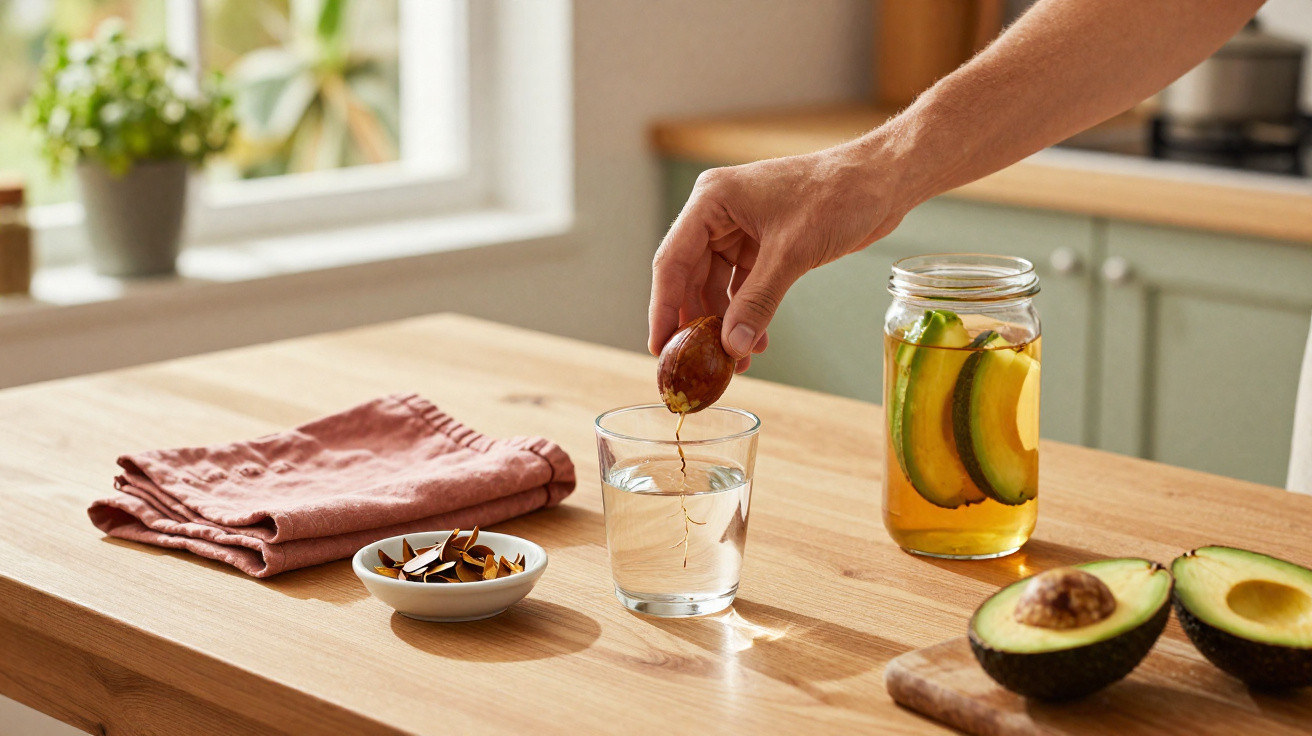
The avocado stone is often thrown straight into the bin, yet it can serve several purposes before disposal. This sizeable leftover attracts interest for its natural compounds and can also be used for an infusion, dyeing and growing a seedling at home.
Why is the avocado stone considered a household treasure?
Its appeal begins with its size: when the fruit is cut open, it is clear that the seed accounts for a substantial part of what is discarded. Reusing it prevents waste, provides opportunities for small home experiments and turns an ordinary waste product into a useful resource.
Beyond the culinary use of its flesh, the avocado stone sparks interest for what it can do outside the kitchen. It may be dried, boiled, grated or germinated, but care is essential, as not every homemade preparation should become something for regular consumption.
Some straightforward ways to reuse it include:
- Infusion: this can be made using grated, dried stone, always in moderation.
- Dye: boiling it releases pinkish shades for fabric tests.
- Germination: cocktail sticks and a glass of water can help start a seedling.
- Reuse: this limits the disposal of a bulky part of the fruit.
- Experiment: it works well as a simple, sustainable activity at home.
What does the avocado reveal about this large seed?
The edible fruit of the avocado tree, Persea americana, belongs to the Lauraceae family and is grown in tropical and subtropical regions. Its composition includes fats, vitamins and bioactive compounds, helping to explain the interest in both the seed and the flesh.
Even so, household reuse should not be confused with a promise of guaranteed benefits. The stone may contain interesting compounds, but ingesting it still requires caution, since homemade preparations differ in concentration, origin and safety.
How can avocado stone be used in infusions cautiously?
For an infusion, wash and dry the stone, grate it and keep it away from moisture before preparing anything. The drink should only be consumed occasionally and in moderation, as there is debate around frequent ingestion of this seed.
Infusions require moderation
Do not regard this as unrestricted consumption.
The aim is to explore a traditional and experimental use, not to replace dietary or medical guidance.
Pregnant people, children and anyone with health conditions should avoid trying it without professional advice.
In practical terms, add a small amount of grated stone to hot water, strain it thoroughly and watch for any discomfort. If in doubt, choose non-food uses, such as natural dyeing or germination, and keep the stone away from excessive consumption.
To minimise risks, follow these basic precautions:
- wash the stone thoroughly before drying or grating it;
- do not consume it daily or in large amounts;
- stop using it if any unusual reaction occurs;
- favour external uses where there is uncertainty about ingestion.
How can the avocado stone become dye and a seedling?
Boiling the stone in water can release pinkish tones for natural-dye experiments. Results differ according to the fabric, boiling time and number of seeds used, so it is worth beginning with fabric scraps before colouring larger items.
To germinate it, insert cocktail sticks into the side of the stone and rest it over a glass, keeping its base in contact with water. Changing the water regularly prevents unpleasant smells, while indirect light and patience encourage root growth and sprouting.
These uses work best with a few simple measures:
- boil clean stones to extract the pinkish colour;
- test the dye first on a small piece of fabric;
- keep only the base of the seed in the water;
- change the water in the glass to prevent odour and dirt.
How can it be reused without overdoing it each day?
Anyone looking into myths and facts about eating fruit stones and seeds should take a balanced approach to avocado. Reuse is worthwhile, but it does not make every stone a safe food for frequent use.
The best approach combines sustainability with caution: grow a seedling, try natural dyes and use infusions only carefully. In this way, the stone is no longer automatically rubbish and becomes a useful, creative and conscious experience.
Comments
No comments yet. Be the first to comment!
Leave a Comment