
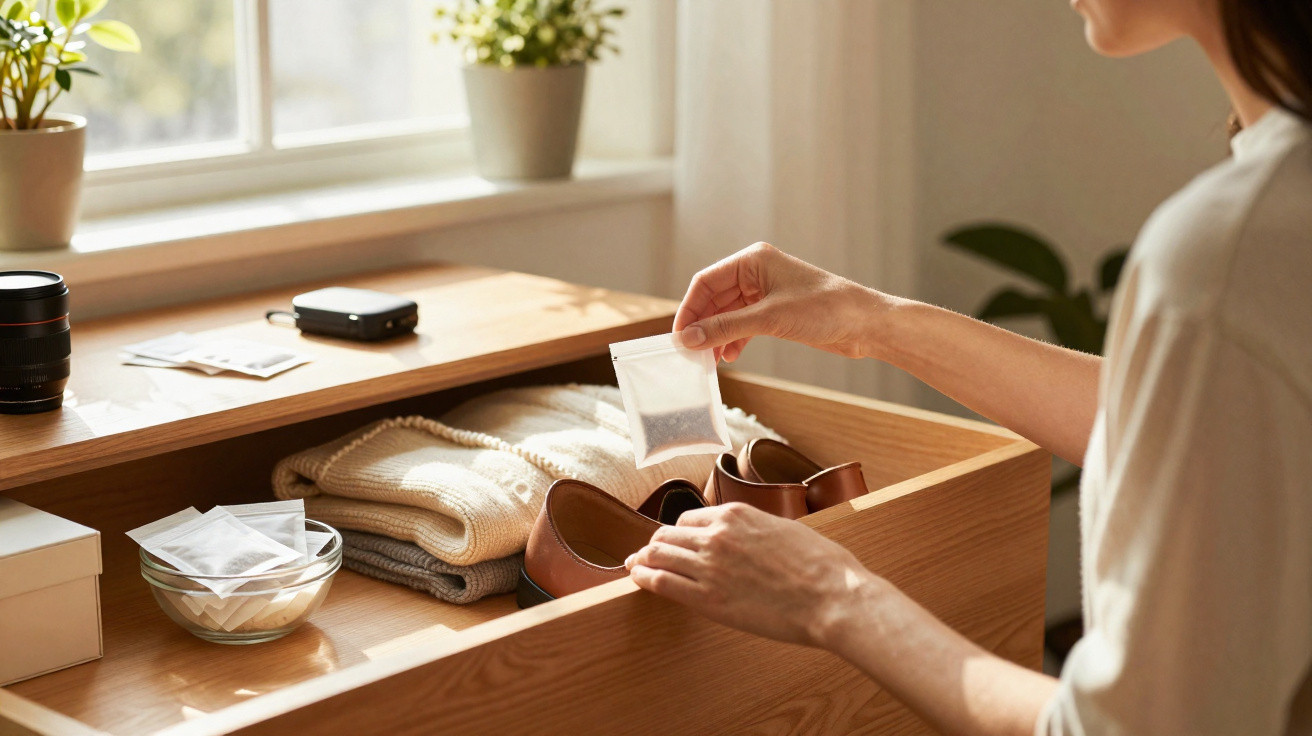
In Japan, small silica gel sachets are often kept to shield belongings from moisture rather than being thrown away immediately. The principle is straightforward: the material captures water from the air and helps prevent mould.
Why keep silica gel sachets at home?
These sachets are found in shoe boxes, electronics and certain packages because they lower humidity in enclosed spaces. Reused carefully, they can help safeguard documents, cameras, drawers and sensitive possessions from everyday damage for longer.
The key is to use them only when they are dry and undamaged, without opening the packet or scattering the beads. In this way, silica gel forms an unobtrusive barrier against moisture, helping to limit the risk of oxidation and musty smells inside cupboards.
Their most useful applications include:
- Shoes: helps reduce moisture in closed boxes.
- Documents: protects stored papers from cupboard odours.
- Cameras: lowers moisture levels in bags and cases.
- Cupboards: can be placed near medicines, provided it does not touch the tablets.
- Bags: helps in enclosed compartments used every day.
How does silica gel retain moisture?
The desiccant used to control humidity in packaged goods is made from silicon dioxide and has a porous granular structure. This allows strong adsorption of water onto the surface of the material’s internal pores in enclosed environments.
In other words, water is held on its internal surface rather than turning the sachet into an ordinary sponge. This is why it works best in small, sealed places such as drawers, boxes, cases and protected packaging.
Where can silica gel sachets be reused every day?
In drawers, they can help protect papers, photographs and small metal items from humid air. In a camera bag, they reduce the likelihood of lenses misting up, as long as the sachet remains sealed and the case is kept clean.
Keep moisture away from belongings
It works best in small spaces
A single sachet will not dry out an entire room, but it can help inside boxes, bags and drawers.
Replace it if the packet is torn, damp or leaking loose beads.
Sachets can also be stored alongside documents, small tools and items kept in closed cupboards. With wet mobile phones, they may assist with external drying, but they are no substitute for technical support where internal or severe damage is visible.
Use sachets in the following ways:
- place them in drawers containing papers, photographs and important documents;
- keep them in a camera bag, away from loose lenses;
- leave them in boxes with shoes and metal accessories;
- use them near medicines, without direct contact with tablets.
Which safety precautions are essential?
Although standard silica gel is considered non-toxic, the warning not to ingest it exists because of a choking risk, particularly for children and animals. Never open the packet or leave beads loose around the home.
Some moisture-indicator sachets may contain other substances that change colour once saturated. As it is not always easy to identify every ingredient, keep any sachet out of reach of children and inquisitive pets.
For safe reuse, follow these rules:
- do not eat it, smell it closely or open the sachet;
- dispose of packets that are torn or leaking beads;
- do not place it inside food or open medicine containers;
- always keep it away from children and household pets.
Is it worth keeping silica gel rather than throwing it away?
For people who like to reuse household items and avoid unnecessary spending, these sachets offer a small, inexpensive and practical solution. They help protect objects, reduce localised moisture and extend the use of stored materials.
The best results rely on common sense: use only intact sachets, place them in enclosed areas and prevent any accidental ingestion. What may have seemed like rubbish can then become a discreet ally against mould, oxidation and persistent household moisture for longer.


Comments
No comments yet. Be the first to comment!
Leave a Comment