
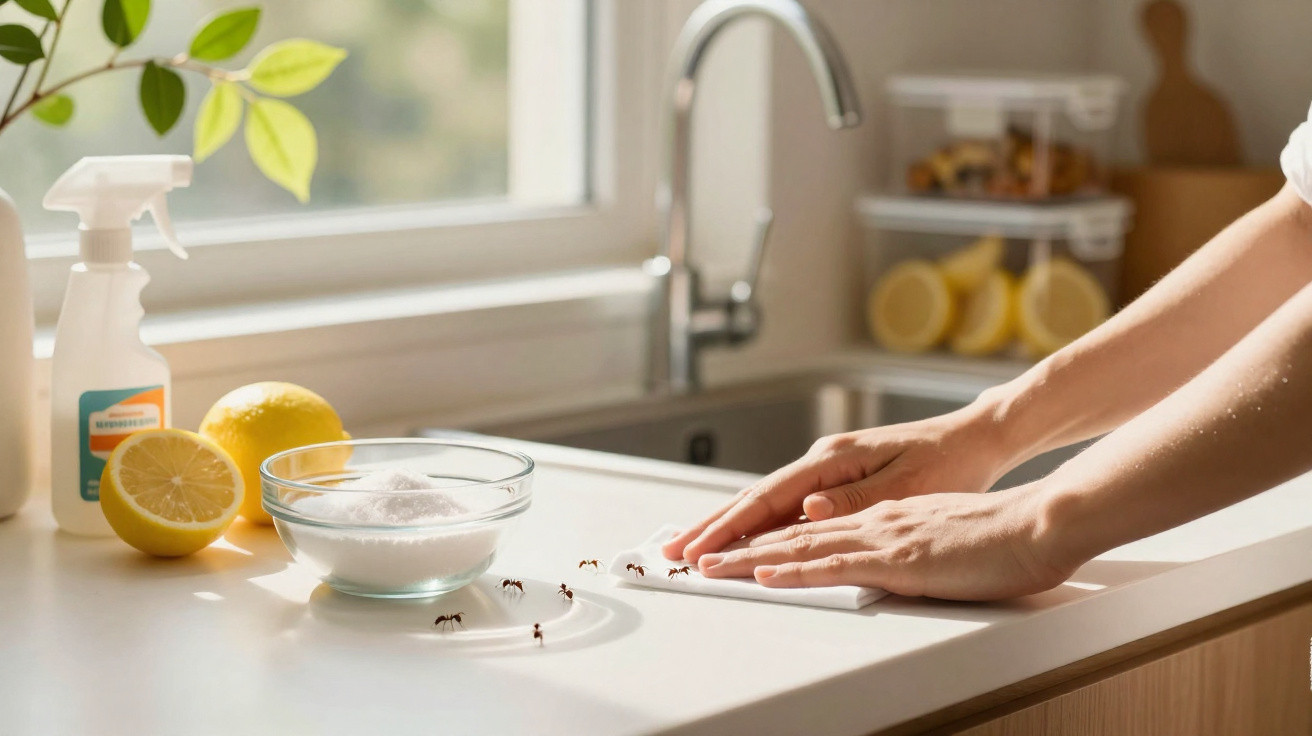
Finding a trail of ants marching across the kitchen worktop is a familiar sight as temperatures begin to rise. According to pest-control specialists, this happens because spring signals the end of the dormant period for many species. They then start looking for food and water to strengthen their colonies. With crumbs, stored food and moisture all readily available, the kitchen becomes one of these insects’ main destinations.
Why do ants appear more often in the kitchen during spring?
Throughout winter, many ant species become less active to conserve energy. Once temperatures stay above roughly 10 °C, they begin foraging again and start establishing new colonies. This is when their activity increases and household invasions become more frequent.
When an ant discovers a food source, it leaves behind a pheromone trail that directs other workers to the same spot. This explains why, after seeing a single insect, an entire line can soon appear, following precisely the same route.
What makes the kitchen so appealing to ants?
Even a kitchen that looks clean can provide everything ants need. Tiny crumbs, splashes of sugary drinks, improperly stored food, overflowing rubbish and even dampness around the sink can be enough to draw them in.
Specialists also warn that pet food, compost caddies and leaks beneath the sink can increase the risk of an infestation even further. The easier it is to find food and water, the more likely other ants are to follow the same trail.
- Crumbs left on worktops and floors
- Food stored without an adequate seal
- Open or overflowing bins
- Dog and cat food left out for long periods
- Leaks and excessive moisture near the sink
- Compost caddies kept close to the kitchen
How can you stop ants from continuing to enter the kitchen?
One of the key recommendations is to establish where ants are getting in before trying to get rid of them. Rather than immediately killing the first insects you spot, specialists advise watching their route to identify gaps, cracks or small openings near doors, windows, pipework and appliance access points.
Once these entry points have been found, they should be sealed and kitchen cleaning should be stepped up. Another recommendation is not to use bait and repellents at the same time, as one method may reduce the effectiveness of the other and make it harder to control the colony.
- Wipe up crumbs and food residue straight away
- Store food in tightly sealed containers
- Dry worktops, sinks and sponges after use
- Seal gaps around doors, windows and pipework
- Choose only one control strategy at a time
- Empty and clean bins regularly
How can you keep the kitchen protected from further infestations?
Prevention remains the most effective way to stop ants from returning. Small daily habits can greatly reduce the likelihood of insects finding enough food to establish new routes through the home. When cleaning is consistent and entry points stay sealed, the space becomes less appealing to the colony.
If the infestation continues despite these measures, or if species such as carpenter ants or fire ants are identified, specialists recommend contacting a professional pest-control service, as these situations often require specific treatments.
Conclusion: small measures prevent major invasions
Ants tend to appear in the kitchen precisely when spring wakes their colonies for a new season of food-seeking. Fortunately, straightforward measures such as removing crumbs, managing moisture and sealing potential entry points can substantially reduce the risk of infestations.
When you notice the first ants, acting promptly is the best way to prevent the rest of the colony from turning your kitchen into a permanent food source.



Comments
No comments yet. Be the first to comment!
Leave a Comment