
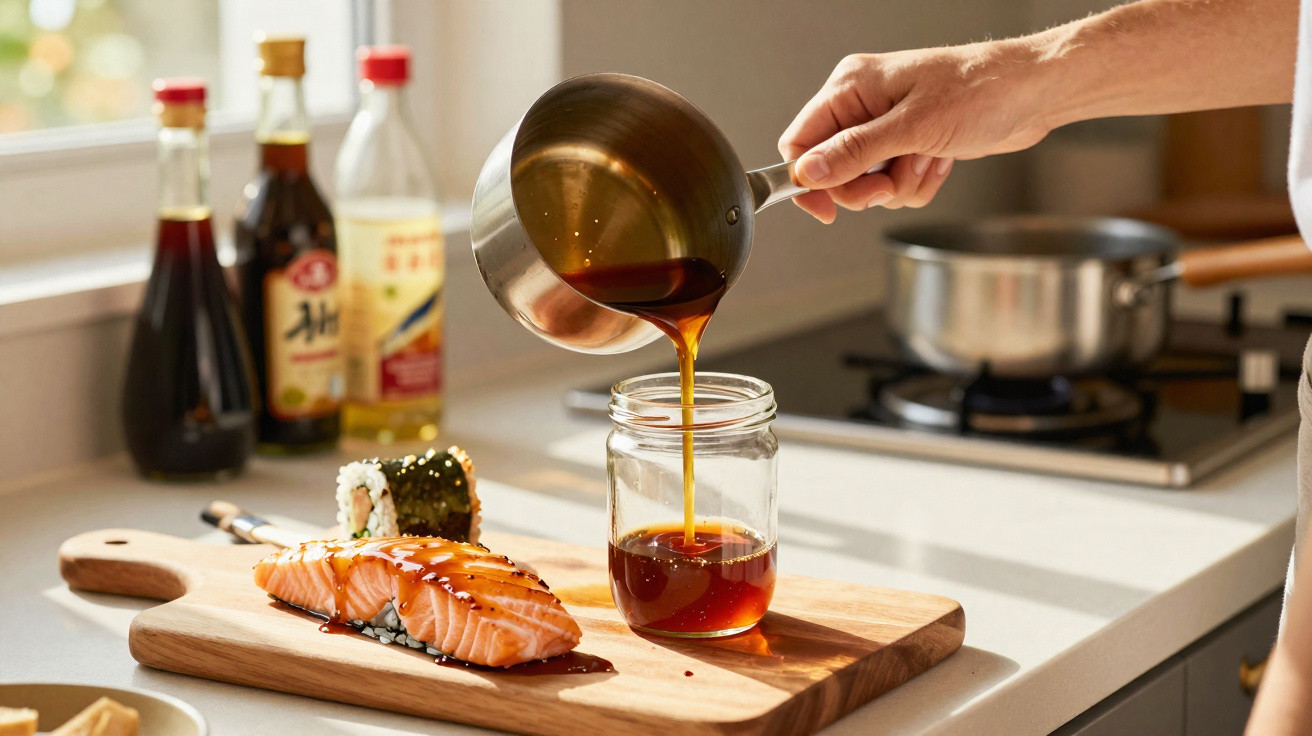
Homemade tare sauce is the sweet-and-savoury gloss that elevates yakisoba, skewers and sushi without requiring complicated techniques. Made with soy sauce, sugar, mirin and ginger, it is gently reduced over a low heat until it becomes a thick, salty and shiny sauce.
Which ingredients make a simple homemade tare sauce?
Tare has a short ingredient list, although the flavours must be balanced so it does not become overly salty. Soy sauce provides the foundation, while sugar or honey brings sweetness, mirin adds fragrance and ginger gives the finished homemade sauce a note of freshness.
A useful ratio is 120 ml soy sauce, 80 ml sugar, 60 ml mirin and a few thin slices of ginger. At home, this mixture makes a full-bodied, bold and versatile tare.
Have every ingredient ready before turning on the hob:
- Soy sauce: provides saltiness, dark colour and depth to the sauce.
- Sugar: honey can replace it for a more aromatic result.
- Mirin: if unavailable, use water with sugar and a few drops of rice vinegar.
- Ginger: add it sliced or grated, always in a small amount.
- Low heat: allows the sauce to reduce without burning the sugar or making the soy sauce bitter.
Why does slow reduction make tare sauce shinier?
Japanese cooking values ingredients, presentation and careful preparation, as traditional Japanese cuisine demonstrates. Within this approach, tare acts as a concentrated finishing sauce that can enhance flavour, shine and contrast in simple Brazilian dishes as well.
Its sweet-and-savoury character develops through slow reduction, as the sugar dissolves into the soy sauce and the ginger infuses it without taking over. If it boils too vigorously, the sauce may turn bitter, thicken excessively and lose its lightness, aroma and balance.
How do you make tare sauce to the right consistency?
Add the soy sauce, sugar, mirin and ginger to a small saucepan, stirring them together before switching on the heat. Then cook over a low flame until the liquid reduces, develops its final shine and lightly coats the back of a spoon.
A glossy, full-bodied reduction
Take it off the heat before it becomes too thick.
The sauce will continue thickening once it is removed from the heat.
If it turns into a heavy syrup in the saucepan, it can become salty and difficult to spread.
The correct consistency is reached when the sauce runs slowly but still moves freely. It will thicken further as it cools, so remove it from the heat before it turns into a heavy syrup in the jar, preventing an overly sticky, salty and concentrated result.
To avoid missing the right point, look for these signs:
- bubbles become smaller and slower towards the end of the reduction;
- the sauce coats the spoon without forming an overly thick layer;
- the shine develops before the liquid becomes dark caramel;
- the ginger should perfume the sauce rather than dominate the final flavour.
How should you store and use tare once it is ready?
Once cool, keep the tare in a clean, tightly sealed container in the fridge, always using a clean spoon. Because the sauce is concentrated with soy sauce and sugar, it lasts longer than fresh preparations, but you should still check its smell, colour and texture.
When serving, use small amounts because its flavour is intense. It works well with yakisoba, stir-fried vegetables, skewers, grilled chicken, tofu, rice and as a finishing touch for sushi, adding shine and caramelisation without making the dish complicated.
Some practical ways to use it include:
- brushing it over skewers during the final minutes of cooking;
- stirring it into yakisoba after the vegetables have been stir-fried;
- using it as a finishing sauce for rice, tofu or grilled vegetables;
- serving a small portion alongside sushi and snacks.
Is homemade tare worth making instead of buying it ready-made?
Anyone who already enjoys making quick sauces from basic ingredients will find tare an equally practical way to vary everyday meals at home. The recipe involves only a few steps, yet delivers distinctive flavour and a restaurant-style appearance.
The key is not to rush the reduction, to taste it before it becomes too thick, and to adapt substitutions to what is available in the cupboard. With soy sauce, balanced sweetness, ginger and patience, homemade tare becomes a versatile staple for Japanese dishes, snacks and grilled foods.




Comments
No comments yet. Be the first to comment!
Leave a Comment