
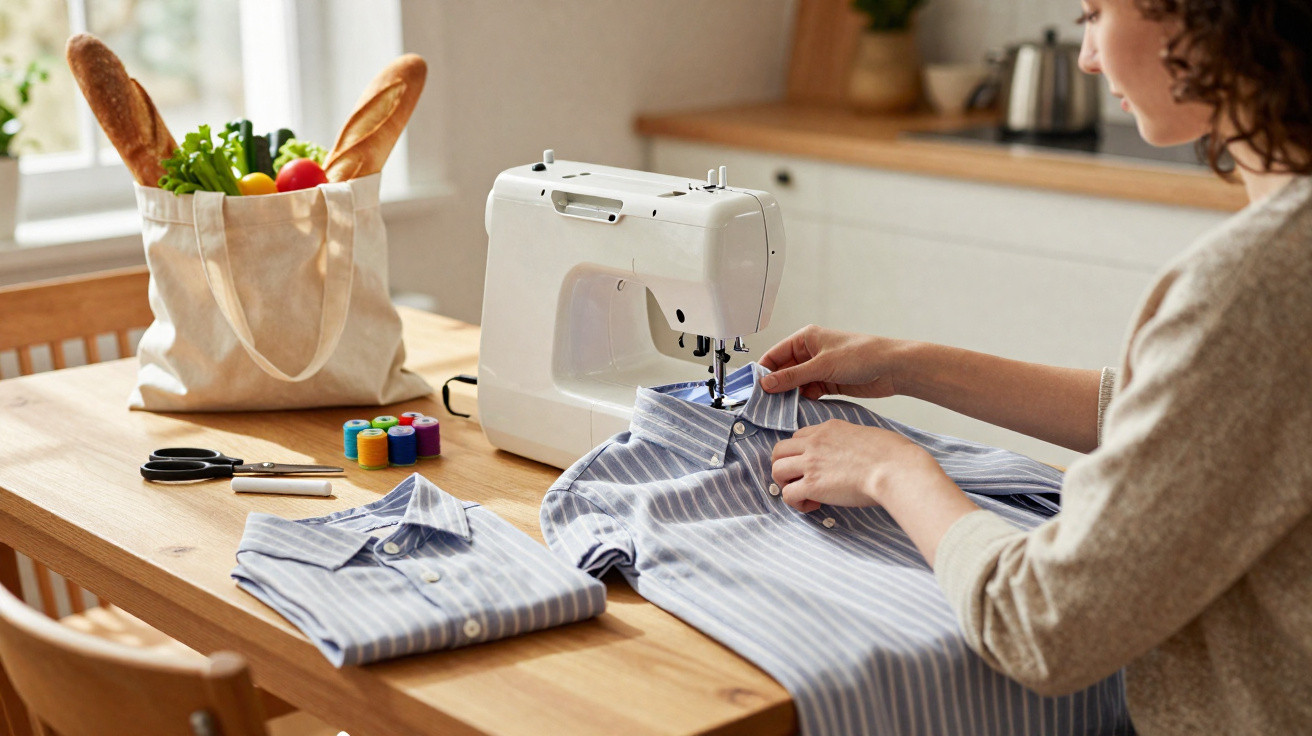
A simple sewing trick tackles two everyday problems at once.
Anyone who shops regularly will know the issue: more and more bags, flimsy carriers, handles that tear – while the drawer at home is overflowing with plastic bags. At the same time, unworn shirts sit in the wardrobe, too good to throw away. That combination can be put to good use: an unwanted men’s shirt can be sewn into a surprisingly sturdy shopping bag in around an hour.
Why an old men’s shirt is suddenly so valuable
At first glance, many shirts look ready for the bin: a faded collar, worn cuffs or perhaps even a missing button. Yet the main body of the shirt is almost always still sound – and it provides exactly the material needed for a hard-wearing bag.
“Turning shirts into bags saves money, cuts waste and gives you a real workhorse for the weekly shop.”
The reason is straightforward. Men’s shirts are generally made from closely woven cotton poplin or another fine fabric designed to last. It withstands pulling, rubbing and heavier shopping far better than many inexpensive fabric bags sold in shops.
Inflation, overflowing bins and tight budgets
Money is no longer quite so readily available in many households. A good-quality fabric bag can easily cost €15–€30. Buying several quickly adds up to an amount most people would rather save. Meanwhile, an average of around 12 kilos of clothing per person ends up in the rubbish every year – a considerable waste of resources.
This is where reusing old clothing at home, rather than simply putting it in a textile recycling bank, comes in. Upcycling avoids disposal, removes the need for new purchases and turns an unwanted wardrobe item into a useful everyday essential.
Turn a shirt into a shopping bag: the sewing trick explained
The best part is that no professional sewing studio is required: just a reasonably reliable sewing machine, an old shirt and an hour of your time. The process is manageable and suitable for sewing beginners too.
Materials you actually need
- 1 men’s shirt, ideally XL or oversized
- A sewing machine with straight and zigzag stitches
- Scissors or a rotary cutter
- Pins or sewing clips
- Matching sewing thread
- A ruler or tape measure
- Tailor’s chalk or a washable fabric pen (optional)
Step-by-step guide to a strong fabric bag
Lay the fully buttoned shirt flat on a table, with the button placket facing upwards, and smooth out the seams.
Cut off both sleeves directly along the armhole seam. The straighter the cut, the neater the finished edge will be.
Remove the collar by cutting the fabric just beneath the collar seam. This creates the future opening of the bag.
Turn the shirt inside out, so that the right side of the fabric faces inwards.
Carefully align the lower hem and secure it with pins or clips.
Sew the bottom edge from one side seam to the other using a straight stitch. This seam will later support the full weight of the contents.
Sew a second seam immediately beside it with a zigzag stitch to stop the fabric from fraying.
“The bottom seam determines the carrying strength – two seams are essential, not optional.”
All that is left now is to make the handles. This is where the cut-off sleeves come into use.
From each sleeve, cut a strip approximately 10 centimetres wide along its length.
Fold the strips lengthways, first wrong sides together and then right sides together, before sewing them into tubes.
Turn the tubes so the seam is on the inside, then topstitch close to the edge from the outside. This makes strong, double-layered handles.
Mark the handle positions around the bag opening – one on either side of the button placket, evenly spaced from the side seams.
Attach the handles with several rectangular or cross-shaped seams. The more times you stitch across the strap, the stronger the handle will be.
Finally, turn everything right side out. You now have a bag that looks more like a stylish accessory than a makeshift solution.
Why the shirt shopping bag works so well every day
The fabric itself offers several benefits that become obvious when carrying heavier items. Cotton poplin and similar shirt fabrics are densely woven without being rigid. In other words, the bag can hold heavy jars, bottles and groceries, while still folding down easily to fit into a rucksack or handbag.
“A well-sewn shirt bag can easily carry flour, glass bottles and fruit – then simply go straight into the washing machine after shopping.”
Common everyday uses
- Weekly shop: Pasta, flour, oil bottles and jars – the tightly woven fabric can cope with it.
- Farmers’ market: Fruit, vegetables, bread and flowers can all be kept neatly separate in individual bags.
- Work and university: A laptop in its sleeve, water bottle, lunch box and notebook.
- Leisure time: A towel, swimwear and sun cream – ideal as a beach or swimming bag.
There is another practical advantage: on many shirts, the breast pocket remains intact. It is handy for a shopping list, trolley token, house key or phone. No extra work is needed, as the pocket already comes with the shirt.
Environmental and financial benefits at a glance
| Aspect | Effect |
|---|---|
| Waste | One less shirt in household rubbish or a textile recycling bank |
| Money | €15–€30 saved for every bag sewn at home |
| Plastic | Fewer single-use and thin reusable bags in circulation |
| Resources | Longer use of existing fabric and less new production |
Reworking three old shirts can quickly save €45–€90, while removing the need to buy new shopping bags for a long time. It also keeps more textiles out of the bin – one way to make everyday life a little more resource-conscious.
Which shirts are best for making a shopping bag?
Not every shirt automatically makes an excellent bag. A few selection criteria will help:
- Size: XL or larger provides enough fabric for a roomy bag.
- Material: Closely woven cotton or blended fabrics withstand more than thin, transparent materials.
- Condition: The collar and cuffs may be worn out, but the body and side seams should still look strong.
- Pattern: Checks, stripes and subtle prints later look like a deliberate design detail.
If you have several shirts, you can assign different bags to different jobs: one exclusively for jars and bottles, another for fruit and vegetables, and one for bread and baked goods. This makes it easier to stay organised and helps prevent delicate food from being crushed.
Further variations and useful extras
A little experimentation with the design can get even more from the basic idea. More experienced sewers can add side darts to the base, for example, allowing the bag to stand more widely. Another option is to reinforce the top edge with an additional fabric strip cut from the leftover material.
There are plenty of visual options too: leave the button placket at the front, use the back panel on the outside, choose contrasting thread or sew on fabric offcuts as labels. Many of these details look more spontaneous and personal than a shop-bought bag. For children, a coloured hem or sewn-on patch helps each family member recognise their own bag immediately.
If it is your first time sewing, start with a shirt you genuinely no longer care about. Mistakes will matter less, and the second attempt will usually produce a much straighter cut. Seams that come undone can be reinforced with an extra row of stitching – sturdiness matters more than perfection.
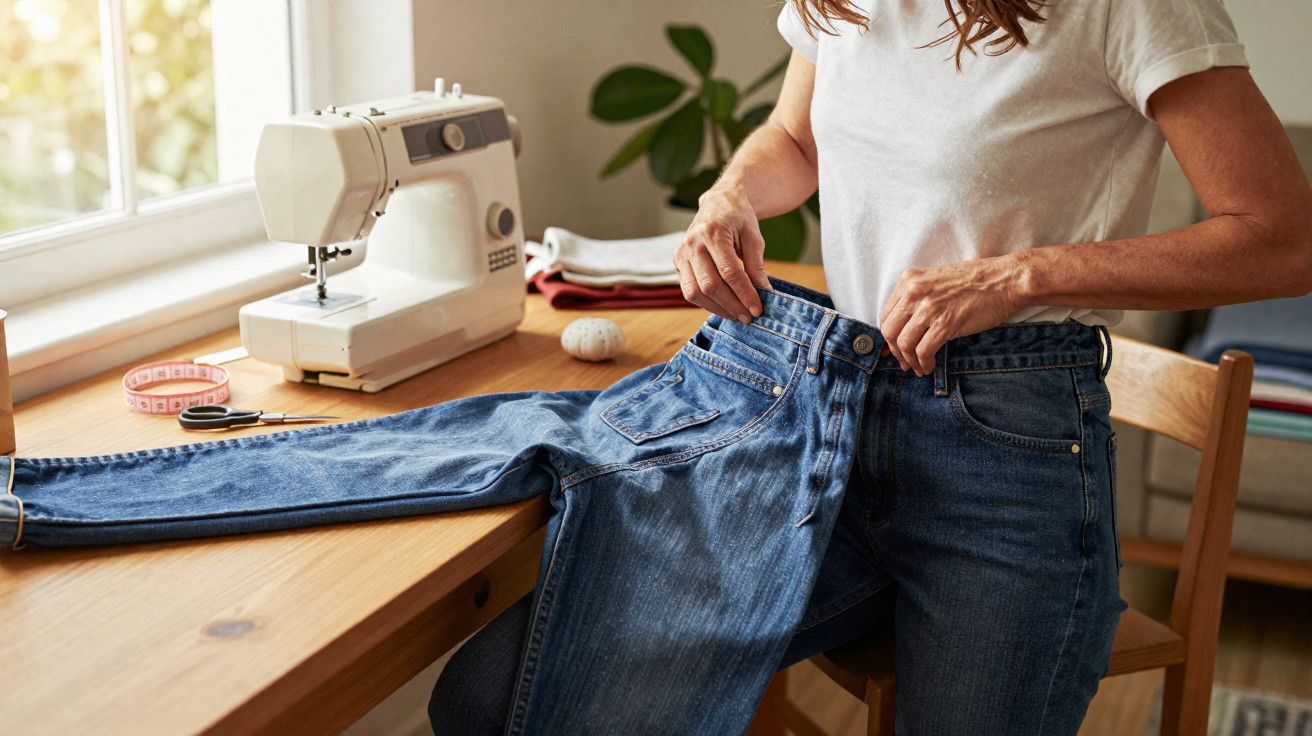
Once you get the taste for it, more garments often end up under the scissors: old jeans for reinforcing the base, T-shirts for lightweight fruit bags, or bedding for an XXL shopping bag. Over time, this creates a whole collection of robust fabric helpers that become a regular part of the household – while the drawer full of plastic bags looks considerably emptier.



Comments
No comments yet. Be the first to comment!
Leave a Comment