
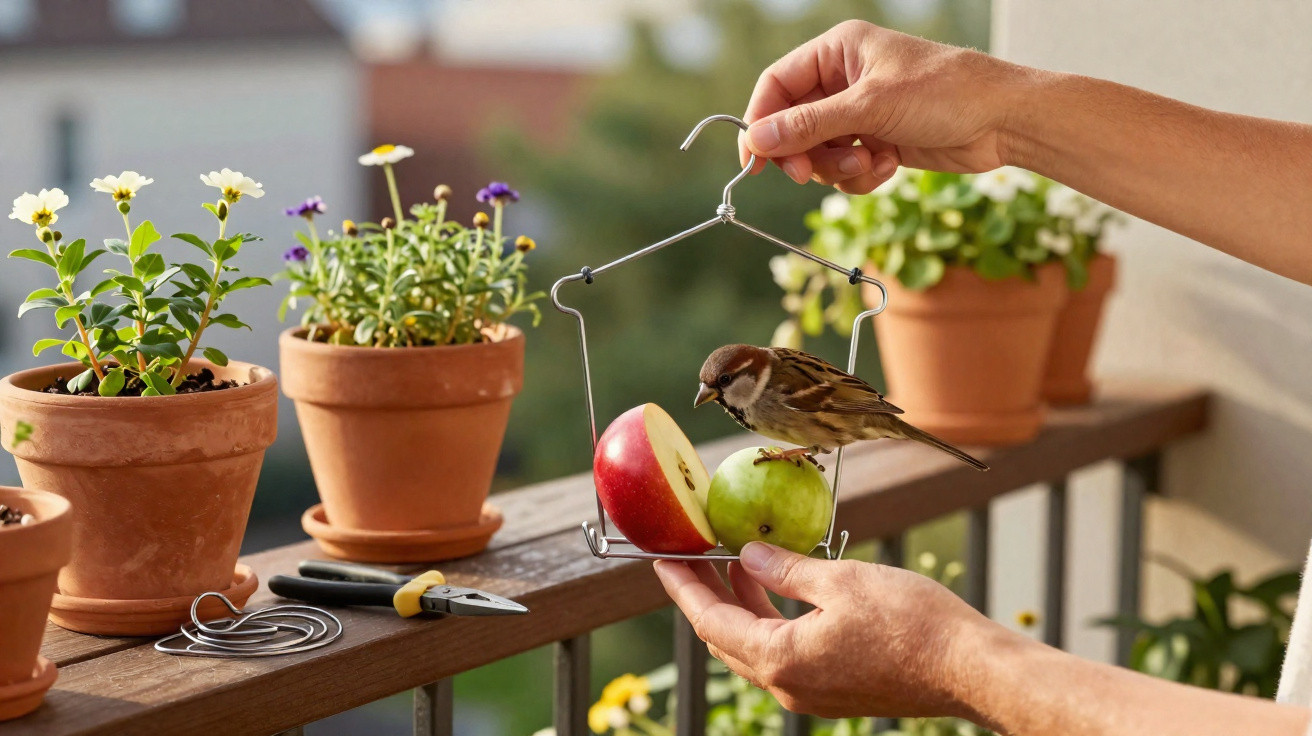
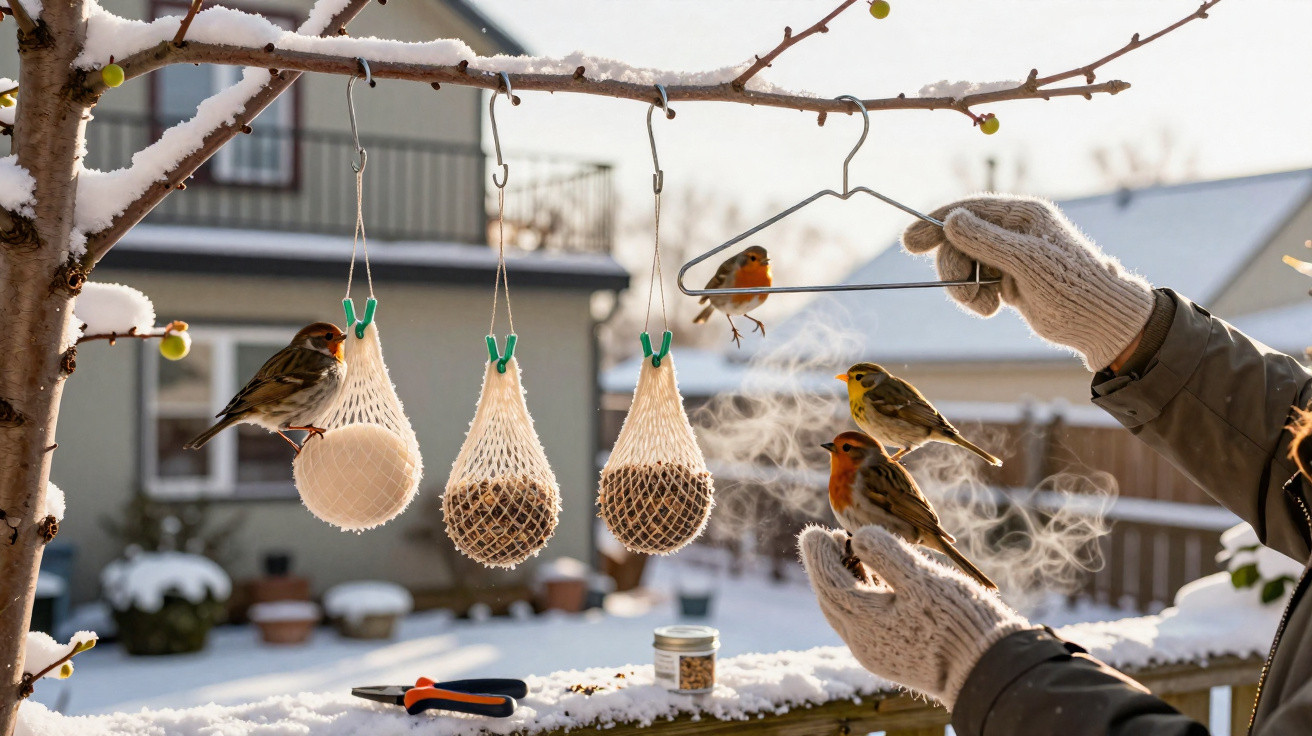
When you stand by the window in spring, you hear them straight away: blackbirds, tits and finches. They are searching for food, while the cost of ready-made feeding stations at DIY shops continues to rise. Yet a simple everyday item can be turned, with one straightforward trick, into a remarkably sturdy, useful and, above all, completely free bird feeder.
Why a wire hanger can become a garden highlight
Metal clothes hangers lead a rather sorry life in many homes: too flimsy for heavy winter coats, somehow surplus to requirements, yet too good to throw away. This very ‘problem item’ is ideal for giving a second life outdoors.
“A thin wire hanger has everything you need: it is sturdy enough to hold food, flexible enough for beginners to shape, and found in almost every wardrobe.”
Spring is a demanding time for songbirds. They build nests, court, and raise their first young. All of this requires energy. An easily reached source of food can make a huge difference, particularly during cold or rainy spells when insects and seeds are scarce.
Garden owners benefit too: more birds in the garden means fewer pests on roses, fruit trees and vegetable beds. Tits consume impressive numbers of caterpillars, aphids and small insects. A basic feeding station therefore doubles as a form of biological pest control.
What you need for a zero-cost bird feeder
Very little material, a big result
This craft project requires no more than a quick look in the wardrobe or storage cupboard. There is no cutting to size, welding or drilling involved – your hands and a pair of pliers do the main work.
- 1 metal clothes hanger, ideally made from thin wire, such as a dry-cleaning hanger
- 1 pair of side cutters or combination pliers with cutters
- 1 pair of flat-nose pliers for safe bending
- 1 whole apple half or 1 bird fat ball
The thin wire used for these hangers is perfect: it bends easily without breaking straight away. Even people with no DIY experience can create a stable holder in just a few minutes. Minor imperfections do not matter at all – birds are not looking for perfection, only a secure holder and enough food.
Step by step: reshape the hanger in three minutes
Step 1: Secure the hanging hook
Place the hanger in front of you: the hook at the top will later be used to hang it from a tree. This section needs to remain sturdy. First, carefully loosen the small wire twist immediately below the hook using flat-nose pliers. The wire will then extend downwards as a straight length.
Important: do not bend open the curved tip of the top hook. It is used to suspend the feeder from a branch or garden hook. If preferred, squeeze the hook slightly tighter with the pliers so that it is less likely to slip off the branch later.
“The entire construction hangs from the hook – the more solid this part is, the longer the feeder will withstand wind, rain and snow loads.”
Step 2: Shape the food holder
The long section of wire at the bottom now becomes the support for the food. Two versions work well, depending on what you intend to offer.
Option A: A holder for an apple or piece of fruit
To attract tits, blackbirds or sparrows with fruit, bend the wire end firmly upwards. You can either make a U-shaped fork that grips half an apple, or form a pointed extension onto which the fruit is skewered.
- Cut the apple in half and remove the core.
- Push the apple half onto the point with its cut side facing downwards.
- Check that the apple is firmly fixed and does not wobble.
This keeps the piece of fruit in place even in stronger winds. Tits tend to peck at softer areas, while blackbirds are especially fond of juicy apple pieces.
Option B: A spiral for a fat ball
A different shape is more suitable for standard fat balls. Use the flat-nose pliers to wind the lower end of the wire into a tight spiral. The aim is to create a small basket into which the ball can be pressed.
The gaps between the coils should be narrow enough to stop the ball slipping through the bottom, while still allowing birds to reach its surface easily. Finally, bend the sharp wire end inwards to prevent birds from injuring themselves.
“Always turn sharp edges inwards. Small feet and delicate bird legs are sensitive to metal burrs.”
The best location for a wire hanger bird feeder: safety first
Where to hang the feeder – and where not to
Once the hanger has been shaped and filled with food, the key question is where to put it. Its position determines whether birds feel safe and whether they will use the food source over the long term.
A few basic rules can help you choose the right spot:
- Height: Around 2 to 3 metres above the ground, so cats and martens have little chance of reaching it.
- Surroundings: Near branches or bushes so birds can quickly find cover, but not directly within dense foliage.
- Distance from windows: At least 10 metres away from large windows to reduce the risk of collisions.
- Shelter from wind: Choose a spot protected from the wind where food will not continually swing around or fall off.
A strong branch is ideal, allowing the hook to hang freely without constantly striking the trunk or other twigs. If you do not have a tree, use a sturdy post or a metal rod in a flower bed.
How this simple trick benefits nature and everyday life
More than decoration: a feeding station as a mini ecosystem
What initially sounds like a bit of fun with a wire hanger can quickly change life in the garden. As soon as the first birds discover the new feeding spot, word effectively gets around in the bird world. It becomes a small, lively hub of arrivals, departures, brief squabbles and song.
This brings several effects at once:
- Birds use less energy while searching for food.
- They return more often and spend longer in the garden.
- They consume more insects, larvae and caterpillars on plants.
- People gain a direct way to observe local wildlife.
“Anyone able to see a feeder like this from the kitchen window can enjoy observing nature every day – without binoculars or long journeys.”
Care, food choices and a few important points
How often should it be cleaned? What food is suitable?
Although the metal hanger itself is durable, the feeder still needs occasional care. Fruit leftovers quickly develop mould in warm weather, while fat food softens in rain and may slide from the wire.
A practical routine:
- Check fruit every day and replace it after two to three days at the latest.
- Inspect fat balls regularly in damp weather and discard them immediately if they become mouldy.
- Wipe the metal parts with hot water from time to time to remove dirt.
Suitable foods include:
- unsprayed pieces of apple or pear
- ready-made fat balls without netting
- homemade fat food made from vegetable fat and a seed mix
Salty leftovers, bread and seasoned foods are harmful to birds and do not belong in the feeder.
Why upcycling projects like this make so much sense
Less waste, more nature on your doorstep
Metal clothes hangers often end up in bulky waste collections or sit unused for years at the back of a cupboard. Repurposing one as a bird feeder saves resources and avoids plastic accessories that can quickly crack or turn yellow outdoors.
At the same time, a homemade solution makes it easier to do something for birds in the first place. Anyone who does not want to buy an expensive feeder is more likely to pick up pliers and try a small project like this. Many people who start with one later make additional holders or add water sources and nest boxes to their garden.
In this way, an unremarkable wire hanger gradually becomes a small contribution to biodiversity – as well as a daily moment of pleasure when a great tit suddenly lands on the windowsill and feeds from the homemade bird feeder.

Comments
No comments yet. Be the first to comment!
Leave a Comment