
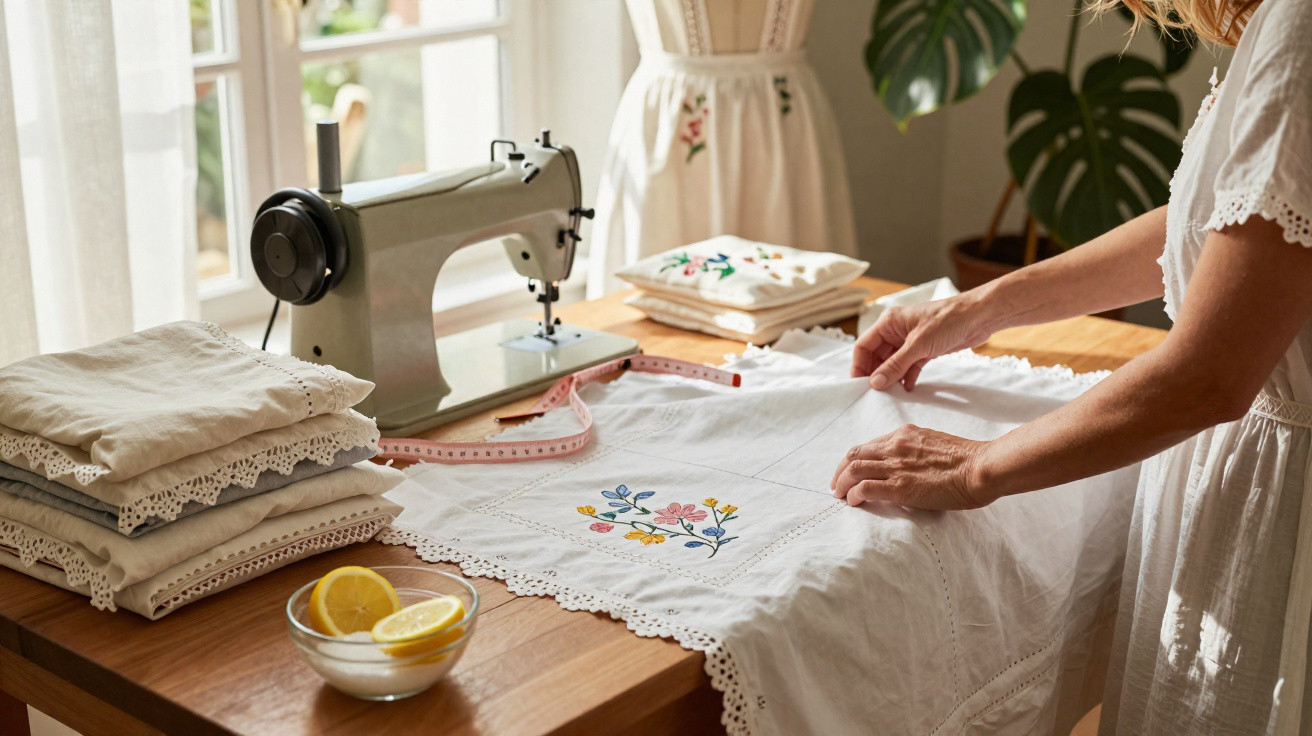
Many households have the same forgotten treasure tucked away at the back of a cupboard: a pile of immaculate but very old linen or cotton sheets, often inherited from a grandmother or great-grandmother. Beautifully embroidered, yet too heavy, too delicate or simply too old-fashioned for a modern bed. With a clear plan for preparing, cutting and showcasing them, these heirlooms can become striking clothes and elegant home textiles.
Why vintage embroidered sheets are valuable fabric
Owning these sheets means having more than a nostalgic keepsake. Many were made from excellent linen or from métis, a cotton-and-linen blend. Both materials are considerably more durable than most inexpensive fabrics sold today.
“The tightly woven fabric of old sheets lasts for years, helps balance temperature and becomes more comfortable against the skin with every wash.”
Common characteristics of these vintage textiles include:
- a substantial fabric weight, frequently well above 200 g/m²
- long, strong fibres that barely shed lint
- the ability to withstand hot washes at 60 to 90 °C
- naturally balanced warmth and moisture management
Rather than allowing them to yellow in a cupboard, these sheets are ideal for upcycling: transforming existing materials into new pieces with a high-quality finish. At a time when tonnes of textile waste are produced every year, this is both appealing and genuinely sustainable.
Preparing yellowed sheets for reuse
Before scissors go anywhere near the fabric, it needs careful preparation. The effort pays off twice over when it is time to sew.
Wash, brighten and inspect
Start by putting the sheet through a full wash cycle to remove dust, storage smells and old marks. Then assess its colour closely. Many old white fabrics have developed a slight yellow cast, but a few methods can restore a fresher appearance:
- Hot water and lemon juice: A simple natural approach for lightly yellowed fabric.
- Percarbonate in a hot soak: Dissolved in water at around 60 °C or above, this bleaching agent works particularly well without placing the same strain on fibres as chlorine.
Chlorine cleaners and traditional bleach solutions are harsh on natural fibres, weakening the weave and potentially causing holes. Anyone wanting to preserve the fabric should avoid them.
Iron the sheet thoroughly once it has been washed. Smooth fabric is easier to cut accurately, and flaws become much more visible, including tiny tears, worn patches and discolouration.
Mark the special details in the fabric
This is where the creative planning begins. Use tailor’s chalk or a washable fabric pen to identify the most interesting elements:
- monograms and initials
- detailed cutwork embroidery
- drawn-thread hems, or ladderwork inserts (“jour échelle”)
- scalloped edges finished with embroidery
These areas will become the focal point of later clothing or homeware. Large sections of plain fabric, meanwhile, are perfect for front and back panels, sleeves or the reverse side of cushions. Keep the scissors in the sewing basket at this stage: decide on the design first, then cut.
Sewing vintage embroidered sheets: make embroidery the focal point
The key technique is not to cut through the existing embroidery at random, but to treat it as a deliberately placed panel. In sewing, these are known as inset pieces.
“The central idea is to move the old monogram deliberately to a place where it will stand out – such as on a breast pocket.”
The technique step by step
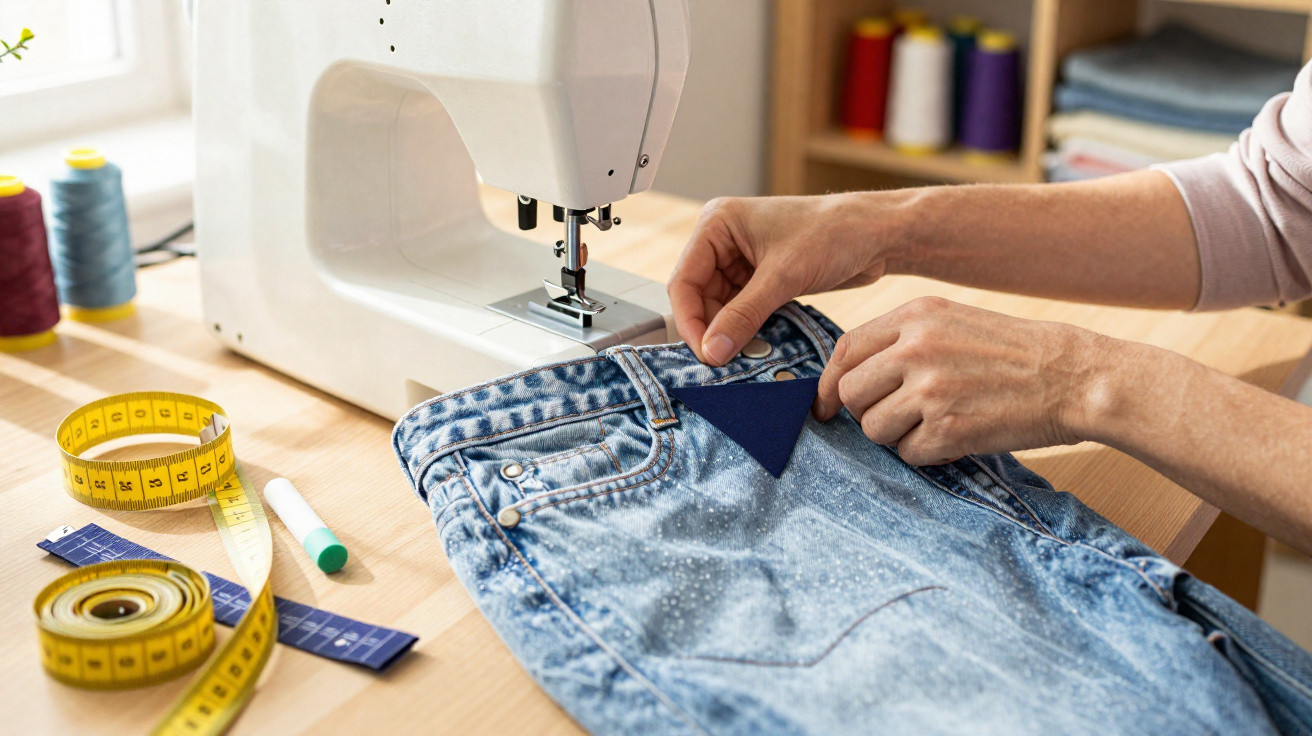
- Position the pattern pieces: Arrange paper patterns so embroidery falls in prominent areas, such as a monogram on a breast pocket, a line of cutwork at the sleeve hem or a back yoke.
- Cut with generous allowances: Leave sufficient seam allowance around embroidered sections. This provides room for adjustment and reinforcement.
- Reinforce fragile areas: If a section has become thin, apply lightweight fusible interfacing to the reverse. Finishing the edges afterwards will prevent fraying.
- Use fabric offcuts: Smaller leftover pieces can become details such as flap pockets, cuffs, inner collar sections or belts.
One typical example is a relaxed mid-season jacket made from a sheet roughly three metres long and featuring a large initial. The monogram takes pride of place on a patch breast pocket, while the smooth sections form the rest of the jacket. The result looks like a one-off boutique piece rather than former bedding.
Garments that work especially well
Sheet fabric is sturdy but tends to drape with some weight, which should guide the choice of pattern. Very fitted or tightly tailored garments are less suitable; loose and straight shapes tend to work better.
Popular fashion ideas using old sheets
- Oversized blouses: Use plain sections for the front and back, placing embroidery on the collar, button placket or cuffs.
- Kimono jackets: Their generous shapes cut well from a single sheet, with embroidered borders following the front opening or sleeves.
- Summer dresses: Choose straight or lightly flared designs, adding embroidery at the neckline or as a hem border.
- Belts and sashes: Embroidered edges can be turned into tie belts that elevate simple outfits.
Anyone still gaining confidence at the sewing machine should begin with straightforward projects such as kimonos or tunics. These usually require a straight grainline, few darts and an easy fit.
Home décor ideas: from sheet to stylish furnishing
Vintage embroidered sheets can do far more than refresh a wardrobe. With minimal work, they can also create very refined-looking pieces for the home.
Restyle the bed, table and windows
- Duvet cover from two sheets: Stitch two lengths together along three sides. Leave an opening in the centre of the fourth side, closing it with buttons or ties. Place embroidered edges decoratively at the foot of the bed.
- Tablecloth and napkins: Use one large sheet as a tablecloth, positioning monograms or cutwork embroidery at the corners. Matching cloth napkins can be made from the offcuts.
- Kitchen textiles: Plain tea towels, pot holders and bread bags instantly look more luxurious with a small embroidered panel or monogram.
- Curtains and drapes: Using the existing hem as a rod pocket saves a more time-consuming sewing step. Embroidered edges can frame the window.
Square pieces with a centrally placed monogram can quickly be sewn into decorative cushions. Fold the material double and quilt it lightly to create a padded bed-head covering, a detail reminiscent of old country houses.
Quick projects for beginner sewers
Not everyone wants to start with a jacket. Old sheets are also excellent for smaller projects that allow you to practise new techniques.
- Cushion covers with an envelope closure: Sew two rectangles around the edges and overlap them at the back. No zip is required.
- Simple bags: Fold a long rectangle into a pouch, centre the embroidery and make handles from leftover strips.
- Make-up bags: Add a small zip and a little wadding; they are ideal for displaying small embroidered motifs.
Projects like these help you understand the particular qualities of old fabric: how it responds to ironing, how it behaves in the sewing machine and how much tension it can take.
What to check before using old fabric
As tempting as vintage sheets may be, they are not entirely risk-free. Decades in storage can affect the weave.
- Check for thin areas: Hold the sheet up to the light to reveal where it has become more transparent and therefore weaker.
- Look for moth damage or mildew stains: Small damaged areas can sometimes be cut away, whereas extensive staining is less easily dealt with.
- Avoid stretch-dependent designs: This fabric has very little give. Patterns need to allow for that, otherwise strain and tears may occur.
People with sensitive skin should wash the finished items once more after sewing. This will fully remove old fabric finishes and any residues from storage.
Why the effort is worthwhile
Hand-worked monograms and cutwork embroidery would be exceptionally expensive to produce today. On an old sheet, they are already there: free of charge, merely dusty. By placing them thoughtfully, you can create distinctive items that carry a story while also reducing textile waste.
The result brings an interesting contrast to everyday life: a plain T-shirt becomes a statement with an embroidered jacket, while an old chest of drawers can suddenly feel like it belongs in a boutique hotel when paired with new cushions against the bed head. The essential point is not to cut through the embroidery, but to position it intentionally. That is the clever sewing idea that turns a forgotten sheet into a favourite piece.

Comments
No comments yet. Be the first to comment!
Leave a Comment