
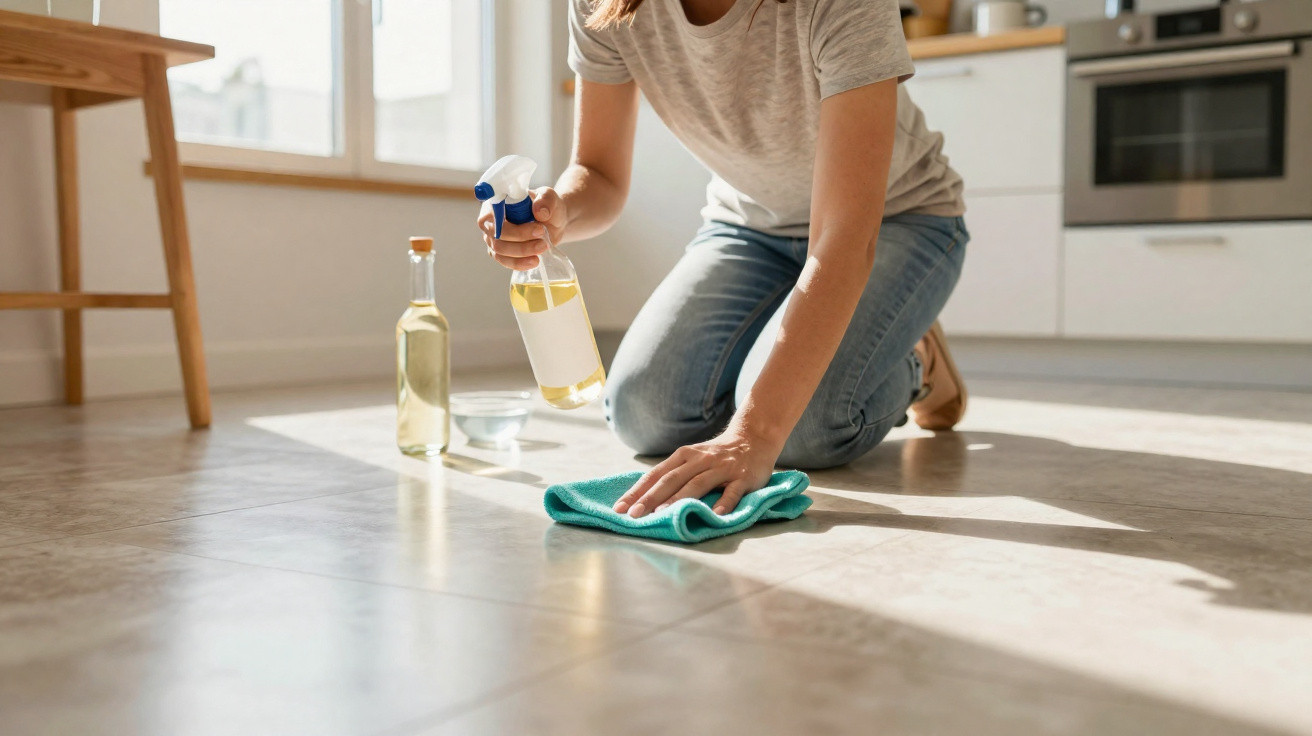
A simple kitchen staple can bring back the shine.
Porcelain stoneware is regarded as hard-wearing, easy to maintain and well suited to kitchens and living rooms. After a few years, however, streaks, dull films and stubborn marks can begin to appear. Lemon juice or powder from the cupboard is then often added to the cleaning water - with consequences that may only become apparent gradually. Professional building cleaners recommend a different approach that is considerably kinder to both the floor and your patience.
Why lemon juice and powder can damage the floor over time
Anyone searching online for advice on dull porcelain stoneware will repeatedly come across acidic mixtures and white powders. They sound like gentle household remedies and may seem effective at first, but professionals advise caution.
- Acid attacks the glaze on porcelain stoneware.
- Abrasive powders may create fine scratches.
- Unspecified mixtures can quickly leave behind a greasy or white film.
Frequent use is particularly likely to cause tiny defects in the surface. The floor not only looks duller, but also picks up dirt and grease more readily. The usual result is more frequent mopping, while the shine still fails to return.
“Many popular household remedies do clean to some extent, but they leave traces that make the floor dull in the long term.”
There is also a practical issue: mixing products by guesswork each time means there is no control over either concentration or effect. On one occasion the mixture may be far too strong, and on another too weak - and floors react more sensitively to this than many people realise.
The overlooked helper in the kitchen cupboard
In their day-to-day work, professional building cleaners rely on products with clear, predictable results. For porcelain stoneware, they recommend something found in almost every home: clear table vinegar.
When used at the right strength, it breaks down grease, removes limescale haze and delivers noticeably more shine without leaving sticky residue. The key is not an all-out approach, but the mixture itself.
The ideal mix for dull porcelain stoneware
For thorough yet gentle cleaning, cleaning specialists generally suggest the following ratio:
- 1 part table vinegar
- 3 parts lukewarm water
Combine both in a clean cleaning bucket used solely for floors. Residue from all-purpose cleaner or washing-up liquid could otherwise undo the result.
How to use the vinegar mixture correctly
With the right method, the floor can visibly improve within minutes. Professionals advise the following process:
- Remove loose dirt with a broom or vacuum cleaner.
- Dip a clean microfibre mop or cloth into the solution and wring it out well.
- Mop the floor section by section, without leaving puddles behind.
- Go over it again with a second cloth dampened only with clean water to remove any acid residue.
- Finally, dry the floor by hand with a dry microfibre cloth or a soft cotton cloth.
“The real game-changer is drying it by hand: without droplets and streaks, porcelain stoneware suddenly looks as though it has just been laid.”
This final stage of drying thoroughly is almost always skipped in everyday cleaning. Yet this is often where unattractive water marks and grey haze develop, leaving the floor looking so tired.
Everyday care: keeping the floor shiny for longer
For routine cleaning between deeper cleans, specialists recommend mild products. A neutral cleaner that is neither strongly acidic nor strongly alkaline is normally entirely sufficient.
A practical cleaning routine for porcelain stoneware could look like this:
- Daily or several times a week: vacuum or sweep to remove sand and crumbs.
- Once or twice a week: mop with lukewarm water and a splash of neutral cleaner.
- Every few weeks: use the vinegar mixture when the floor visibly starts to look dull.
For stains, experts advise against filling an entire bucket with specialist products straight away, recommending a targeted approach instead.
Treat stains precisely instead of “poisoning” the whole floor
Stubborn marks can often be dealt with through small, localised measures:
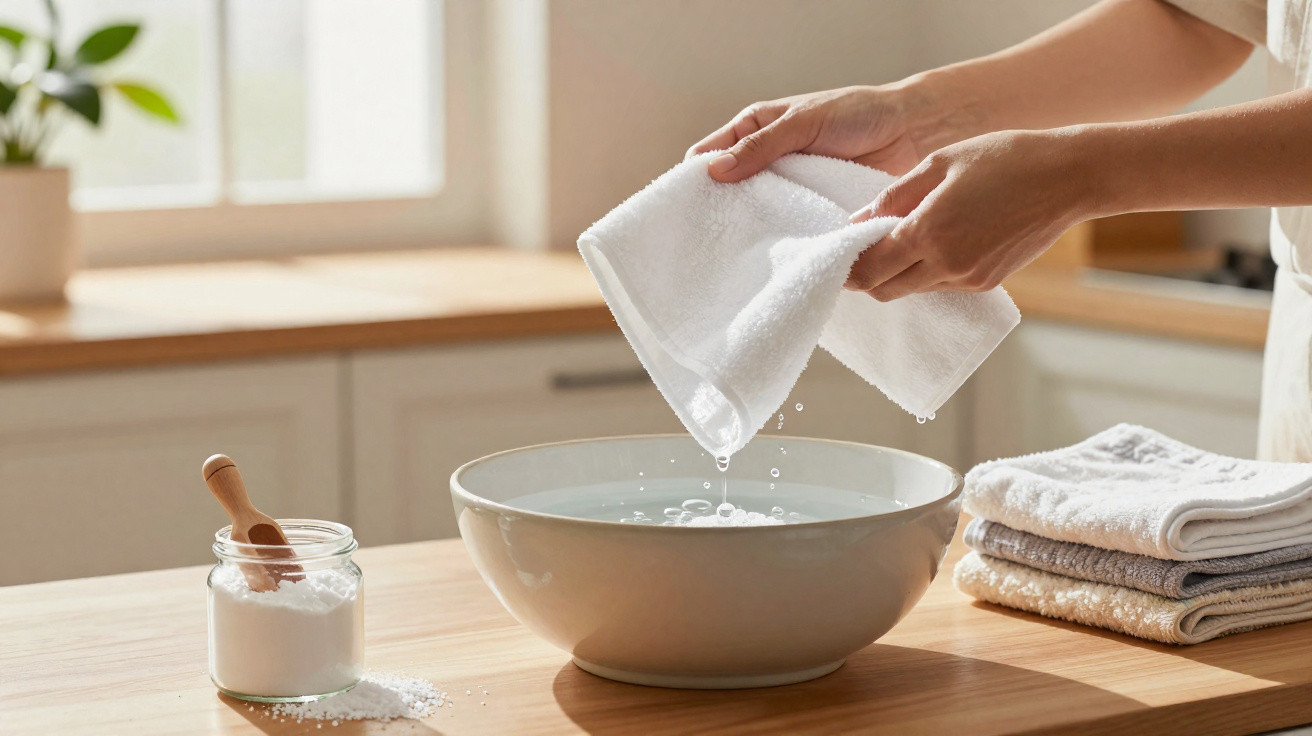
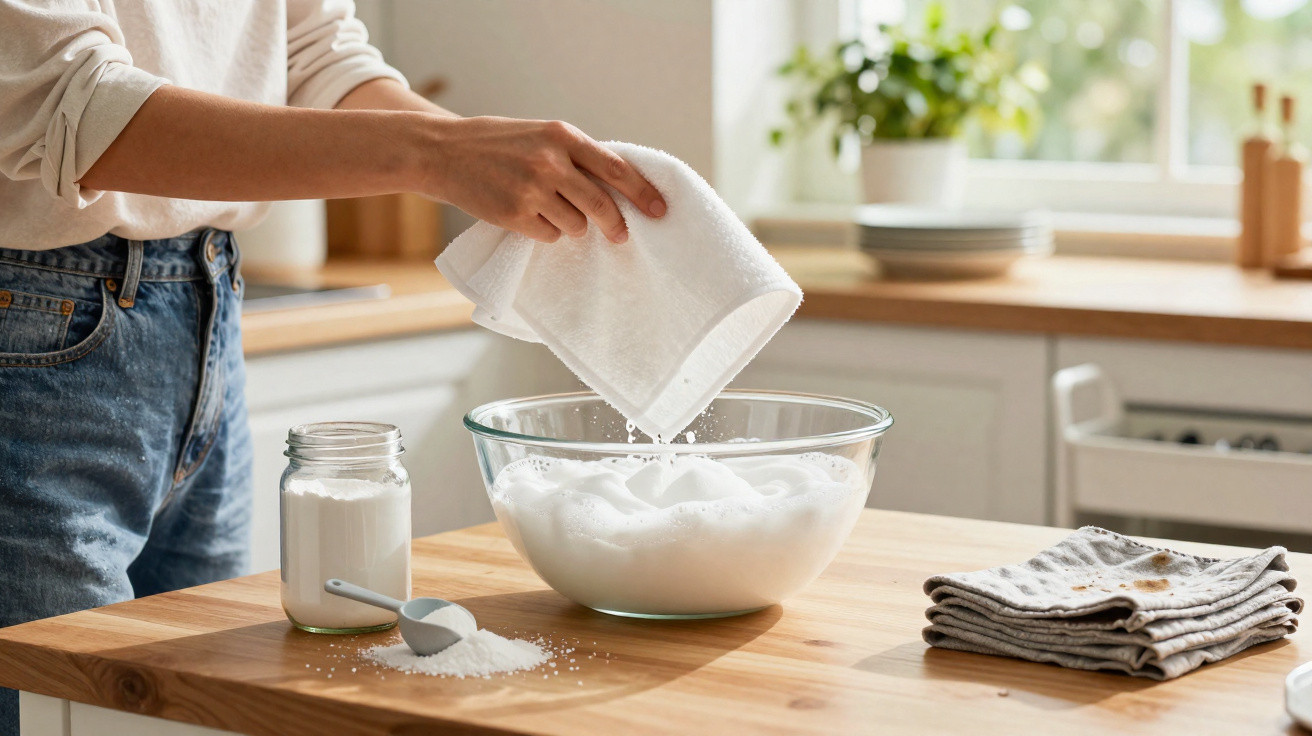
- Grease stains: Sprinkle a little powder directly onto the area, work it in gently with a soft brush, then rinse thoroughly with water.
- Rust marks: Apply a paste made from table vinegar and a little powder, leave it to work for around 15 minutes, then rinse it away without vigorous scrubbing.
It is important to use these treatments only on the affected spot and rinse the area well afterwards. Spreading such mixtures over large areas repeatedly risks creating dull haze again.
Protective measures: how to prevent dull floors effectively
The best clean is the one that never becomes necessary. Porcelain stoneware can withstand a great deal, but it is still sensitive to unsuitable chemicals and mechanical wear.
| Problem | Simple protection tip |
|---|---|
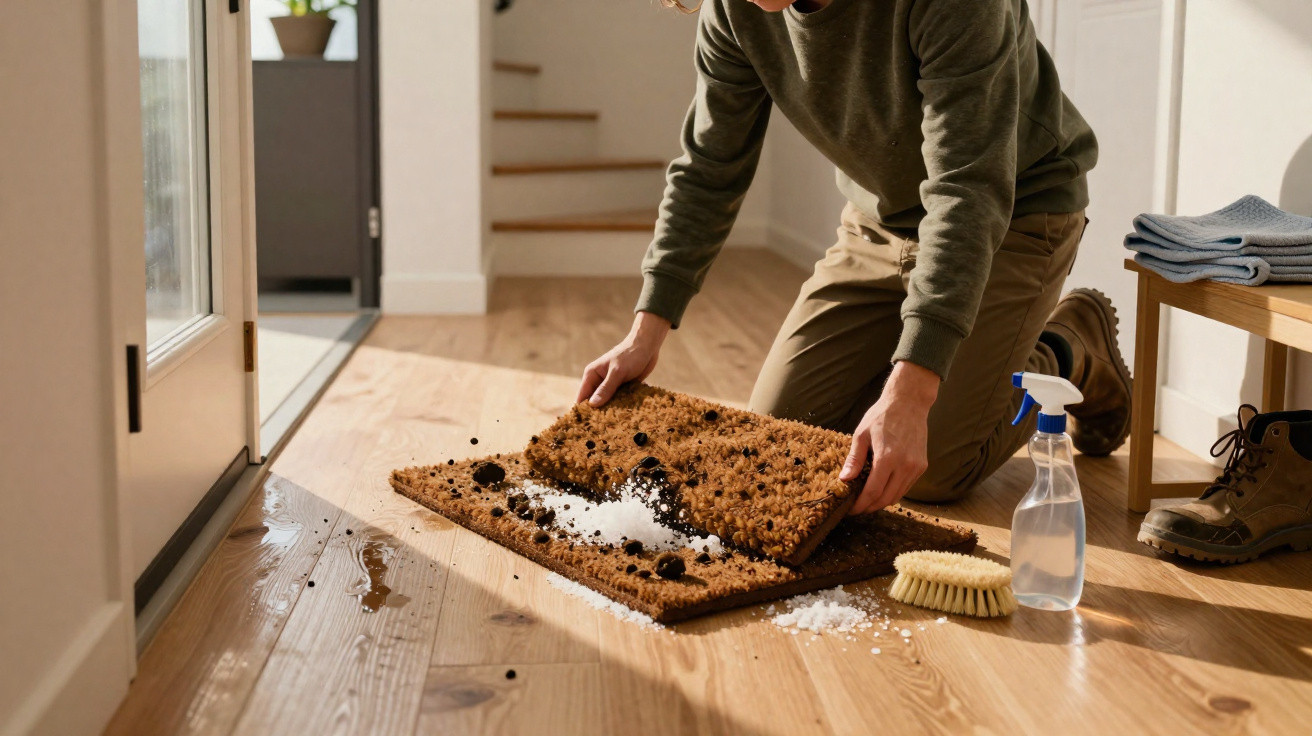
| Sand and small stones brought in from outside | Place a coarse doormat outside and an absorbent mat indoors |
| Chair and table legs | Fit felt pads and replace them regularly |
| Strong household cleaners | Use neutral products only; avoid scouring powders and aggressive bathroom cleaners |
| Water marks after mopping | Always buff dry with a cloth, especially in the kitchen |
Anyone wishing to give their floor an occasional visual lift can work carefully on small sections: put a tiny amount of olive oil or beeswax on a soft cloth, spread it in an extremely thin layer and buff it thoroughly. This creates a warm shine without making the floor slippery - provided the coating truly remains minimal.
How porcelain stoneware is made
A brief look at the material helps explain how cleaning products affect it. Porcelain stoneware is made from ceramic compounds fired to a very high density. It is largely impermeable to water and has an almost glass-like finish. Many tiles also have an additional glaze that creates their characteristic shine.
Harsh cleaners, high acid concentrations and scratching products attack this very thin layer. Once it has been weakened, the floor looks dull, dirt clings more firmly and becomes harder to remove. This is why professionals favour mild, easily controlled methods - such as mopping with diluted table vinegar followed by a rinse with clean water.
When professional help is worthwhile
If the floor remains grey despite adjusted care, or if it has widespread discolouration, a thorough deep clean by a specialist company may be worthwhile. These businesses use dedicated machines and carefully matched cleaning products to remove old layers and residue without causing further damage to the tiles.
Afterwards, the household methods and habits described above can often maintain a fresh appearance for many years. Avoiding aggressive experiments early on and choosing clear, simple recipes instead can extend the lifespan of the floor considerably.



Comments
No comments yet. Be the first to comment!
Leave a Comment