
Your phone keeps flashing, a little rectangle of daylight in your palm, while cold, unyielding white pours down from the ceiling LEDs. You are worn out, yet your mind is still behaving as though it were 3 p.m. in an open-plan office.
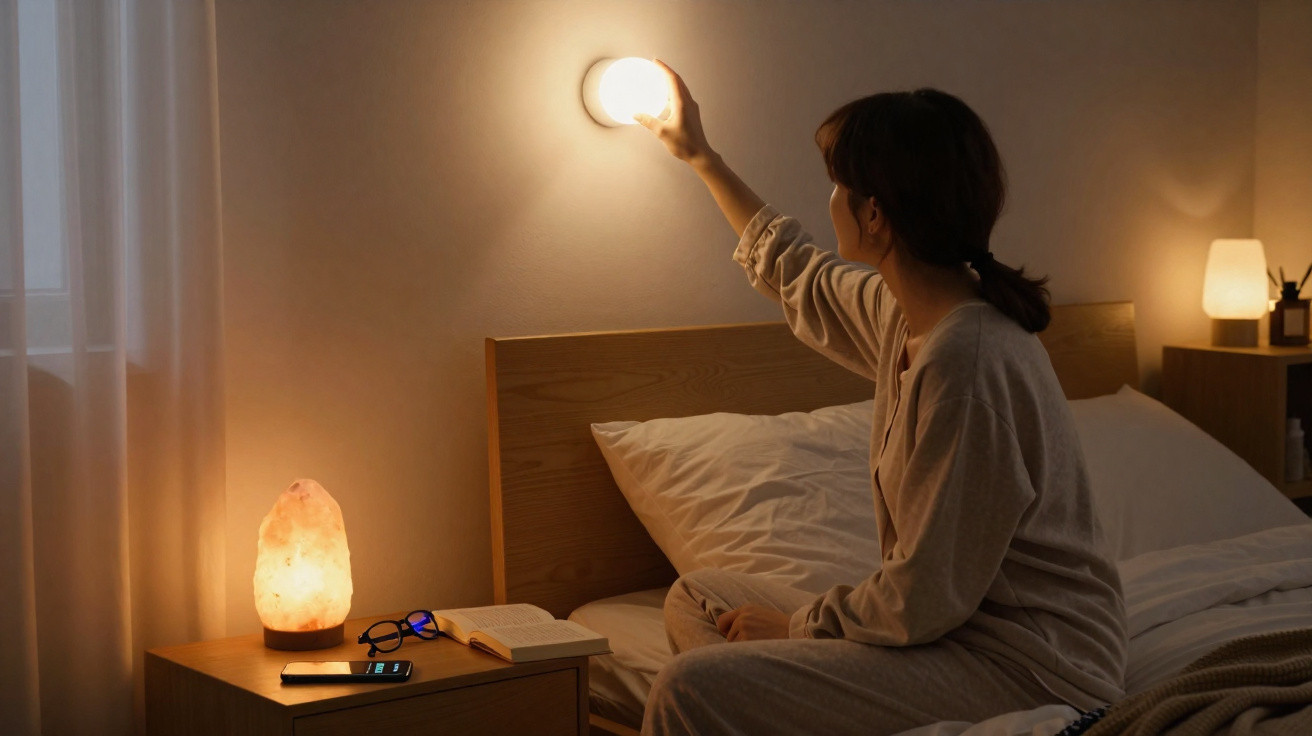
Then the main light is dimmed. A corner lamp clicks on, warm and nearly amber. Shadows lengthen, and the room instantly seems more intimate, quieter and less severe. Your shoulders ease down a few millimetres before you have consciously chosen to relax. You yawn-not from boredom, but because something inside has changed pace.
Only the lighting has altered. Yet that small adjustment can subtly reshape your entire evening.
The quiet cue your brain has been waiting for
Most nights, we go straight from emails to Netflix to doomscrolling beneath the same stark ceiling light used for washing up or organising paperwork. Our bodies receive no indication that the day is drawing to a close. The room remains in “action mode”, and we do too.
Ambient lighting works in the opposite direction. It reduces contrast, softens hard edges and changes a room from a workplace into a cocoon. Rather than a single powerful light overhead, there are small pools of illumination: a lamp beside the sofa, a strip behind the television, a candle flickering on a shelf. The atmosphere becomes richer in the best sense. You are not instructed to unwind; you simply begin moving towards it.
Biologically, this is not merely decoration. Bright, cool light signals to your brain to stay awake, continue producing cortisol and hold back melatonin. Dimmer, warmer light gives a gentler message at the back of your mind: it is getting late, time to slow down. Filling your evenings with muted amber or soft pink tones is not about being fancy. It gives your circadian rhythm a clear, kind reminder.
Picture a compact flat at 8:30 p.m. in late autumn. Streetlights blur across the windows outside. Indoors, a low-standing lamp is the only light on, casting a pool around an armchair. Under-cabinet kitchen lighting glows in a restrained honey shade. The laptop is shut and pushed to one side of the table. A couple scroll through their phones, but speak more quietly, take longer between sentences and move their hands less.
Their timetable has not changed. It is the same working day, commute and inbox. The difference lies in the way the room is lit. This kind of ambient cocoon carries real influence in everyday life. In surveys by sleep foundations, those who say they dim lights and screens during the final hour before bed are often also the people who fall asleep more quickly and wake less often overnight.
We have all experienced the hotel room with flimsy curtains, a punishing overhead fitting and a television throwing blue light over the bed. Your body stays alert, as if you were trying to sleep in an office. Compare that with a guest house featuring low, gentle bedside lamps, perhaps fitted with a warm filament bulb. You settle into that space without requiring any guidance. Your system understands what the light is communicating.
It makes logical sense. Human brains developed under sunsets rather than LED panels. As daylight faded, the light spectrum moved towards warmer shades and overall brightness fell. Melatonin would rise, eyelids would become heavy and the village would fall quiet.
Modern homes interrupt that rhythm. We have fitted miniature suns into our ceilings and leave them blazing until it is time to brush our teeth. Bright white light at 11 p.m. tells us to remain awake. Using ambient lighting is therefore a way to return to that older pattern. Switching off overhead lights and leaving only low, warm points of illumination creates a small artificial sunset in your living room.
That is why “relaxation lighting” can feel unexpectedly effective. It is not only about atmosphere; it is about timing. When a room steadily becomes softer at around 9 p.m., it teaches your body that night is more than a time on the clock-it is an environment. And an environment is more difficult to argue with than an alarm on your phone.
How to make ambient lighting part of your evening ritual
Begin by choosing one point in the evening to connect with a lighting change. Do not choose five actions or build an ideal routine. Pick only one cue. For many people, it comes after dinner: the plate goes in the sink, the overhead lights go off and the lamps come on. It is the point where “doing” quietly becomes “winding down”.
Use two or three warm sources of light rather than one intense one. Put a table lamp in a corner and a floor lamp behind the sofa. You could also tuck an LED strip behind a shelf or television and set it to a muted amber or dim gold. Place light sources at eye height or lower, allowing light to spread sideways instead of falling from above. That single alteration can make a living room resemble a lounge rather than a boardroom.
If you enjoy modest rituals, attach them to lighting: light a candle when you open a book, switch on fairy lights when you put away your phone, or turn on a salt lamp while making herbal tea. These little “switches” are less about spirituality than training your brain to understand: now we do this, and nothing else.
Many people purchase smart bulbs but never alter their settings. The standard white light remains all year, like a permanently lit supermarket aisle. Others wait for the “perfect” lamp while continuing to live beneath the harsh glare of the main fitting. Let’s be honest: nobody really does all of that every day.
When you are exhausted, planning the ideal ambient set-up can seem like another task. Take it slowly instead. One lamp is already a success. If your partner prefers bright light for reading, find a middle ground: keep one focused reading lamp and dim everything else in the room. The goal is not an Instagram-ready living room; it is a nervous system that no longer believes it is midday.
A frequent mistake is making the room too dark too quickly. In a nearly black room, your eyes strain and you may reach for your phone again for “just a bit of light”. Step the brightness down gradually instead: use medium lighting after dinner, then make it softer an hour later. Give your senses a staircase rather than a cliff edge.
“When the light changes, the conversation changes. People drop their shoulders, speak a little slower, and remember to breathe,” confided an interior designer who secretly judges every overhead light she meets.
For busy evenings, approach this through straightforward actions rather than interior-design projects.
- Turn off the ceiling light after 8 p.m., apart from in the bathroom or hallway.
- Fit bulbs labelled 2700K or “warm white” in lamps used during the evening.
- Keep at least one light behind you rather than directly in your face, such as a lamp behind the sofa.
- Choose one “signal” colour for smart bulbs-soft amber or pale peach-to mean: nearly bedtime.
- Connect lighting changes to habits you already have: television off, lamp on, phone in airplane mode.
Let your evenings speak a different language of light
Once you begin experimenting with ambient lighting, evenings may seem unexpectedly longer. This is not because you stay up later, but because the transition is no longer an abrupt cut. There is more texture between “working” and “sleeping”. You gain a small stretch of time when nothing is urgent, supported quietly by the light around you.
That stretch is delicate. One email or one bright kitchen light switched on for “just a second” can send your brain straight back into forward gear. This is why some people regard their lighting as a contract with themselves: after 9 p.m., only soft lamps and no overhead fittings. It is not a punishment. It protects the slow space where the day finally responds to you instead of the reverse.
After a difficult day, you may still find yourself scrolling through TikTok beneath a warm bulb. Even then, though, your eyes may sting less, your jaw may be more relaxed and your heart rate slightly lower. The body follows the story the light is telling, even when the mind is elsewhere. That is the quiet strength of this approach: it can still help without perfect discipline.
Ambient light will not resolve insomnia caused by severe anxiety, chronic pain or shift work. No lamp can bargain with a 4 a.m. alarm. But many of us spend every night working against our own biology under unsuitable bulbs. Changing that does not require a complete lifestyle overhaul. It only takes a few switches, used at the right time and in the right corners.
On a screen, this might sound like one more lifestyle improvement. In practice, it is far more modest: an inexpensive yellow-toned bulb, a second-hand lamp or perhaps a timer plug. It is a small act of resistance against the belief that every room must be bright enough to film an advert. It is also a quiet invitation to your brain: perhaps tonight, we can arrive a little more gently.
Ambient lighting is more about consent than appearance. It quietly asks your body: ready to call it a day? On some nights, the answer will remain no. Emails, children, life. On others, that warm halo in the corner will feel like a hand resting on your shoulder, leading you towards bed without saying a word.
The approach exists in those details: when the light changes, how many sources you use, which colour you choose and how it reflects from the walls. It is an art, but also a set of simple, almost ordinary choices that build into something unexpectedly tender. On nights when sleep comes more easily, you may not credit the lamps. When it does not, you may suddenly notice the severity of the ceiling light and turn it off with a small, tired laugh.
We have all known the moment when party lights come on at the end of the night and everything suddenly feels too loud and too real. Evening ambient light is its opposite: a gradual dimmer for your day, an exit that does not slam shut. It is not magic or a cure-all. It is simply a way to tell yourself, through the quiet language of shadows and glow: you are allowed to unwind now.
| Key point | Detail | Benefit for the reader |
|---|---|---|
| Gentle signal for the brain | Warm, dim lighting in the evening encourages melatonin and relaxation | Understand why you feel calmer and more ready for sleep |
| A simple, practical ritual | Turn off the ceiling light after dinner and switch on 2–3 warm lamps | Gain an easy method to use without changing your entire daily routine |
| Small changes that build up | Use low lamps, a recurring colour and gradual brightness levels | Change the evening atmosphere and improve sleep quality over time |
FAQ:
- What colour light is best in the evening? Choose warm white at around 2700K or below. Amber, soft gold and even a very gentle pink are better than cool white or blue shades for signalling relaxation.
- Do I need smart bulbs to create ambient lighting? No. A couple of affordable warm bulbs in floor or table lamps can already make a major difference. Smart bulbs simply make timing and colour easier to automate.
- How long before bed should I dim the lights? Aim for at least 60 minutes of softer, warmer illumination, or 90 minutes if you regularly struggle to fall asleep. Treat it as a runway, not a switch.
- Can I still watch TV with ambient lighting? Yes, but use a gentle backlight behind or close to the screen and avoid watching in complete darkness. Reduce the television brightness slightly so it does not glare into your eyes.
- What if my partner likes bright lights at night? Create zones: use one focused bright lamp for them and softer lamps throughout the rest of the room. Frame it as a sleep-quality experiment rather than a disagreement over taste.






Comments
No comments yet. Be the first to comment!
Leave a Comment