
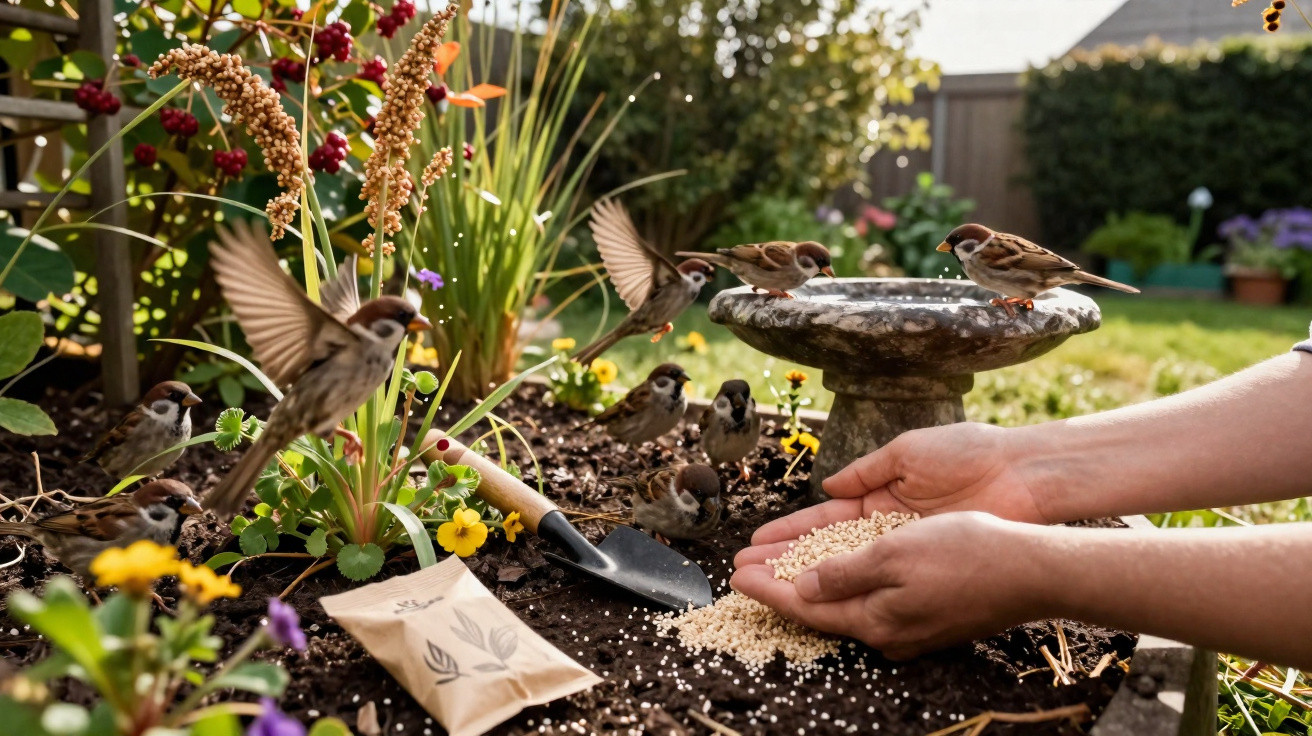
Many garden owners would like to see more birds right outside their homes – not only because their song is soothing, but also because they eat insects and help support the natural balance. One particular plant is considered a quiet favourite among bird enthusiasts: it provides food, attracts numerous species and even copes with challenging soils. Pair it with a few simple measures and you can create a small paradise for tits, finches, blackbirds and more.
The unassuming wonder plant: why birds love white millet
The understated star is white millet. Although this cereal crop is best known as an ingredient in pet bird feed, it is also exceptionally well suited to growing in the garden.
“White millet provides birds with energy-rich food for almost the entire year – right where they need it: in your garden.”
White millet is so appealing to birds for several reasons:
- Nutrient-rich: Its grains supply plenty of energy, making them ideal in winter and throughout the breeding season.
- Drought-tolerant: It copes far better with prolonged dry spells than many other plants.
- Undemanding in terms of soil: It will grow in relatively poor or slightly alkaline soils where other species struggle.
- Dense seed heads: These give birds both food and a little cover while they feed.
Sow white millet in a bed or a corner of the lawn and you will soon notice a change in the number of birds visiting. Finches, sparrows and other seed-eating birds arrive in groups once the seeds ripen. If the stalks are left in place, the birds can benefit from them well into winter.
How to grow white millet properly in the garden
The good news is that white millet is far less demanding than many ornamental plants that require large amounts of water and fertiliser. A few basic guidelines are enough to ensure it grows reliably.
Position and soil
- Light: Choose a site with as much sun as possible; partial shade is still acceptable.
- Soil: Loose soil that is fairly low to moderately rich in nutrients; slightly alkaline conditions are not a problem.
- Avoid waterlogging: The plant does not tolerate permanently wet ground.
Sowing and care
- Sowing time: From mid-April to May, once the soil has warmed up slightly.
- Sowing: Scatter the seeds thinly, rake them in lightly and water them.
- Watering: Water thoroughly only during germination and in periods of persistent drought.
- Fertilising: This is generally unnecessary, particularly in garden soil that has already been cultivated.
- Harvesting for birds: Do not harvest anything – simply leave the plants until birds have eaten the seed heads clean.
If you have sufficient room, create a proper “bird grain field”: a small strip or corner sown densely. In smaller gardens, island beds or mixed planting with flowers and perennials are also enough.
More than millet: plants that attract birds like a magnet
A garden becomes even more appealing when it offers not only grains but also a range of food sources and hiding places across the year. A combination of shrubs, perennials and climbing plants ensures that many different bird species can find what they need.
Berry shrubs as a natural feeding station
- Cotoneaster: Bright red berries in winter, popular with blackbirds and thrushes.
- Elder: Its flowers attract insects, while its berries provide abundant food in late summer and autumn.
- Firethorn (Pyracantha): Yellow, orange or red berries that are quickly eaten during cold weather.
- Holly (Ilex): Evergreen with dense branches and red berries that form an important winter food source.
Plants with sought-after seeds
- Sunflower: A classic at every feeding spot, loved by tits, finches and sparrows.
- Amaranth: Produces countless tiny seeds that many wild birds readily eat.
Nectar and insect magnets
Attracting insects automatically draws insect-eating birds such as robins and wagtails.
- Butterfly bush (Buddleja): Famous for attracting butterflies, as well as insects that birds hunt.
- Lavender: Easy to maintain, strongly scented and attractive to bees and solitary bees.
- Coneflower (Echinacea): First an insect-friendly plant, then its dried seed heads provide food for birds.
Ground cover and climbers for shelter
- Ivy: Offers cover throughout the year, flowers in late summer and berries in winter.
- Virginia creeper: Provides screening, climbing support and occasional berries.
Habitat rather than a show garden: turning your plot into a bird refuge
Plants alone are not enough. Birds also require safe nesting sites, water and areas where people do not constantly interfere.
“The less ‘perfect’ a garden looks, the more comfortable many animal species feel – from wrens to hedgehogs.”
Let wild corners develop
One of the most effective measures may sound counterintuitive to many gardeners: simply leave certain areas to their own devices.
- Leave grasses standing instead of cutting them back completely.
- Let piles of leaves remain, as insects and small mammals hide in them.
- Keep old perennials standing well into winter because their seed heads provide food.
These areas do not attract birds alone. Hedgehogs, beetles, solitary bees and other beneficial creatures also thrive there, helping to stabilise the garden’s ecological balance.
Dense hedges instead of sterile fences
Planting dense hedges along the boundary of your plot brings several advantages at once:
- Privacy screening for people and animals.
- Nesting places among the branches, well protected from cats and birds of prey.
- Wind protection, improving conditions for many plants.
Native species such as hornbeam, privet, hawthorn and blackthorn are especially suitable. They provide not only shelter but often berries or flowers as well.
Avoid pesticides completely
Anyone spraying poisons against insects or “weeds” removes birds’ most important food source and harms many other animals. Residues enter the soil, rainwater and food chain. A wildlife-friendly garden does without chemical products altogether and instead relies on:
- Crop rotation in the vegetable bed
- Robust varieties rather than delicate exotic plants
- Manual work when pest infestations are severe
- Encouraging beneficial insects such as ladybirds and parasitic wasps
No water, no birds: small oases for thirsty visitors
Food is only one part of the equation. Wild birds, especially in summer, are finding clean water increasingly hard to come by. A simple water source can therefore be almost as attractive as food.
- Shallow bowls: For drinking and bathing; change the water regularly.
- A bird bath on a stand: Provides some protection from cats.
- A small pond: Creates habitat for insects, amphibians and birds at the same time.
A combination is ideal: white millet as a food source, a water spot beside it and a hedge or shrub behind it as a retreat. This makes birds feel safe and encourages them to return every day.
Why a bird-friendly garden benefits everyone
A garden that attracts many bird species is not merely pleasant to look at. It strengthens the entire ecosystem around the home. Birds control insect populations, spread seeds, loosen the soil through their activity and create a natural dynamism that is missing from many sterile gardens.
Start with white millet, then gradually add berry shrubs, flowering plants, water sources and wild areas, and even a small terraced-house plot can become a lively mini-biotope. Children can experience nature right on the doorstep, neighbours can enjoy the birdsong – and, at the same time, you make a practical contribution to protecting biodiversity.






Comments
No comments yet. Be the first to comment!
Leave a Comment