
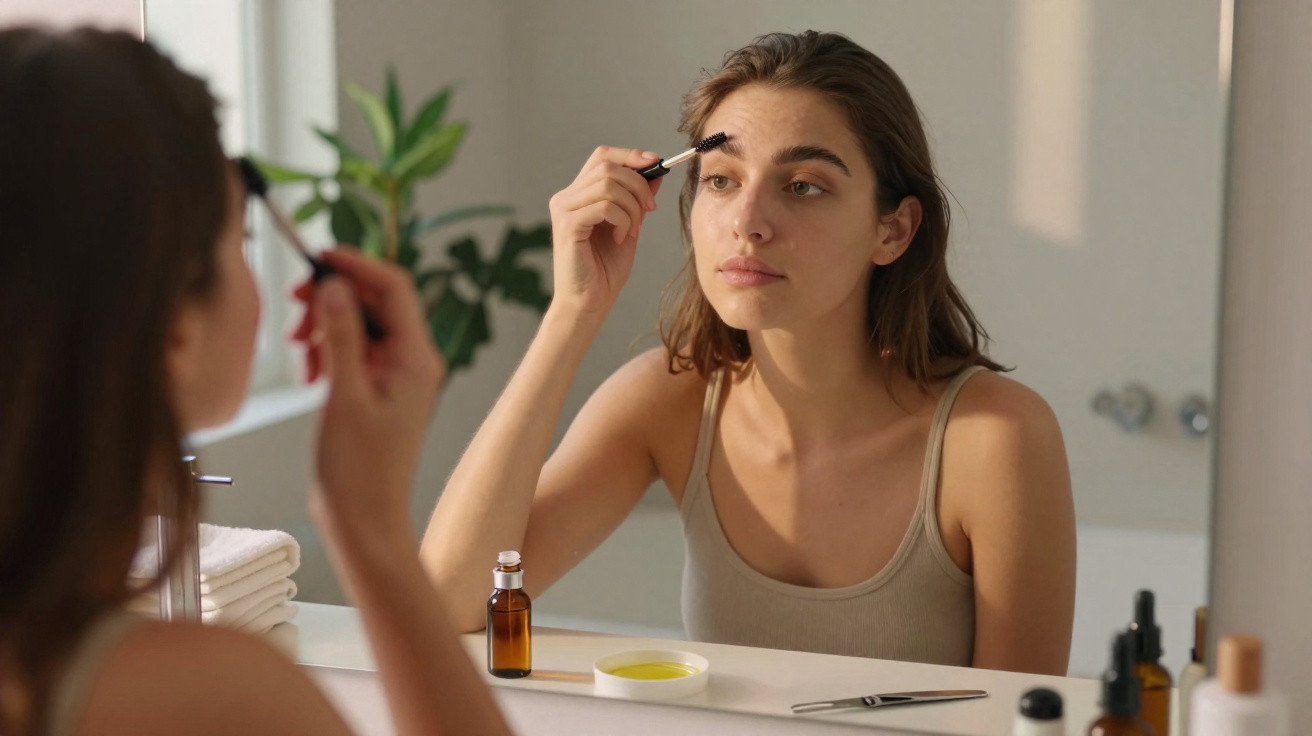
Many people only realise in photographs or under harsh bathroom lighting how strongly their brows shape their overall appearance. Anyone looking to move on from the trend for ultra-fine, heavily overplucked or bleached eyebrows can regain noticeably more fullness within a few weeks by following a handful of consistent steps – without a salon, microblading or costly treatments.
Why so many people suddenly want fuller eyebrows again
Beauty trends move in cycles: after extra-wide “Boy Brows”, pencil-thin brows and bleached arches returned to fashion on TikTok and Instagram. Celebrities such as Kendall Jenner and Dua Lipa demonstrated how dramatically the face changes when the brows nearly disappear. Yet this look works in everyday life for only a small number of people.
After a few months, many notice that their brows lack fullness, their gaze looks less defined and their face loses contour. It becomes particularly tricky when brows have been repeatedly plucked or waxed for years. Eventually, some hair follicles stop producing hair, leaving the brow sparser than it once was.
“Anyone who wants naturally fuller eyebrows again needs one thing above all: consistent care and a firm no to tweezers – for at least several weeks.”
The encouraging news is that, in many cases, follicles respond well once they are given a break and cared for regularly. Four practical habits can help get the process moving.
Take a longer break from tweezers: let your eyebrows grow, however frustrating it feels
The most important step is also the least comfortable: give your brows time. In practice, that means no daily ‘tidying-up session’ in front of the mirror.
How long should the tweezing break last?
- Avoid extensive plucking for at least 6 to 8 weeks.
- Remove only hairs growing clearly outside the natural brow line.
- Stand a little further back from the mirror so you do not become fixated on every tiny hair.
Eyebrow growth cycles usually last between four and twelve weeks. If you ‘correct’ them every other day, you will keep removing hairs that have only just started to emerge. The brow will therefore never appear denser.
Setting a clear target can help: photograph your eyebrows from the front and side at the start. Repeat this after four and eight weeks. That way, you can see the progress even if the in-between stage feels messy in daily life.
Manage the shape differently for now
If uneven areas bother you, rely on shaping techniques rather than tweezers:
- Clear brow gel keeps stray hairs in place.
- A lightly covering concealer beneath the brow arch can visually disguise overgrown hairs.
- A fine brow pencil defines the top edge, so the eye area stays clear.
This keeps your face looking more structured without creating fresh gaps.
Daily brushing: a small movement with a big effect
The second tool is straightforward: brush your eyebrows every day. It may sound insignificant, but it delivers several benefits at once.
How to brush your eyebrows correctly
Use a clean spoolie brush – an eyebrow brush or an old mascara wand that has been thoroughly cleaned:
- Brush the hairs vertically upwards first.
- Then sweep them slightly outwards, following their direction of growth.
- Spend 15 to 20 seconds on each eyebrow.
This movement stimulates microcirculation. In other words, blood flow to the skin around the follicles increases, allowing nutrients to reach them more effectively. At the same time, arranging every hair this way makes the brow look naturally fuller, even without any product.
“Regular brushing also reveals where there are genuine gaps and where unbrushed hairs merely create the illusion that there is ‘nothing there’.”
Many people are surprised to find that the brow they thought was ‘missing’ was simply poorly shaped. A proper brushing routine can make some gaps look smaller straight away.
Targeted eyebrow care: serums, peptides and oils for stronger hairs
The third step is an evening care ritual. This is worth investing in, as brow hairs respond well to selected ingredients.
Which products really help?
| Product type | Effect | Application tip |
|---|---|---|
| Peptide serum | Strengthens the hair follicle and may improve density | Apply a thin layer directly along the brow line using the applicator |
| Conditioning brow gel | Groups, conditions and protects hairs during the day | Work it in during the morning after brushing |
| Plant oil, such as castor oil | Nourishes hair and skin and offers a slight thickening effect | Apply a tiny drop with a cotton bud; keep it out of the eye |
The key is not to use everything at once. Pick one or two products and stick with them. Care takes time: noticeable changes often appear only after six to ten weeks of consistent use.
How to add care to your evening routine
- Remove your make-up and cleanse your face.
- Apply your skincare, avoiding the eye contour area.
- Finally, massage serum or oil into the clean eyebrow area.
Gentle circular motions further support circulation. Avoid vigorous rubbing, as this can irritate the skin unnecessarily.
Hair-by-hair eyebrow make-up: instantly denser without looking overdone
While you wait for your eyebrows to regrow, skilful make-up can rescue the overall look. The aim is a result that does not appear drawn on, even up close.
The right technique for natural fullness
Rather than filling in the entire brow, use lots of fine, short strokes:
- Choose an ultra-fine brow pencil or a dedicated brow pen with a felt tip.
- Draw short lines in the direction of growth, concentrating mainly on gaps.
- Emphasise the upper brow edge rather than the lower one – this lifts the gaze.
Finish by setting everything with tinted or clear gel. The gel brushes fine hairs upwards and makes the hair-by-hair effect more convincing.
“Eyebrow make-up is like a trial run: you can test how fuller, wider or more defined shapes look on you without sacrificing a single hair.”
Anyone tempted by trend looks such as ultra-light or very thin eyebrows can recreate them with make-up instead of bleaching or plucking radically. This keeps the real brow intact.
Risks, limits and when to see a professional
Not every brow can be fully rebuilt. Those who have plucked or waxed very aggressively for years may have caused irreversible damage to the follicles. Some areas may then no longer grow back completely.
If you have visible bald patches, it is worth booking an appointment with a dermatologist. Conditions such as alopecia areata, hormonal imbalances or significant nutrient deficiencies can sometimes cause eyebrow hair loss.
Typical warning signs include:
- Sudden hair loss on one side only
- Itchy, red or flaky skin around the eyebrows
- Marked thinning within a few weeks despite no change in your tweezing habits
In these situations, medical treatment may be necessary, ranging from anti-inflammatory creams to prescription serums. Cosmetic techniques alone will not be enough.
How nutrients, lifestyle and hormonal fluctuations affect your eyebrows
Eyebrows can be just as sensitive as the hair on your head. Iron deficiency, severe crash diets, ongoing stress or an underactive thyroid often show up in facial hair too.
A blood test with your GP can establish whether levels of iron, zinc, vitamin D or B vitamins are too low. Once a deficiency is corrected, hair growth often returns to normal after a few months, including in the eyebrows.
The hair cycle also changes around puberty, pregnancy, breastfeeding and menopause. Plucking too radically during these phases risks leaving the brow stuck in a hormonal ‘conservation phase’. The return to fuller brows can then take even longer.
A practical example: what your 8-week eyebrow plan could look like
To make the theory more tangible, here is a realistic outline:
- Weeks 1–2: Put the tweezers away, brush daily and apply a conditioning serum in the evening. Expect some mild frustration with the ‘untidy’ stage.
- Weeks 3–4: The first new hairs appear. Remove only strays far below or above the brow line. Camouflage gaps with a fine pencil.
- Weeks 5–6: The shape becomes softer and the brow gains visibly more substance. Continue the care routine and, if needed, use gel during the day.
- Weeks 7–8: This is the time for a gentle reshaping, ideally with professional advice at a brow studio and without excessive plucking.
Anyone who follows this plan twice a year, for instance after summer and before winter, can support their eyebrow density over the long term.
Why patience with fuller eyebrows really pays off
Compared with lash lifting, microblading or brow lamination, brushing, serums and make-up may seem rather unspectacular. However, they offer one major advantage: your natural brow sets the pace and stays healthy.
Each of these four habits – taking a break from hair removal, daily brushing, a care routine and hair-by-hair make-up – has a modest effect on its own. Together, after several weeks, they create exactly what many people want: a softer, fuller line that frames the eyes without looking made up.






Comments
No comments yet. Be the first to comment!
Leave a Comment