
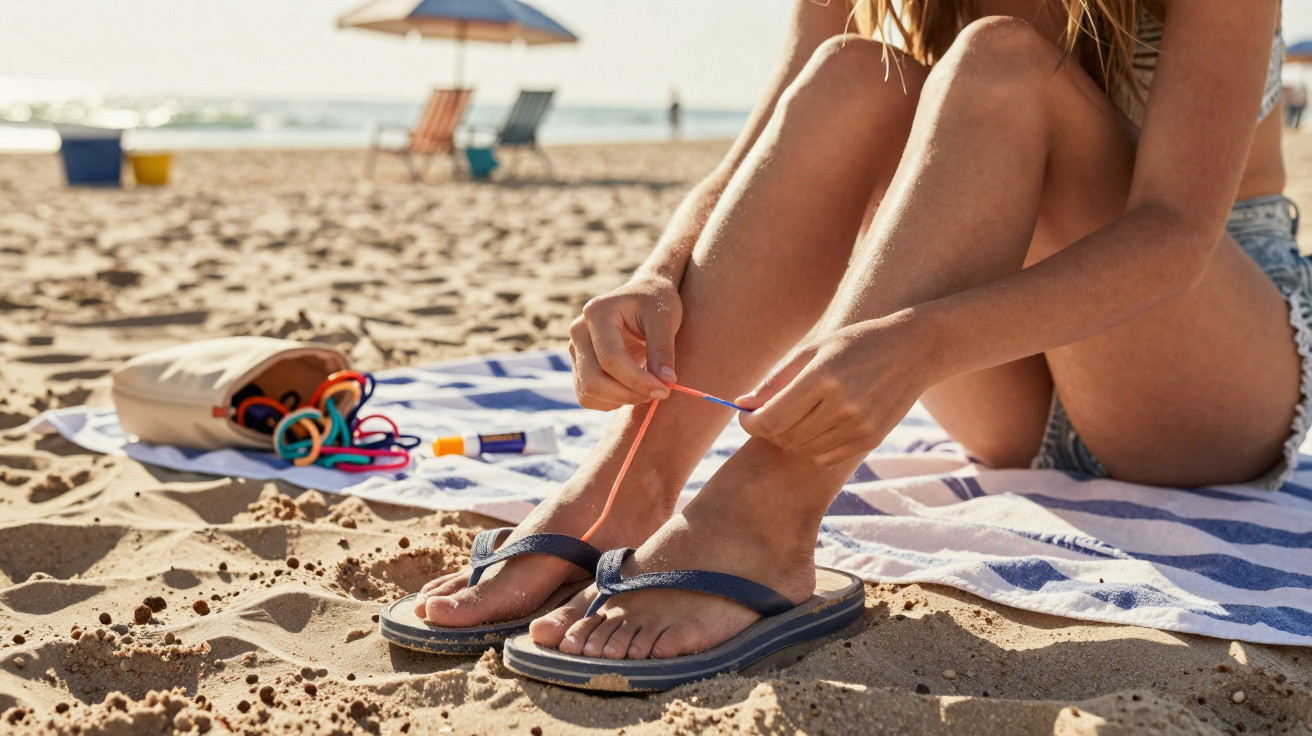
Walking by the sea calls for practical, comfortable footwear, but unexpected problems are common on holiday. If a strap comes loose, ordinary hair elastics provide a quick, effective way to rescue your favourite flip-flops.
How do hair elastics save your flip-flops at the beach?
Intense heat and constant moisture weaken the footwear’s rubber, making the structure more likely to break without warning. By securing small, flexible accessories to the underside of the sole, you create a strong stopper that prevents the central plug from slipping out.
This immediate adjustment restores the support needed to keep walking over hot sand without pain. As a temporary measure, it stops the footwear from becoming unusable, so you can enjoy leisure time without having to cut short your anticipated seaside trip.
What is the secret to never feeling tired feet at the beach again?
Choosing the right footwear for sand means looking for breathable materials and anatomical support that prevents discomfort from the very first steps… Read more
Why do flip-flop straps break during outings?
Body weight and the repeated effort of walking on uneven surfaces place excessive strain on plastic straps. This mechanical stress widens the hole in the sole, causing the support to come loose and creating considerable discomfort with every step.
Fine grains of sand can also work their way between the components, increasing friction and wearing down the material quickly. Spotting these signs early makes it easier to carry out an emergency repair before permanent damage occurs.
Below is a video from the 5-Minute Crafts YouTube channel demonstrating clever everyday tricks:
What are the best tricks for repairing footwear on the spot?
Looping an elastic band around the plug beneath the sole creates a secure yet flexible fastening. This straightforward method stops the rubber from coming out again, delivering instant stability and an excellent result without requiring tools.
Another highly useful option is to weave the elastics between the attachment points to reinforce the entire support structure. This spreads the pressure of each step evenly, offering greater safety and helping to maintain durability.
Practical Beach Kit
Items to save your outing
Keep these basic supplies close by to deal with problems quickly:
- Strong hair elastics for immediate strap repairs;
- Adhesive blister plasters to ease direct friction against the skin;
- A wet wipe to remove built-up sand residue.
How can uncomfortable friction on your feet be prevented?
Constant contact between synthetic straps and damp skin often causes redness and painful irritation while walking. Covering rough sections with soft fabric or rubberised fasteners reduces the direct impact and protects the affected area.
Keeping your feet clean and dry whenever you come out of the sea also reduces friction caused by accumulated sediment. Using small physical barriers provides greater well-being and makes your beach day a much more pleasant experience.
A few simple measures can help keep your footwear in perfect working condition:
- Rinse sandals in fresh water to remove salt and sand;
- Store pairs in well-ventilated places away from excessive sunlight;
- Carry spare elastics in your bag to deal with any unexpected issue.
What extra care ensures greater comfort during summer?
Choosing models with an anatomical shape and quality materials makes a considerable difference to the health of the lower limbs. Checking the overall condition of the straps before leaving home prevents unpleasant surprises and ensures complete peace of mind at any destination.
With affordable solutions and a little creativity, minor issues no longer have to disrupt relaxing moments in the sun. Adopting simple preventative habits protects your footwear and ensures a summer routine full of comfort and plenty of practicality.



Comments
No comments yet. Be the first to comment!
Leave a Comment