
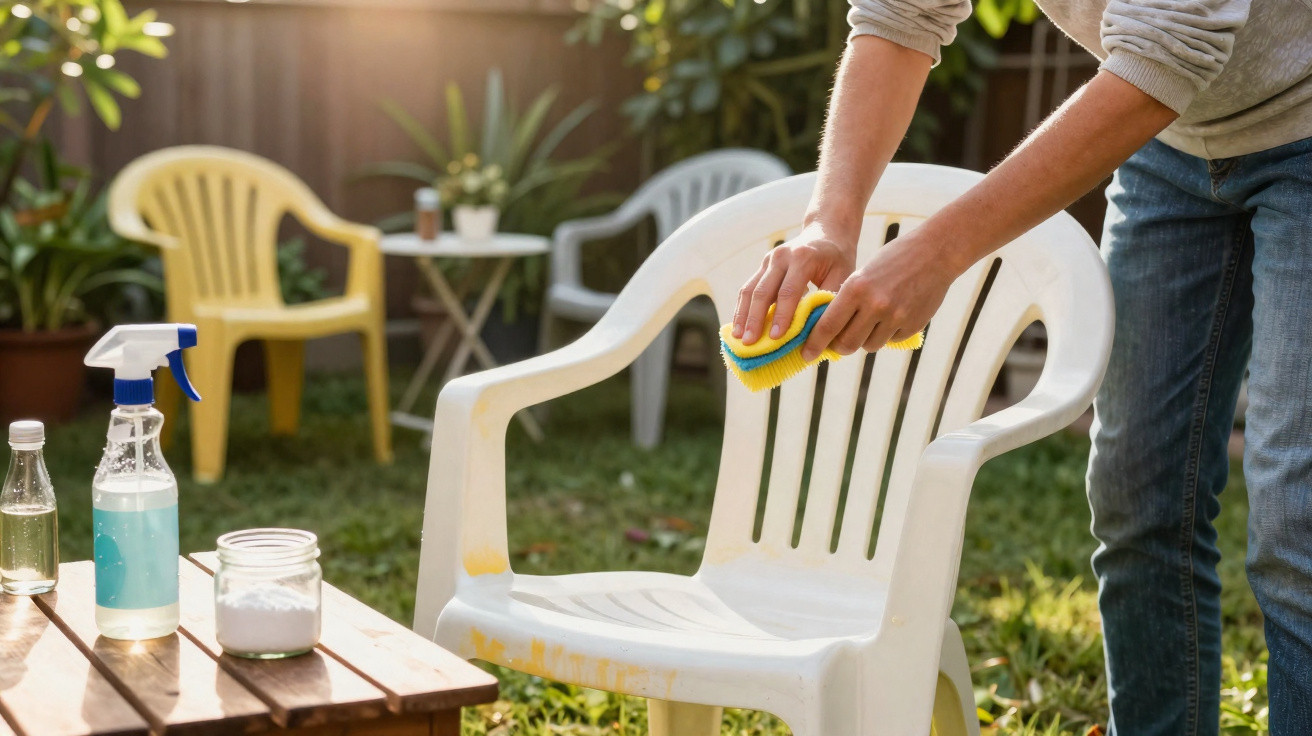
When the first spring sunshine draws you outdoors, the terrace can deliver an unwelcome surprise: plastic furniture that was once white may now look grey, dull and old.
Winter has left its mark, along with the sun, rain and dust of the previous season. The table is stained, the chairs have a grey film and the white has taken on a yellowish tone. Many people immediately consider buying replacements – yet a simple household remedy mix can often remedy a large proportion of this visible damage remarkably well.
Why plastic garden furniture turns yellow and grey so quickly
Outdoor plastic furniture is regarded as easy to maintain. A quick wipe and it is clean – or so it seems. In practice, several factors are constantly working against the material.
UV radiation attacks the surface, making it more brittle, microscopically rougher and therefore more porous. Dust, pollen and dirt can settle far more easily as a result, eventually becoming difficult to remove with plain water alone. Water also leaves limescale and dirt marks that can appear as a grey film.
This is especially noticeable on white PVC chairs and tables, which can gradually turn cream or yellow. Coloured furniture is more likely to lose its intensity, appearing faded and blotchy. Anyone who does not choose furniture with UV protection built into its surface may notice this ageing process after only a few summers.
Other materials age too, simply in different ways: metal may rust, wood requires regular oiling and sanding, while woven furniture is sensitive to prolonged rain. Plastic, by comparison, can usually be refreshed surprisingly effectively – provided it is not broken or severely cracked.
The grey film is often not permanent damage, but a combination of a worn surface and stubborn deposits – and that is exactly where the household remedy mix comes in.
Step one: thorough basic cleaning rather than a quick wipe
Before using the special mix, the furniture needs a proper initial clean. Even the best product can do little when loose dust or cobwebs are still present.
- Use a soft brush or hand brush to remove coarse dirt, leaves and webs.
- Fill a bucket with warm water and a little washing-up liquid.
- Wipe all surfaces with a soft cloth or sponge, including the undersides and backrests.
- Rinse with clean water so that no detergent film remains.
This first stage may seem unremarkable, but it removes grease, bird droppings, blossom dust and ordinary garden grime. Only then can the actual “refresher” show what it can do.
The household remedy mix: restoring shine to yellowed plastic
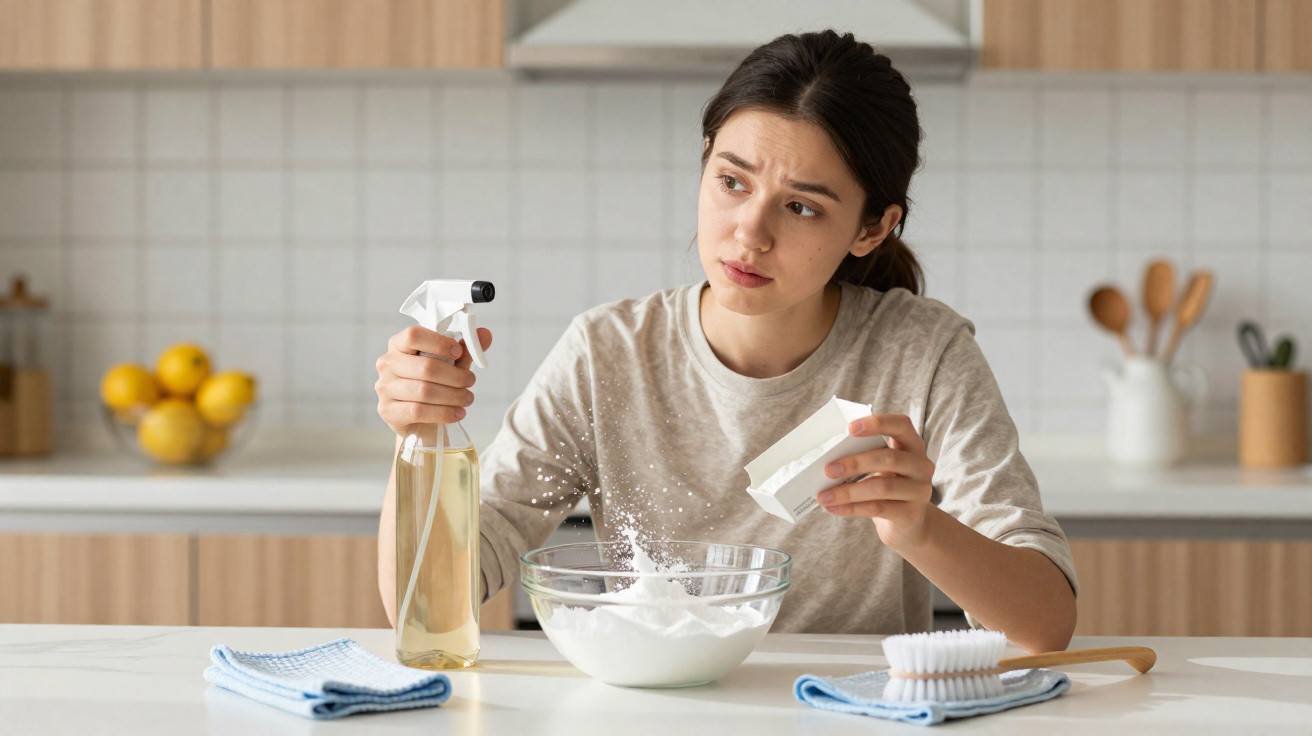
You do not need specialist cleaners from a DIY shop for the second stage. In most cases, items already found in many cupboards are enough: warm water, ordinary household vinegar, and bicarbonate of soda or baking powder based on sodium bicarbonate.
Recipe for the refreshing spray
The mix is most practical in a spray bottle. This allows it to be spread evenly without dripping excessively. Add the following to the bottle:
- 500 millilitres of warm water
- 1 tablespoon of colourless household vinegar, such as clear table vinegar
- 2 tablespoons of bicarbonate of soda or pure baking soda
- a small squirt of washing-up liquid
The order is not particularly important, but do not fill the bottle right to the top, as the mixture may foam slightly when shaken. Swirl it briefly until everything is combined.
Using it on garden furniture
- Spray the mix generously over seat surfaces, backrests and table tops.
- Work it in using a soft sponge or microfibre cloth, applying it in strokes.
- Leave the solution on for several minutes so that the vinegar and bicarbonate of soda can work on the deposits.
- Then rinse thoroughly with plenty of water, ideally using a garden hose.
- Wipe over with a dry cloth to prevent water marks.
Many users report that the typical grey film appears noticeably reduced after the first treatment. A second round may be worthwhile for heavily weathered furniture.
The combination of vinegar, bicarbonate of soda and a little washing-up liquid loosens limescale, greasy marks and deeply embedded dirt from the worn plastic surface – a mild yet surprisingly effective “exfoliating” effect for plastic.
What to do with stubborn stains and extremely yellowed chairs
Some stains do not give up so easily: sun cream, barbecue grease, blossom resin and old dirt marks can look almost baked in. An additional helper can be useful here.
For white plastic furniture, a cleaning stone, often sold as a scrubbing stone, is suitable. It usually contains mineral cleaning particles, a little soap and glycerine. It can be used to lightly polish the surface.
Important: always work with a damp sponge, use only a small amount of product and test it first in an inconspicuous area. Then clean gently in circular movements without pressing too hard. On coloured plastic, such a stone may alter the colour slightly, so test even more carefully.
| Problem | Possible solution |
|---|---|
| Light grey film | Apply the household remedy mix once and rinse well |
| Heavy yellowing | Clean twice; if necessary, use a cleaning stone on white surfaces |
| Individual dark stains | Treat specifically with a cleaning stone or cream cleaner, very carefully |
| Dull-looking surface | Fine sandpaper, around 120–240 grit, followed by specialist paint for plastic |
When repair is worthwhile – and when the chair must go in the bin
However fond you may be of old terrace chairs, one factor is crucial: safety. Before beginning the cleaning process, inspect every seat briefly.
- Are there visible cracks in the frame or legs?
- Are there clear breaks in the armrests or seat?
- Does the plastic seem very brittle and dent easily?
In these cases, putting it in the bin is usually the only sensible option. A broken chair can give way under load without warning – an unnecessary risk, especially for guests or children.
Purely cosmetic damage is different: scratches, slightly uneven colour and dull areas can often be concealed effectively. Those willing to put in a little more effort can lightly sand the affected areas with fine sandpaper and then apply suitable specialist paint for plastic. This creates a more even finish, often with added protection against UV radiation.
How to prevent fresh yellowing and a grey film
After this more intensive rescue job, the “new old” garden chair should of course continue looking good for as long as possible. A few habits can slow the ageing process considerably.
- Look for UV-protected models when buying furniture.
- Store it somewhere dry and protected from light during winter, such as a cellar, garage or beneath a high-quality cover.
- Wipe it briefly once a month with warm washing-up water, rather than waiting years for a major clean.
- Do not use oils or greasy polishes – over time, they can make plastic softer and more prone to staining.
Regular small-scale cleaning makes the biggest difference. Wiping down the table after barbecue season or drying a chair with a cloth after a pollen shower prevents stubborn layers from building up in the first place.
How vinegar and bicarbonate of soda work – and their limits
Vinegar is mildly acidic and dissolves limescale and mineral deposits. Bicarbonate of soda adds a gentle abrasive effect and tackles greasy residues. Combined with a little washing-up liquid, they create an all-purpose cleaner that deals with many typical marks on plastic surfaces without being overly harsh.
Even so, one point remains clear: severely aged plastic cannot be returned to its original state. If the material itself has become grey, brittle or thin, even the best mix can only improve its appearance. Anyone who wonders every year whether the old table is still “fit for company” should consider investing in high-quality, UV-stable furniture over the medium term – an investment that pays off over many years.
For anyone about to head to the shed and bring dusty chairs back into the light, a bucket of warm water, the small household remedy mix and a little elbow grease are often enough to turn a supposedly bulky-waste set into perfectly presentable summer furniture. That saves not only money, but also a considerable amount of plastic waste.


Comments
No comments yet. Be the first to comment!
Leave a Comment