
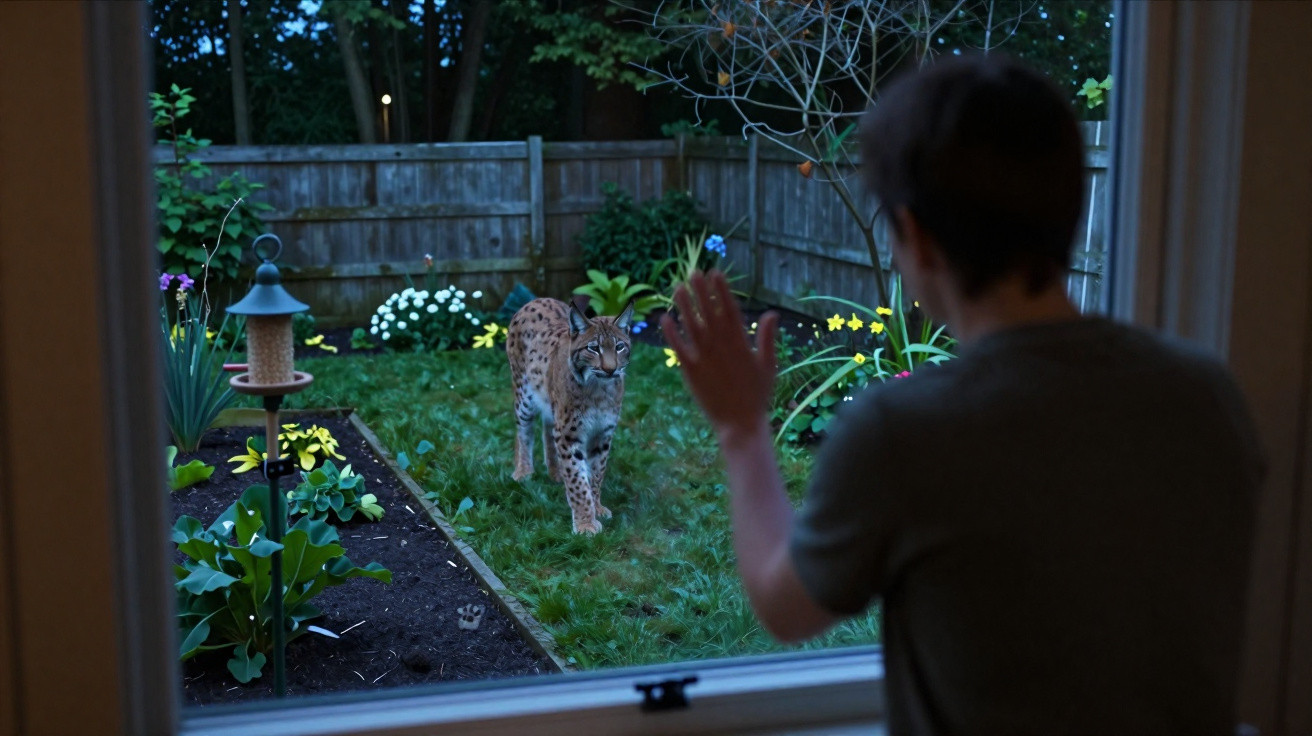
Across Germany, Austria and Switzerland, reports of lynx returning to their former range are becoming more frequent. Many people want to know how this large wild cat lives, whether it poses any danger, and whether it might suddenly appear outside the patio or even cross the garden. Its biology, behaviour and the signs it leaves behind provide the answers.
What the lynx is and what it looks like
Known to specialists as Lynx lynx, the Eurasian lynx is Europe’s largest wild cat. It belongs to the same family as the domestic cat, leopard and lion, yet in woodland it is more like a shadow: quiet, concealed and difficult to spot.
The lynx has several distinctive features:
- pointed ears topped with black tufts
- a short, seemingly ‘blunt’ tail with a black tip
- a broad, rounded head with pronounced facial ruffs
- usually spotted fur in brown or beige shades
A fully grown animal can measure up to 1 metre in length, excluding the tail, and weigh 15 to 30 kilograms. This makes a lynx roughly as heavy as a medium-sized dog, although its long legs and broad paws give it a much more powerful appearance.
“The lynx is large enough to kill roe deer – yet so inconspicuous that most people never see one.”
In Central Europe, lynx mainly inhabit large forest areas, including the Bavarian Forest, the Bohemian Forest, the Jura, parts of the Alps and, increasingly, other upland regions where they have been reintroduced or have migrated from neighbouring countries.
Lynx habitat: why the lynx needs woodland
The lynx is a classic woodland species. It depends on cover, tranquillity and a sufficient supply of prey. It largely avoids open land, where it feels exposed and vulnerable.
Its ideal habitat combines several features:
- extensive forests that are as little fragmented as possible
- few roads and very limited ongoing disturbance
- hilly or mountainous terrain offering plenty of hiding places
- healthy populations of roe deer and other prey species
A single lynx occupies an enormous territory. Males may range across several hundred square kilometres, while females use somewhat smaller, though still very large, areas. This is why many people live in the middle of lynx territory without ever seeing one.
Lynx mark their territories with urine, droppings and scratch marks on trees. When two adult animals meet outside the mating season, the encounter is more likely to involve threatening displays and withdrawal than a real fight – conserving energy matters more to this solitary hunter.
Daily life of a shadow hunter
Active at night and rarely seen
Lynx are strongly solitary animals. They live alone except during the breeding season and while a female is raising her young. They are most active at dusk and overnight.
During daylight hours, they retreat to dense young woodland, rocky ground, thickets or sheltered hollows. There they rest, groom their fur, digest food or watch their surroundings unnoticed.
This strong preference for darkness is one of the main reasons why encounters remain so unusual. Someone walking a dog through the woods in the afternoon may pass a lynx lying only a few metres away in thick cover, without either person or dog noticing it.
Prey and hunting technique
The lynx eats only meat. Roe deer form the centre of its diet and provide most of its energy. It also hunts, among other animals:
- brown hares and mountain hares
- foxes
- larger birds on or close to the ground
- smaller mammals such as mice or martens
It stalks prey at close range, staying in the shadows and using the terrain and vegetation to its advantage. It waits patiently for the right opportunity, then leaps from a short distance. Its approach is a single explosive attack, rather than a long chase like that of a cheetah.
A lynx often does not eat a roe deer it has killed in one sitting. Instead, it returns to the carcass over several nights, having hidden it beneath branches, leaves or snow. Anyone finding a partly eaten roe deer in woodland that has been cleanly bitten rather than torn apart may be looking at evidence of a lynx rather than a fox or wild boar.
How dangerous is the lynx to people?
Although the lynx is an impressive animal, it presents virtually no concern for human safety. It is exceptionally shy and avoids people whenever it can.
“Lynx attacks on people are virtually unknown in Europe. The animal does not regard humans as prey, but as a threat.”
Encounters almost always end with the lynx retreating as soon as it catches a scent on the wind or notices movement. Even inquisitive young animals generally keep their distance.
The position is more nuanced for pets and livestock. Free-roaming goats or sheep without protection near woodland may occasionally be taken, while larger outdoor cats or small dogs in remote areas are theoretically at risk. In many regions, hunters, conservation bodies and livestock keepers work together to limit losses, for example through livestock guardian dogs or electric fencing.
Can a lynx come right up to your home?
The likelihood of a sighting near settlements
Anyone living in established lynx territory could, in theory, see an animal passing close to a village or the edge of a town. The likelihood is still low, however. Vast territories, nocturnal activity and the lynx’s pronounced caution ensure that sightings remain genuinely lucky moments.
As wild animals spread through Central Europe, these boundary areas between forest and settlements are becoming more interesting. Roe deer graze on fields behind supermarkets, wild boar root around in front gardens, and occasionally a lynx follows them in search of prey.
Can a lynx cross the garden?
Seeing a lynx in your own garden is rare, but possible. The chances increase when several conditions coincide:
- the house is directly beside woodland or in a very rural setting
- there is little artificial light and the surroundings are quiet at night
- access is open, such as via unmade driveways or gaps in hedges
- roe deer regularly move close to the property
In these circumstances, a lynx may use the garden as a brief route through the area – usually in the middle of the night and without leaving signs that non-specialists would immediately recognise. Remaining close to homes is not in the animal’s interests; it is too shy and too closely tied to woodland for that.
How to recognise the presence of a lynx
Indirect evidence is far more common than an actual sighting. With some luck, anyone paying close attention in woodland can find clues.
| Sign | Features |
|---|---|
| Tracks | rounded prints, four toes, no visible claws, clearly larger than those of a domestic cat |
| Kill | roe deer or hare with a strong throat bite, little ‘mess’, prey often partly covered |
| Scratch marks | clear grooves on trunks at the lynx’s chest height |
| Camera traps | images from wildlife cameras at animal paths and wallows |
Anyone who believes they have found signs of a lynx can contact local forestry offices, nature conservation authorities or regional lynx projects. Specialists there can assess tracks and record sightings.
What to do if you encounter a lynx
If a direct encounter does occur despite the lynx’s caution – perhaps during a night-time drive or on a secluded forest path – a few simple rules are useful:
- stay calm and avoid sudden movements
- keep your distance and give the animal space
- do not follow it or try to take photographs if doing so would pressure the animal
- make sure children and dogs remain close to you
In almost every case, human presence alone is enough to make the lynx turn away. Anyone who sees one has witnessed a rare moment – and should then allow this hunter to return to its invisibility.
Why lynx conservation is so sensitive
Following persecution and extinction in many regions, lynx have been reintroduced for several decades. Their populations are growing slowly, but remain vulnerable. Every illegal shooting and every major road-building scheme in a core habitat can set a population back.
“Where lynx live, it is considered a good sign: the food chain is functioning and the forest still provides quiet refuges.”
The Eurasian lynx is strictly protected by law in Europe. Capturing, killing and deliberately disturbing it are prohibited. At the same time, many projects aim to reduce conflicts with livestock keepers through advice, compensation and technical support.
Further insights for garden owners and nature enthusiasts
People living close to woodland who are interested in wildlife can make a few conscious choices. Motion sensors with powerful floodlights deter more than burglars; they also drive away wild animals. Those seeking a closer connection with nature should instead choose gentle lighting and leave at least part of the garden dark at night.
A simple wildlife camera on a garden fence beside the woods or along a narrow path can reveal surprising visitors: foxes, badgers, martens and roe deer – and, with a great deal of luck, perhaps a lynx. For children, such images are often their first genuine contact with local wildlife.
It remains important not to offer food to wild animals. Feeding sites for roe deer, wild boar or foxes do more than attract animals: they alter their behaviour and create conflict. A varied, wildlife-friendly garden with hedges, deadwood and flowering areas, by contrast, provides habitat for birds, insects and small mammals – making the local environment more alive, entirely without a wild big cat on the patio.






Comments
No comments yet. Be the first to comment!
Leave a Comment