
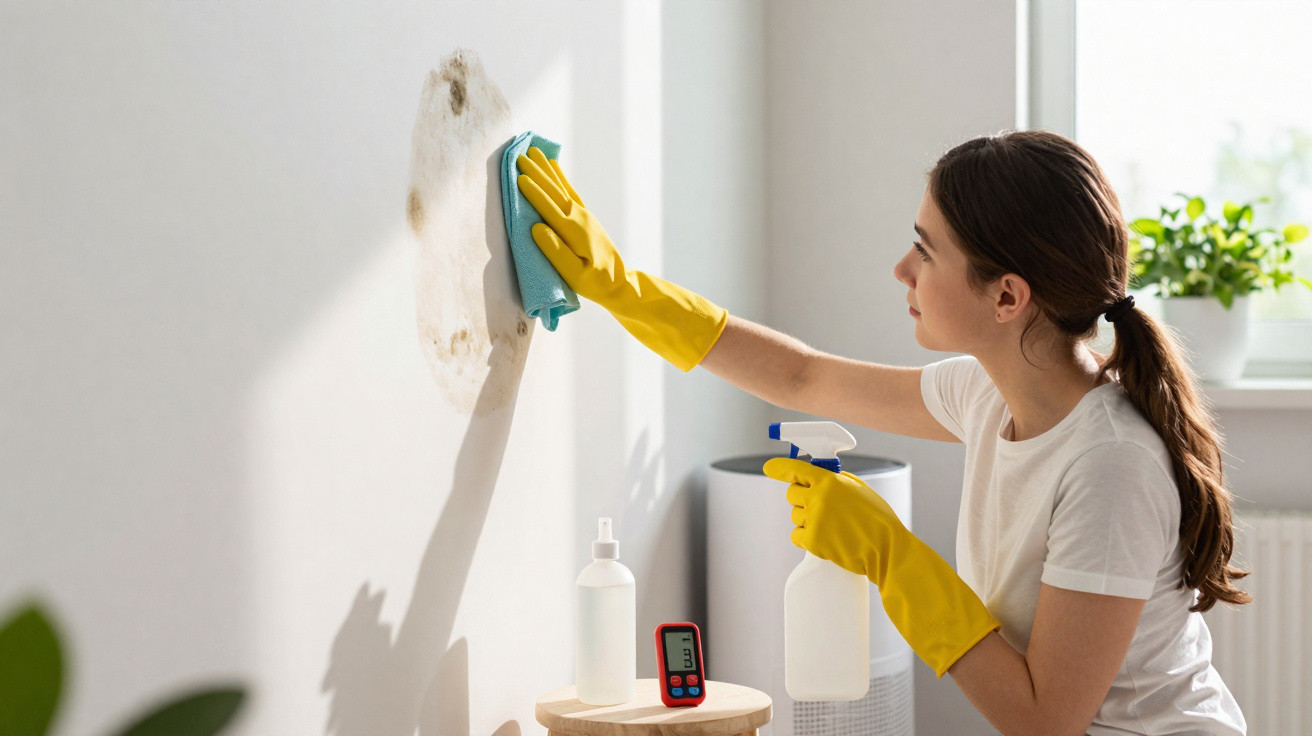
Removing mould from a wall takes more than scrubbing the dark mark until it is no longer visible. Fungi grow wherever moisture persists, whether due to water ingress, a leak, condensation on a cold surface or poor ventilation. Unless the underlying cause is resolved, the wall may look clean for a few days before black spots, the distinctive smell and stained paintwork return.
Why does mould keep returning to the same place?
Fungal spores occur naturally indoors and begin to grow when they encounter moisture and a suitable material. Looking at where the staining develops can therefore help identify the cause: cold external corners may point to condensation, marks close to the ceiling can suggest water ingress, while patches beside pipework may be linked to leaks.
- Rainwater ingress through roofs, façades or windows.
- Hidden plumbing leaks within the wall.
- Condensation caused by very cold walls.
- Thermal bridges at beams, columns and structural junctions.
- Bathrooms, bedrooms and kitchens that are kept closed and damp.
How can you clean a mouldy wall without spreading spores?
Before cleaning, open doors and windows, put on gloves, and avoid dry-brushing the mould, as this can release particles and spread them around the room. On hard, washable surfaces, water and detergent can help remove the surface layer; the area must then be allowed to dry fully. Specialist anti-fungal products may also be used where they are compatible with the paint and wall covering.
Bleach should not be regarded as a universal solution, particularly on porous materials where growth may extend beneath the surface. If it is used in line with the manufacturer’s instructions, it must never be mixed with vinegar, acid, ammonia or any other cleaning product. Plaster, plasterboard and badly damaged finishes may need to be removed and replaced if they are deeply contaminated.
How do you tell whether the problem is water ingress, condensation or a thermal bridge?
The location of the damp and when it appears can help distinguish between the causes. A stain that enlarges after rainfall indicates water ingress; water near pipes may signal a leak; condensation mould commonly forms in corners, behind furniture and on cold external walls, especially during winter.
- A stain that spreads after rain: inspect the roof, gutters, façade and windows.
- Persistent damp near a bathroom or kitchen: investigate the pipework.
- Black spots behind wardrobes: improve air circulation between the furniture and wall.
- Cold corners that “sweat” in winter: assess condensation and thermal insulation.
- Blistered paint or crumbling plaster: find the water entry point before repainting.
What should you do to prevent mould from appearing again?
Once the source of water has been removed, the aim is to keep the surface dry. Ventilating the home every day, using extraction while showering and cooking, and leaving a few centimetres between large furniture and external walls all reduce accumulated moisture. In naturally damp places, a dehumidifier can help keep relative humidity below levels that encourage fungal growth.
A thermal bridge needs a different approach. When one section of a wall is consistently colder than the rest, water vapour in the air can condense on it even where there is no water ingress. Improving insulation, rectifying construction defects, or increasing heating and air circulation at that point is usually more effective than applying repeated coats of anti-mould paint.
When does mould on a wall also require health attention?
Damp surroundings with fungal growth can trigger or worsen nasal irritation, coughing, wheezing and allergy symptoms in sensitive people, especially those with asthma or other respiratory conditions. Children, older people and anyone with a weakened immune system also require greater caution, particularly where there is a large contaminated area or a persistent smell in the home.
If damp covers a large area, returns soon after cleaning or is associated with concealed water ingress, the most effective approach is to repair the building issue first and restore the paintwork and finishes afterwards. Cleaning removes what is visible; preventing water from entering, reducing condensation and keeping the wall dry are the measures that stop the conditions allowing the fungus to reappear.





Comments
No comments yet. Be the first to comment!
Leave a Comment