
Some misconceptions last a lifetime and are only corrected at the eleventh hour; similarly, there are people whose identity becomes clear to us only when they die. The wider public rarely follows the details or the explanations, and sometimes not even the names. Only specialists know every aspect inside out, allowing them to recount the story as soon as it ends. They know the routes taken, the twists, the misunderstandings and the subsequent clarifications.
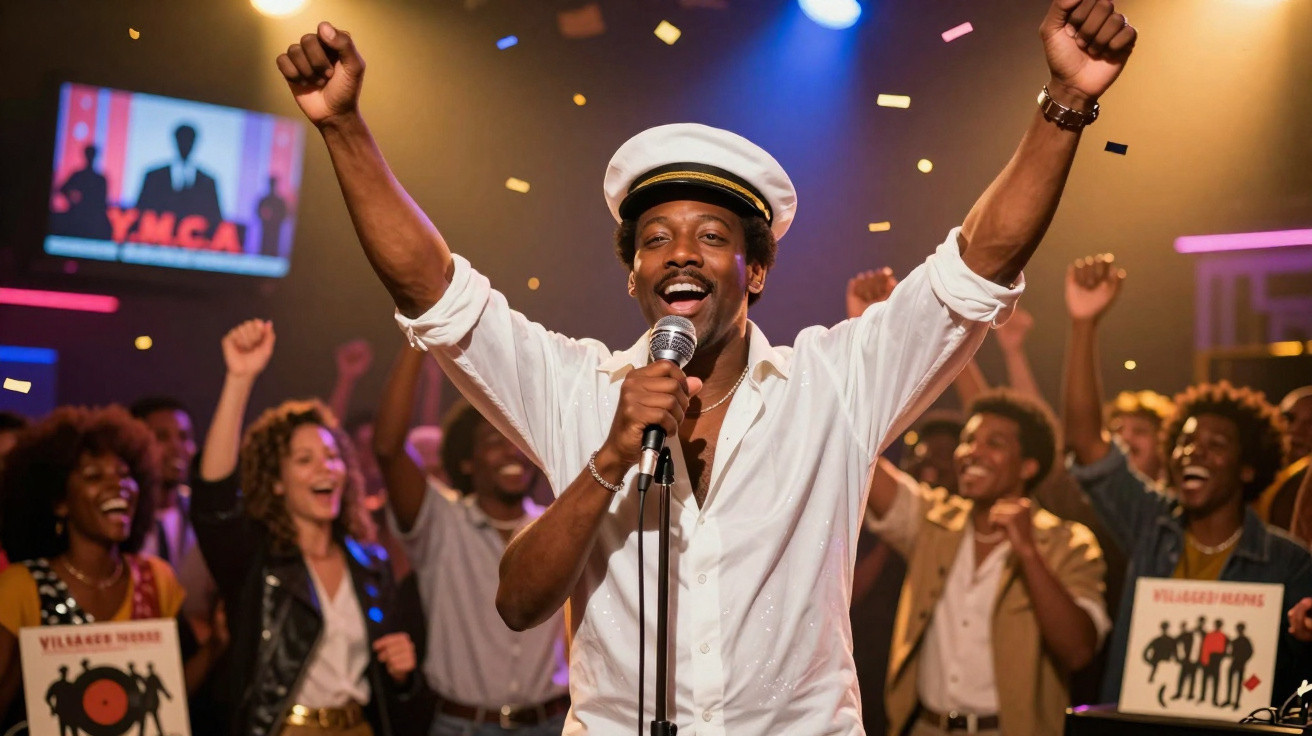
Victor Willis, the voice of Village People
What was the name of Village People’s lead singer? He was the policeman who was sometimes a naval officer, we might answer, aware of our own limitations. We now know that his name was Victor Willis, and that he was not merely the group’s frontman but also co-writer of its biggest hits. On social media, his wife, Karen Huff-Willis, mourned his death on 30 June from “a brief but aggressive illness”.
Victor Edward Willis was born in Dallas, Texas, on 1 July 1951, and grew up in Haight-Ashbury, San Francisco, a neighbourhood at the heart of the 1960s counterculture movement. His father was a Baptist minister, and Willis received his early musical education there, singing gospel in church. By his teenage years, he was performing jazz and soul, and belonged to a band called The Ballads, which opened for The Temptations. Willis was 15 and, filled with excitement, saw his future in that San Francisco auditorium.
He then moved to New York and appeared in several Broadway musicals, including the original production of “The Wiz”. He had previously performed in “Hair” and was part of the Negro Ensemble Company theatre troupe. As well as singing, Willis could dance and act, and in the mid-1970s he met the French producer Jacques Morali. Morali and Henri Belolo, later known as a “pioneer of disco sound”, conceived what would become a boy band in which every member embodied a carefully dressed masculine ideal. According to The New York Times, the pair’s idea may have begun in a gay bar in New York’s West Village, where they saw one barman dressed as an Indian and another as a cowboy.
Willis left Village People at the height of their success in 1980, only to return much later, in 2017.
Morali had asked Willis to record vocals for a collection of dance tracks he was producing, before inviting him to front a group that was taking shape: Village People. Legend has it that the producers placed an advert seeking “macho-looking types with moustaches who can dance”. That is how Glenn Hughes, the biker; Randy Jones, the cowboy; David Hodo, the construction worker; Felipe Rose, the Indian; Alex Briley, the soldier; and, naturally, Victor Willis, the policeman and naval officer, came together. Village People arrived in 1977 with their self-titled album, followed by a run of hits including ‘Macho Man’, ‘In The Navy’, ‘Go West’ and their best-known song, ‘Y.M.C.A.’.
‘Y.M.C.A.’ and Victor Willis’s songwriting
Willis possessed many talents, including the ability to write some of those songs, most notably ‘Y.M.C.A.’. The initials stand for Young Men’s Christian Association, an organisation of Methodist origin that encouraged personal development through physical exercise. The YMCA was the gym Willis had attended in San Francisco and where he had spent time in New York. The anthem he dedicated to it would become, according to the US Library of Congress, which added it to the National Recording Registry in 2020, “an American phenomenon”, and is played in the most unexpected settings. Willis wrote the song, as well as other tracks, but spent many years pursuing the royalties owed to him.
Village People, ‘Y.M.C.A.’ and Donald Trump
Willis departed Village People at the peak of their success in 1980, returning only much later, in 2017. More recently, he resurfaced to cast doubt on the intended meaning of ‘Y.M.C.A.’, a song regarded throughout its life as a gay anthem. A few years ago, Willis sought to challenge that reading and, whether through naivety or opportunism, denied that its lyrics contain homosexual references. The line “You can hang out with all the boys” should, he said, be understood in terms of camaraderie.
Meanwhile, Donald Trump, a major admirer of the song, has used ‘Y.M.C.A.’ at his rallies since 2020, moving along to it as best he can. Willis initially asked Trump not to use the track, but soon realised that the financial returns were highly attractive. After all, it was only a song.






Comments
No comments yet. Be the first to comment!
Leave a Comment