
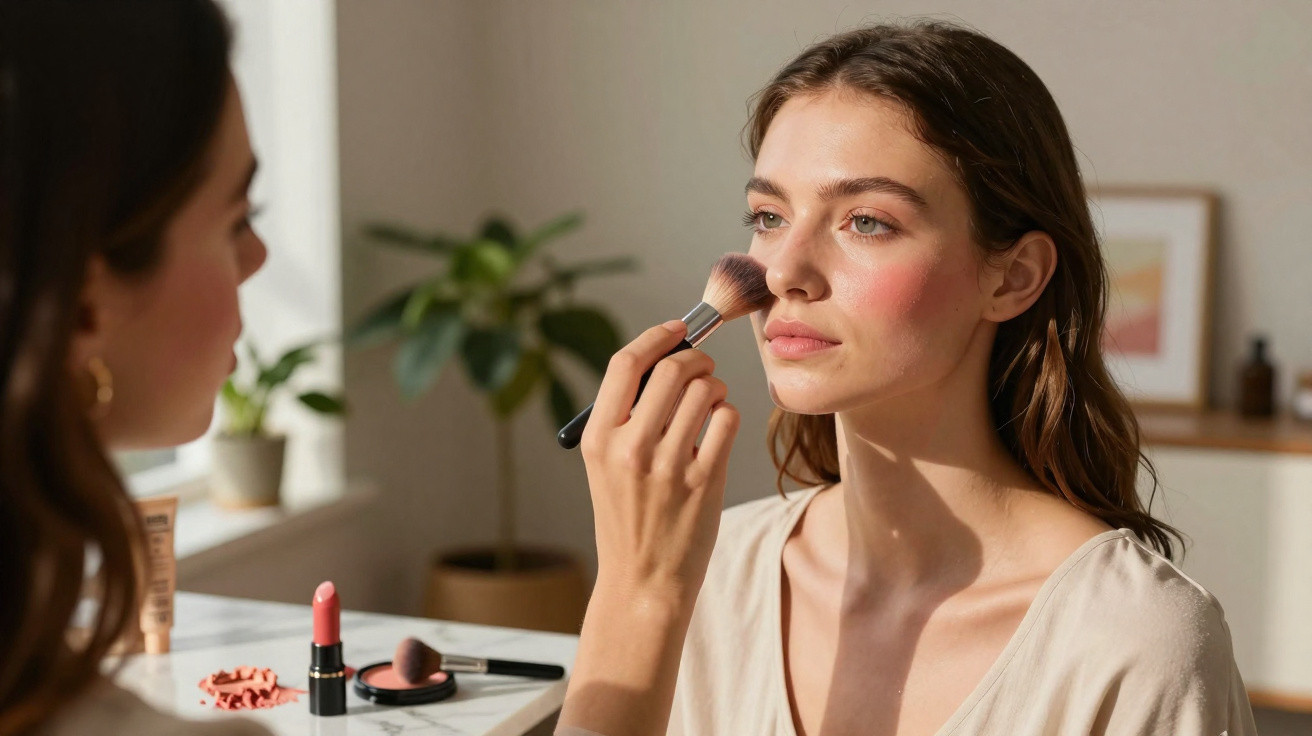
Professional make-up artists swear by this straightforward trick.
Many people love cream blush: it gives the complexion a fresh look, makes skin appear more vibrant and looks less “made-up” than powder. Yet for many, the colour fades after just two or three hours. Make-up artists are now sharing a remarkably simple technique that keeps cream blush in place until the evening – without creating a mask-like finish.
Why cream blush fades so quickly
Cream formulas are considered ideal for a fresh, natural-looking finish. They often look far more flattering than traditional powder blushes, particularly on normal, dry or mature skin. Even so, countless users complain that the colour has disappeared by their lunch break.
There are several reasons for this:
- Skin type: Combination and oily skin can break down cream products more quickly.
- Too much skincare: A very rich day cream can cause blush to slide straight off.
- Friction: Scarves, phones and hands touching the face all lift away pigment.
- The wrong order: Powder, setting spray or foundation are often layered in an unfavourable sequence.
“Cream blush rarely disappears because it is poor quality – it is usually down to application and setting.”
This is exactly where the technique currently going viral on social media comes in: an almost imperceptible combination of cream and powder that retains the glow while dramatically improving wear time.
The two-step trick: how blush lasts until the evening
Step 1: apply cream blush as usual – but in thin layers
First, apply your cream blush over an already evened-out complexion, after foundation or tinted moisturiser. The key is to use very little product.
- Pick up a small amount with a brush or your fingertips.
- Place it at the centre of the cheek, slightly above the natural apple of the cheek.
- Blend it backwards towards the temple.
- Build it up in two or three whisper-thin layers rather than applying one thick coat.
This creates a soft veil rather than a harsh stripe. It also lets you control the intensity without making the complexion appear patchy.
Step 2: fine powder blush with a light-reflecting effect
Now comes the real game changer: apply an extremely light layer of powder blush in as close a shade as possible over the still slightly creamy blush.
Professional trick: the powder can have a subtle shimmer or be mixed with a little highlighter. The light-reflecting pigments act like a “clasp” for the cream base – they pick up the colour and anchor it to the skin’s surface.
“Cream blush brings juiciness, powder blush delivers staying power – together they create a long-lasting glow.”
The brush matters: choose one that is large, soft and loosely packed. That way, you place just a hint of powder over the cream instead of lifting it away. One or two gentle sweeping motions are enough.
How to prepare your skin for blush
Even the best technique can fail without the right base. Your skincare and complexion base determine whether blush grips or slips.
Match skincare to your skin type
- Dry or mature skin: Use a thoroughly hydrating cream, but allow it five minutes to absorb before applying foundation and blush.
- Combination skin: Apply richer products only to dry areas and use a light lotion on the cheeks.
- Oily skin: Opt for mattifying or gel-based formulas so cream blush is not sitting on an oily film.
Too much skincare directly underneath blush makes the colour “float”. A well-absorbed layer with slight tackiness, on the other hand, provides ideal grip.
Use primer strategically
Applying a make-up primer only to the cheeks can help if you become shiny quickly or your blush turns patchy. Suitable options include:
- Pore-refining bases for a smoother surface
- Mattifying primers for very oily skin
- Lightly gripping, gel-like formulas for long wear
Next, apply foundation in thin layers. Your cream blush comes afterwards, followed by powder blush. Use face powder very sparingly on the cheeks: too much underneath reduces the cream product’s grip.
Everyday, office or party: tailor the trick to your style
A subtle glow for every day
For work or everyday university wear, a soft powder with minimal shimmer is enough. It makes cheeks look rosy without appearing heavily made up. Neutral rose or peach shades that resemble a natural flush work particularly well.
If you need to top up quickly, choose a small stick format: apply cream blush, tap it in with your fingers, add a hint of powder over the top – done.
More intense looks for evenings and photographs
You can apply more for the evening or for photographs. A satin-shimmer powder intensifies the colour and gives the face more definition. Thanks to the layering, the result still looks more refined than a thick layer of powder blush alone.
In strong lighting, such as flash photography or studio lights, make sure the shimmer is not too coarse. Otherwise, it can reflect unevenly. Fine powders with an almost creamy texture look most sophisticated here.
Which blush colour suits which skin tone?
| Skin undertone | Recommended blush shades |
|---|---|
| Cool (rosy) | Dusty rose, berry pink, cool plum |
| Neutral | Rose peach, soft coral, nude rose |
| Warm (golden/olive) | Peach, terracotta, warm coral |
Ideally, your cream and powder blush should be closely matched in colour. Small differences can make the effect more interesting, however: a slightly warmer powder over a neutral cream blush adds more depth to the face.
Common mistakes that make blush disappear faster
- Applying too much product at once: Thick layers are more likely to shift.
- Blush over unpowdered, extremely shiny foundation: The colour slips around on the oily film.
- Constantly powdering the cheeks: Too many powder layers take away the blush’s radiance.
- Rubbing rather than tapping: Vigorous brushing removes the cream blush again.
Many people get better results with the “stamping technique”: press the blush into the skin using a dense, slightly damp sponge, then lightly sweep powder over it with a fluffy brush.
More tips for long-lasting fresh cheeks
For particularly long days, setting sprays can help. One professional trick is to apply cream blush first, set it with powder blush, then mist the entire face lightly with setting spray and allow everything to dry briefly. This helps the layers meld together more effectively.
It also makes sense to coordinate the rest of your make-up with your blush. If you fully mattify the complexion but leave the cheeks very shiny, the finish can quickly look patchy. It appears more harmonious when the forehead, nose and chin are lightly matt while the cheeks and upper cheekbones have a gentle glow.
Anyone with sensitive or blemish-prone skin should look for non-comedogenic products. Cream blush on oily, easily congested skin can otherwise put additional strain on the pores. In this case, a thin layer of powder blush with caring, soothing ingredients works well as a base, followed by a little cream applied only in targeted areas for glow.
With the right preparation, a clever combination of cream and powder, and a little practice with blending, your blush will not only last until the end of the working day – it will also look far more polished and fresh than a thick, dull layer of powder.




Comments
No comments yet. Be the first to comment!
Leave a Comment