
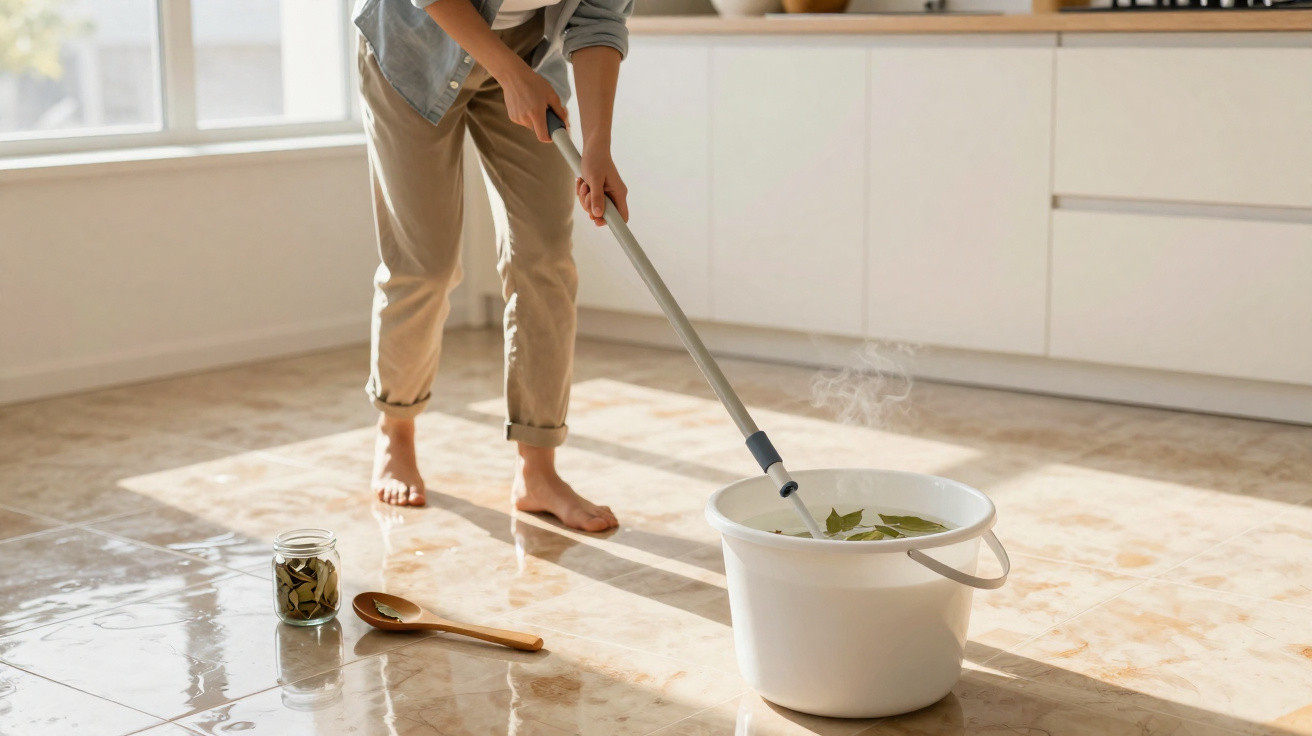
A modest kitchen trick can change all of that.
It is a familiar scenario: you have just mopped, the floor is wet and everyone has to wait – yet only a few hours later it already looks dull again. Footprints, a greyish haze and that slightly tacky feeling underfoot soon return. The good news is that this is often not due to a lack of cleaning effort, but to using the wrong method. Surprisingly, a spice from the kitchen cupboard can make a considerable difference.
Why floors look dull again so soon after mopping
In many parts of the UK, tap water contains a high level of limescale. When you mop, that water forms a thin layer over tiles or laminate. Once it evaporates, it can leave behind a fine mineral film – like invisible chalk.
This residue has several consequences:
- It takes away the floor’s sheen.
- It stops light from reflecting cleanly.
- It can feel slightly dull or “dusty”, even when the floor has only just been mopped.
- It holds on to dirt particles, making the floor appear grey again more quickly.
There are also greasy marks from cooking and pets, rubber scuffs from shoes, and residue from paws or toy wheels. Plain water has only a limited effect on this sort of dirt. Although the floor may look better for a short time, a thin, slightly sticky layer often remains in practice. That is precisely the layer that attracts the next build-up of dirt.
“Many people are not mopping ‘wrong’; they are using water that spreads limescale and dirt around rather than genuinely removing them.”
Popular cleaning tricks that can damage floors or leave them sticky
Out of frustration, many people reach for powerful specialist cleaners. Shop shelves are full of bottles promising “brilliant shine”, a “2-in-1 effect” or an “intense fresh fragrance”. At first, the result can look impressive: the floor shines and the scent lingers in the room.
The drawback is that many of these products leave an extra coating on the surface. During the first hour, this can resemble a glossy finish. Later, you may notice socks sticking slightly or the floor feeling resistant under bare feet. Dust and crumbs then cling more readily instead of being swept away next time.
Homemade cleaning mixtures can cause issues too when they are used in the wrong proportions:
- Black soap: Using too much can leave the floor greasy and difficult to clean.
- Chlorine-based products: These can damage grout, irritate the airways and often add little value for everyday cleaning.
- Acetic-acid cleaners: If too concentrated, they can harm sensitive surfaces such as calcareous natural stone or certain laminate floors.
The air indoors can also quickly suffer from harsh fragrances. If cleaning leaves you with a headache or the smell feels “acrid”, there is usually too much chemical product in use.
The unexpected kitchen helper: bay leaves
A much gentler approach comes from a place few people associate with cleaning: the spice rack. In many homes, an unassuming bundle of dried bay leaves has sat there for years, apparently useful only for roasts and soups.
“Dried kitchen leaves that would normally go into a cooking pot can help produce visibly cleaner, fresher-looking floors when used in a mop bucket.”
The principle is simple: brew the bay leaves into a type of tea, then add it to the mop water. Their natural oils help lift light greasy residue, neutralise odours and leave a very fine, almost silky finish – without the sticky feel of strong cleaning products.
How to use bay leaves in a mop bucket
Step-by-step instructions
The method is remarkably straightforward and costs very little, as most of the ingredients are already at home:
- Place around six dried bay leaves in a heatproof container.
- Pour over one litre of very hot water.
- Leave the infusion for around ten minutes, until the water has a noticeable aromatic scent.
- Strain out the leaves so that no pieces end up in the bucket.
- Pour the infused liquid into the mop bucket and top it up with lukewarm water.
- If you wish, stir in one tablespoon of mild, clear vinegar to help dissolve limescale residue in the mop water.
Then mop with a clean microfibre cloth or mop. Try not to use too much water. It is better to wring the cloth out thoroughly and mop in calm, gently circular movements. This loosens dirt without soaking the grout.
Why this bay leaf trick works so well
The method combines several effects:
- Warm water helps to lift greasy residue and dried-on marks more quickly.
- The natural oils in bay leaves have a mild antibacterial and odour-neutralising effect.
- A splash of vinegar can break down limescale residue that makes a floor look cloudy.
- Microfibre picks up loosened dirt particles effectively instead of merely moving them around.
The result is a floor that does not gleam like a freshly polished surface, but instead has a matt satin appearance that is even and free from a grey haze. Many people report that the floor feels “fresh” for longer and needs mopping less often.
Where you need to take care
However effective this trick may be in everyday use, it should not be used without some thought. Certain floor surfaces are sensitive to both acid and moisture.
Take particular care with:
- calcareous natural stones such as marble or travertine;
- unsealed, porous stone floors;
- older laminate with damaged protective sealing.
In these cases, it is worth testing the mixture on an inconspicuous area first: apply a small amount, leave it briefly, and check whether the shine or colour changes. If everything remains unchanged, you can proceed carefully – and, if in doubt, leave out the vinegar.
“Never experiment with highly concentrated acid, and always check how the floor reacts first – especially with expensive natural stone.”
There is another important point: the effectiveness depends heavily on how clean the mop is. An old, dirty mop head simply redistributes grime. This method works properly only with a freshly washed or regularly replaced cleaning cloth.
Practical tips for everyday floor cleaning
Anyone who wants to try the method can combine it with a few habits that protect floors over the long term:
- Vacuum or sweep thoroughly before mopping, so that crumbs cannot scratch the floor.
- Leave outdoor shoes by the front door where possible, keeping sand and moisture outside.
- If you have pets, do quick wipe-downs more often rather than mopping infrequently and very wet.
- Do not overfill the bucket – it is better to change the water more often than to finish mopping with dirty water.
If you are sensitive to fragrances, you may find the mild, lightly spicy aroma of bay leaves more pleasant than artificial room perfumes. The scent fades fairly quickly and does not mask the whole home all day.
Why simple products are often the better choice
Many households suffer more from an overload of products than from dirt. It is easy to end up with ten different bottles in the cupboard for the kitchen, bathroom, floors and glass, with half of them never even being finished. The bay leaf trick shows that a well-considered, mild solution can be entirely sufficient for everyday use.
Using fewer harsh chemicals also means less strain on hands, airways and wastewater. Costs fall at the same time, because a packet of dried bay leaves lasts a long time. If you wish, you can combine this method with other gentle cleaning habits, such as using all-purpose cleaner sparingly or using distilled water in areas with extremely hard tap water.
If you currently feel as though you are constantly mopping “with no effect”, this simple mixture of hot water and bay leaves offers an inexpensive way to see a genuine before-and-after difference – without overpowering fragrance or specialist chemicals.


Comments
No comments yet. Be the first to comment!
Leave a Comment