
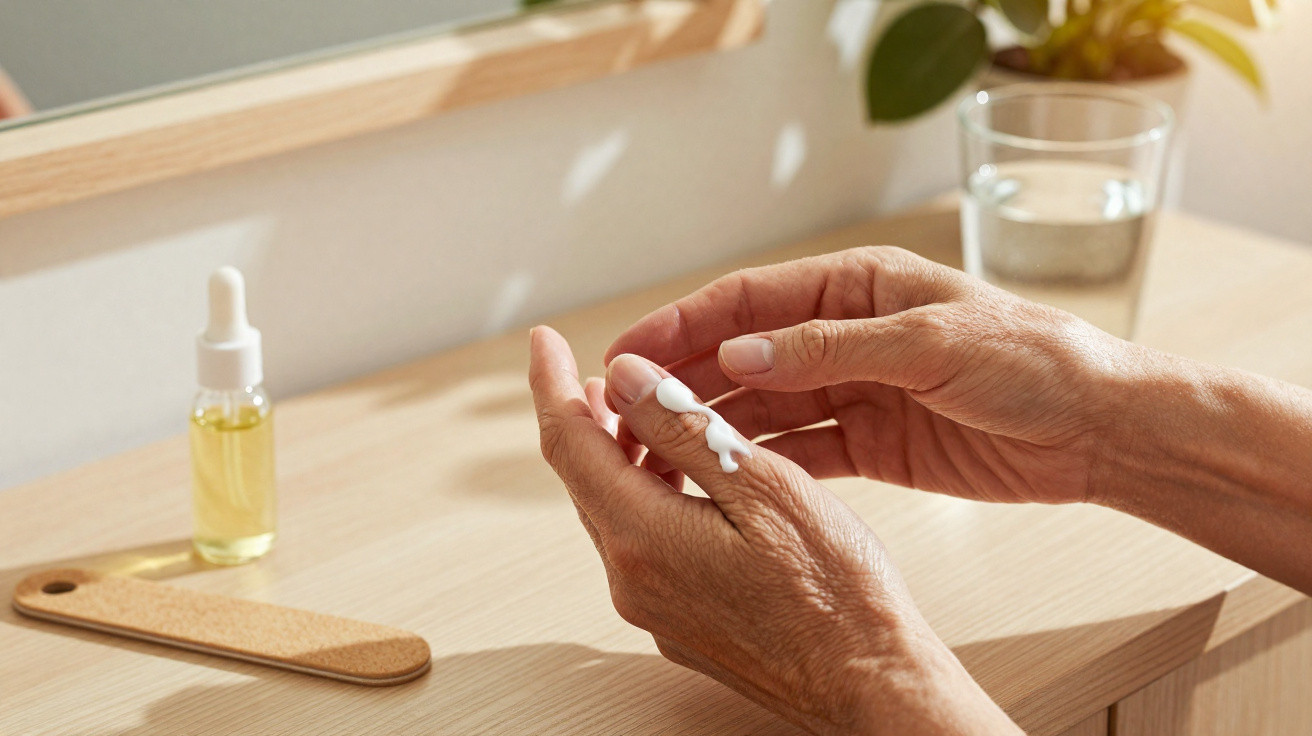
Brittle nails with age can be linked to natural changes, yet everyday habits also affect their strength. The American Academy of Dermatology notes that prolonged periods with wet hands and the unprotected use of harsh chemicals can contribute to nail breakage. Moisturising the nails, cuticles and surrounding skin, meanwhile, may help lessen the issue.
Why do nails become more brittle over the years?
Ageing can slow nail growth and bring about other changes. Brittle nails are also more frequently seen in women over 60, although the condition can affect people at any age.
Alongside age-related changes, external influences may worsen nail fragility. Regular contact with water, repeated handwashing and exposure to harsh products can dry out the nails and nearby skin, making peeling and breakage more likely.
Which everyday habit can increase nail breakage?
Keeping your hands wet for extended periods is one habit worth addressing. Frequent exposure to water may make nails more fragile, particularly when combined with detergents and other products used for household chores.
For this reason, wearing gloves while cleaning and avoiding lengthy contact with water can be straightforward protective measures. Moisturising your hands, nails and cuticles after washing them is also advisable, as this can help nails retain their flexibility.
How should you moisturise nails and cuticles?
Moisturising can be incorporated into your daily routine, particularly after handwashing and when the skin and nails feel dry. Moisturising products, including petroleum jelly and certain specialist creams, can help keep the nails and cuticles hydrated.
It is equally important not to cut or push back the cuticles excessively. They help shield the area where the nail grows, and removing them may make it easier for bacteria and other micro-organisms to enter.
Who should pay closer attention to brittle nails with age?
People who carry out frequent household chores, wash their hands repeatedly or work with chemical products may need extra protection. Keeping nails moisturised and wearing gloves for cleaning tasks are simple precautions that can reduce exposure to factors linked to breakage.
However, persistent changes in nail colour, texture or shape should be assessed by a dermatologist, as not every alteration is caused solely by ageing or dryness. Looking after brittle nails with age therefore involves more than using nail hardeners: protection from external damage and regular moisturising are also among the measures recommended by dermatologists.




Comments
No comments yet. Be the first to comment!
Leave a Comment