
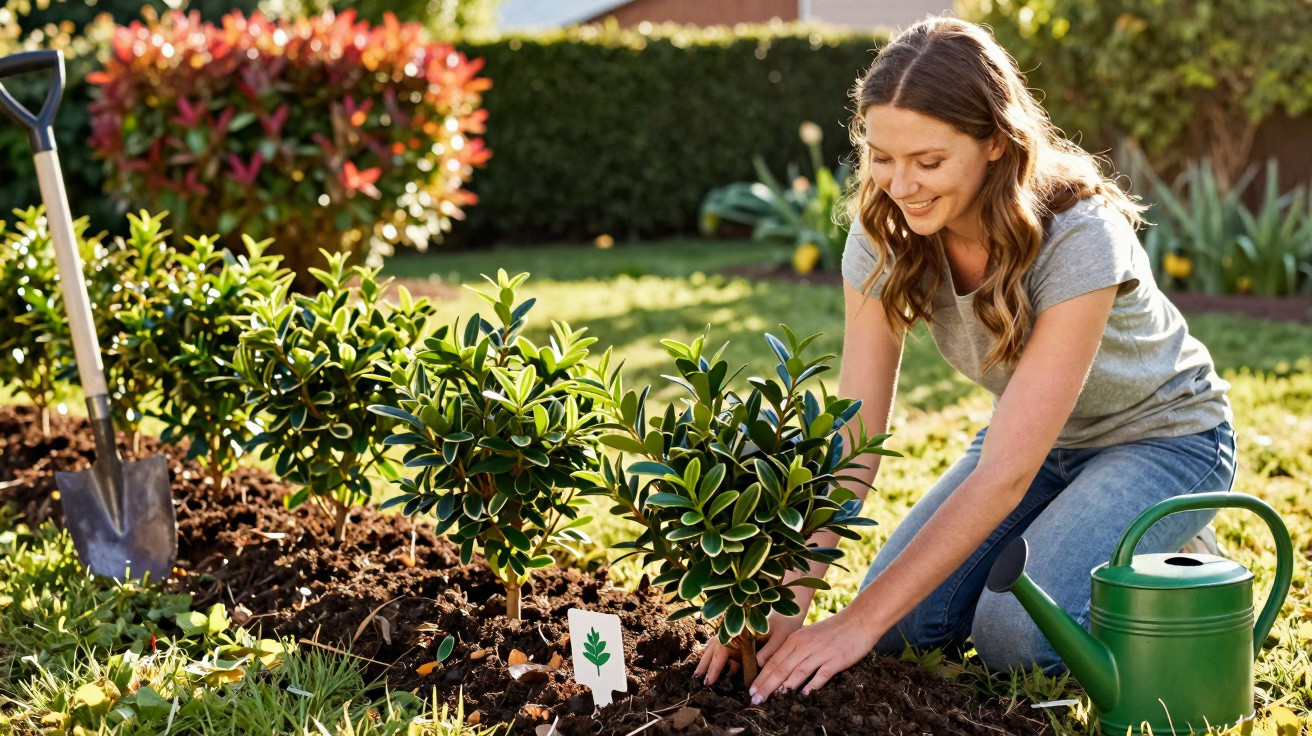
For years, anyone seeking a private, low-maintenance yet decorative garden boundary had little reason to look elsewhere: a Photinia hedge was considered a quick, colourful answer. Garden experts are now sounding the alarm, however, as red-tip photinia is losing vigour and disease problems are becoming more common. Taking its place is a far tougher shrub that is set to become the favourite for modern hedges in 2026: Pittosporum.
Why Photinia is losing its shine
For a long time, red-tip photinia seemed to be the ideal all-rounder: it grew quickly, produced vivid red new growth, kept its foliage all year and was easy to shape. It was used almost single-handedly to enclose many new-build developments. That widespread reliance is now proving costly.
Milder winters and damp springs are bringing more fungal diseases and leaf-spot issues. What was once a lush green hedge develops brown, mottled foliage, thinner patches and an untidy appearance remarkably quickly.
“Anyone still relying entirely on Photinia today is taking a real risk: more work, less privacy and a shorter lifespan for the hedge.”
Rather than enjoying a reliable, dense garden screen, many owners find themselves repeatedly reaching for secateurs and sprays. Maintenance becomes a constant task, yet the hedge still becomes increasingly patchy. It is precisely at this stage that many amateur gardeners start looking for a tougher, less stressful alternative.
Pittosporum: the new favourite for low-maintenance hedges
Pittosporum – often referred to in the trade as sticky seed or resin-seed – is now moving into the spotlight. Once largely a nurseries’ insider recommendation, the shrub is becoming a serious replacement for the traditional Photinia hedge in 2026.
Its key advantages at a glance
- Evergreen and dense: provides year-round privacy, including in winter.
- Highly resilient: has considerably fewer issues with leaf diseases.
- Tolerates drought: well suited to hot, dry summers.
- Holds its shape well: responds well to pruning, whether formal or relaxed.
- Low maintenance: one or two tidying cuts a year are often entirely sufficient.
Especially appealing is the foliage: many varieties have attractively glossy, often gently wavy leaves, while some are even variegated with pale edges. This gives a Pittosporum hedge a more contemporary, elegant character than a uniform block of green.
Unlike disease-prone Photinia, there is no need to worry with every wet spring that the foliage will once again be covered in spots. Once the shrub has rooted in well, it manages with relatively modest watering and remains dependable.
How to make the change in your own garden
Those with a struggling Photinia hedge do not need to remove everything immediately. A planned transition is often the wiser approach, and it is easier on both the nerves and the budget.
Building a resilient hedge step by step
- Identify problem areas by marking Photinia plants that are severely affected or bare.
- Remove poor specimens and replace them with young Pittosporum shrubs.
- Improve the soil by loosening it, adding compost and preventing waterlogging.
- Water regularly during the first two years, until the new shrub is established.
- Trim lightly to maintain shape rather than cutting back severely – this encourages dense growth.
When starting from scratch, you can plant Pittosporum throughout or combine it with other robust species. This type of mixed planting is currently regarded as the most exciting option.
Trend for 2026: mixed hedges instead of uniform green walls
Nurseries and landscape gardeners are seeing a clear shift away from monocultures such as rows made entirely of Photinia, and towards mixed hedges containing several shrub species. The reason is straightforward: diversity makes the whole system more resilient.
“The more different shrubs there are in a hedge, the less able a single disease is to cripple the entire planting.”
Pittosporum can be combined particularly well with other hardy species, including:
- Elaeagnus (oleaster): exceptionally resilient, with silvery foliage and well suited to exposed, windy sites.
- Cornus (dogwood, such as common dogwood): colourful stems in winter and an informal, natural look.
- Privet: a proven choice that tolerates trimming and grows densely.
- Osmanthus: evergreen, often with fragrant flowers, and similar to a robust holly.
The result is a living strip with varied leaf colours, flowering periods and textures rather than a monotonous green barrier. It benefits not only the eye but also insects and birds, which is particularly valuable in urban gardens.
Site, soil and care: what Pittosporum needs
Even a tough shrub is not completely undemanding. A few basic principles determine whether it truly becomes the hedge you want.
| Factor | Recommendation for Pittosporum |
|---|---|
| Light | Full sun to partial shade; avoid a completely north-facing position |
| Soil | Free-draining and preferably humus-rich, without persistent waterlogging |
| Watering | Regularly for the first two years, then moderately |
| Pruning | One light shaping trim after new growth is usually enough |
| Feeding | Once in spring with organic fertiliser or compost |
Where soil is heavily clay-based, incorporate coarse sand or grit when planting. This improves drainage, prevents roots from rotting and helps the shrub remain healthy.
How climate change is influencing hedge selection
Choosing a hedge plant is no longer purely a matter of taste. Heatwaves, dry spells and mild, wet winters are putting traditional species under pressure. This is exactly where Pittosporum and similar shrubs show their strengths.
Shrubs able to cope with both drought and damp transitional periods are better suited to the years ahead. Anyone planting today is effectively planning for the next 15 to 20 years. A species that starts to struggle after only a few winters is scarcely worth that effort.
Practical examples of modern hedge designs
New-build areas are increasingly featuring layered hedges: low, colourful-leaved shrubs at the front, with a dependable evergreen line of Pittosporum or privet behind. Privacy is retained, while the garden feels more open at the same time.
A mixed hedge also works well in smaller gardens: use two to three Pittosporum varieties with different leaf colours, interspersed with oleaster or Osmanthus, and set forward with summer-flowering plants or perennials. Maintenance remains manageable, but the garden gains a much more individual look.
Risks and mistakes that are easy to avoid
No change in planting trends is entirely without risk. Those who switch hastily from Photinia to Pittosporum can sometimes overlook important considerations:
- Plants spaced too closely: the hedge may fill out sooner, but it will become more vulnerable and harder to maintain over time.
- The wrong location: in shady corners that remain wet, virtually every evergreen species will eventually suffer.
- Severe pruning: young plants in particular respond better to regular, gentle shaping.
If you are unsure, seek advice from a local nursery. Many growers understand the typical problems in the area and can recommend varieties that have already proved themselves in the local climate.
Why it pays to look beyond Photinia
Moving on from the Photinia craze does not mean this shrub must disappear altogether. It can still have a place in mixed hedges, in well-ventilated locations or as a specimen plant. The crucial change is one of balance: away from an “all-or-nothing” approach and towards greater variety.
Pittosporum has become symbolic of a new attitude to gardening. It is resilient, adaptable and visually appealing, without requiring constant maintenance. People planting a hedge today are thinking more about longevity, climate tolerance and lower ongoing costs – and those are exactly the areas in which this new trend shrub has its greatest strengths.




Comments
No comments yet. Be the first to comment!
Leave a Comment