
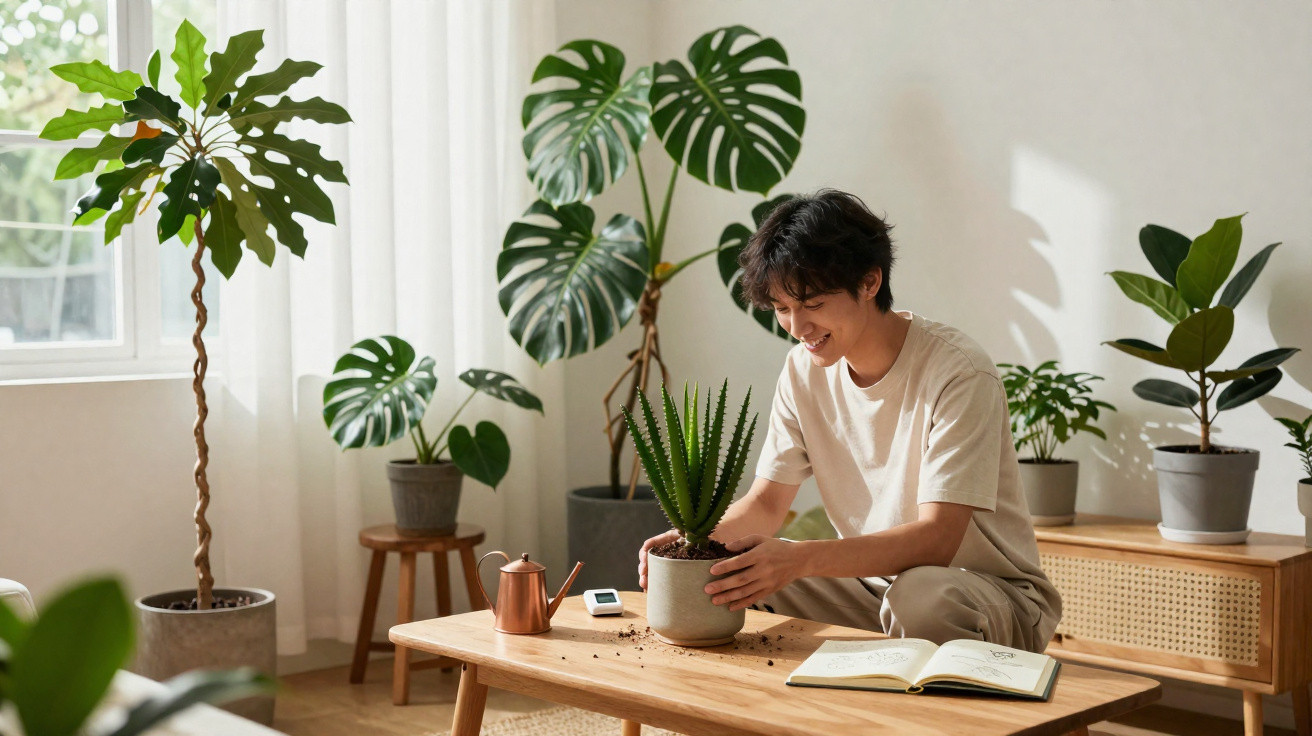
Indoor trees are subtly transforming living rooms, offering a calmer atmosphere, cleaner air and a touch of jungle-style drama for compact urban homes.
On the German television programme Hier und heute, gardening expert Markus Phlippen has promoted “living furniture”: home-suitable trees that cope with occasional neglect instead of needing constant attention. His preferred plants show that you do not need a conservatory or professional gardening knowledge to cultivate a convincing tree-like feature in a flat.
Why indoor trees are having a moment
Studies have associated indoor plants with reduced stress, improved focus and a greater feeling of wellbeing. Unlike small plants lined up on a windowsill, tree-form houseplants occupy vertical space and provide a striking, almost theatrical, leafy setting.
Think of an indoor tree as a long-term flatmate: it grows with you over years, not just a season.
For the many people now working from home, that enduring presence can be important. A tall specimen beside a desk or sofa can soften the visual impact of screens, wires and plain white walls. Phlippen believes a small selection of suitable plants can produce a “mini jungle” look without making everyday maintenance feel burdensome.
Elephant’s foot: the architectural beginner’s tree
Why Beaucarnea recurvata is so forgiving
The elephant’s foot (Beaucarnea recurvata) is among Phlippen’s leading recommendations for newcomers. Although it has an exotic appearance, it stores water much like a camel. Its enlarged trunk base holds moisture, meaning an occasionally missed watering is seldom disastrous.
- Light: Prefers strong sunshine, particularly beside a south-facing window.
- Water: Water sparingly, allowing the compost to dry thoroughly between waterings.
- Air: Cope well with dry centrally heated air.
Long, hair-like foliage cascades from its bottle-shaped trunk, giving the plant considerable “design object” appeal. Set near a bright window, it can define a lounge corner much as a floor lamp would.
The elephant’s foot thrives on neglect, as long as it gets strong light and avoids constantly wet soil.
Too much water is its greatest danger. If its pot remains in standing water, the substantial trunk can rot. A weighty, free-draining growing medium and a container with a large drainage hole can keep it healthy for many years.
Money tree: lush foliage without the drama
Why Pachira aquatica is trending
The money tree (Pachira aquatica), frequently sold with plaited trunks, has quickly become popular on Instagram. Phlippen presents it as an excellent choice for anyone seeking a “real tree” profile indoors: woody stems, a spreading crown and soft green leaves that reflect the light.
In contrast to the elephant’s foot, it favours milder conditions.
| Care factor | Money tree preference |
|---|---|
| Light | Bright position, but no harsh midday sun |
| Humidity | High, similar to a bathroom or kitchen |
| Pruning | Tolerates regular trimming to control size |
| Water | Evenly moist, not bone dry, not soggy |
Because it responds positively to pruning, it can remain compact on a sideboard or be allowed to grow towards the ceiling. Trimming back elongated shoots promotes a fuller crown and strengthens its miniature-tree appearance.
Placed away from scorching sun and kept in humid air, the money tree delivers a soft, tropical canopy all year round.
In a small flat, a useful approach is to place the pot on a tray containing pebbles and a small amount of water. As this evaporates, humidity around the leaves rises gently without leaving the roots waterlogged.
Monstera: the urban jungle staple
Monstera deliciosa as a statement tree
Monstera deliciosa is more widely recognised as an iconic foliage plant than as a “tree”, but indoors it can effectively take on that role. Over time, its thick stems, aerial roots and huge perforated leaves create the impression of a trunk and canopy, particularly when it is grown against a moss pole or robust stake.
Phlippen explains that Monsteras require a balanced approach: humid air but never persistently saturated compost, plus a consistently cooler room rather than the dry heat created by overactive radiators.
- Spray the leaves frequently, particularly during the winter heating period.
- Allow the surface layer of compost to dry a little before watering again.
- Do not position it immediately above radiators or alongside hot-air vents.
The eye-catching split leaves serve more than a decorative purpose. In their natural habitat, the openings let light pass through dense forest canopies. At home, they cast graphic shapes against plain walls and photograph especially well, helping Monstera remain central to plant trends on social media.
A healthy Monstera can dominate a room, functioning almost like a green room divider.
Where room is at a premium, younger Monsteras can be trained to grow vertically by securing their stems to supports. This prevents the sprawling, ground-hugging growth habit that can discourage renters.
Rubber plant: green decor with built-in air filter
Ficus elastica for cleaner indoor air
The rubber plant (Ficus elastica) is a traditional houseplant currently enjoying renewed popularity. Phlippen considers it a resilient, easy-care indoor tree with an additional benefit: its broad, glossy leaves can capture airborne dust and certain pollutants, marginally improving the perceived quality of indoor air.
Its care requirements are pleasantly straightforward.
- Water moderately and allow surplus water to run freely from the pot.
- Provide bright, indirect light, although it can tolerate a degree of shade.
- Clean the leaves with a damp cloth to lift away dust.
Regular leaf cleaning keeps the rubber plant healthier and lets it do a better job as a natural dust catcher.
Its lustrous leaves also bounce light back around a room, helping to brighten darker areas. Numerous cultivars are now available with deep burgundy or variegated foliage, giving homeowners a choice between understated and bold styling without adding to the care required.
Choosing the right indoor tree for your home
Phlippen’s choices demonstrate that different indoor trees fit different ways of living. Those who travel regularly may prefer the elephant’s foot because it handles extended dry periods. Anyone working in a poorly lit home office may instead favour a rubber plant, which accepts less-than-ideal light.
Before making a purchase, assess three points: available light, humidity and your usual routine. South-facing windows with radiators underneath are well suited to drought-tolerant varieties. Humid bathrooms and steamy kitchens work particularly well for money trees and Monsteras that enjoy moisture in the air.
Common terms and real-life scenarios
Beginners are often puzzled by two gardening expressions: “bright, indirect light” and “waterlogging”. Bright, indirect light describes a room bright enough to read in during daylight without turning on a lamp, while direct sunshine does not hit the foliage for hours at a time. Waterlogging occurs when compost is so saturated that its air spaces disappear, depriving roots of oxygen and causing rot.
Picture a standard winter situation in a small flat: the radiators are running at full heat, the air is dry and daylight is limited. Under these conditions, an elephant’s foot beside the brightest window and a rubber plant positioned a short distance away provide dependable, low-maintenance greenery. A Monstera can also succeed, though it will benefit from regular use of a spray bottle and possibly a small humidifier.
There are several risks to consider too. If pets chew the foliage, certain Ficus and Monstera plants may cause mild irritation. People with sensitivities can react to sap while pruning. Simple measures are helpful: wear gloves when cutting and keep plants beyond the easy reach of inquisitive animals.
Selected carefully, these trees can also be combined successfully. A tall rubber plant may form the backdrop, with a Monstera occupying the middle layer and an elephant’s foot placed nearer the ground, resulting in tiered greenery in a single corner. This produces the “green jungle” effect Markus Phlippen discusses on television, while remaining rooted in practical, realistic care routines for busy urban lifestyles.

Comments
No comments yet. Be the first to comment!
Leave a Comment