
Your bill is rising while storage space is shrinking. Many people give up. Others get organised, without relying on gadgets.
As temperatures rise and doors are opened more often, frost starts to build up everywhere. The good news is that a straightforward routine and a few precise habits are enough to break the cycle and keep your freezer stable.
Why frost builds up so quickly
Frost forms when humid air meets extremely cold surfaces. Every time you open the door, water vapour enters the compartment. Putting in food that is still warm makes matters worse, while a worn door seal adds to the problem.
The most common triggers
- Food placed inside while still warm, increasing the moisture in the air.
- Frequent or prolonged door openings, particularly around mealtimes.
- Flattened or dirty seals that allow air to leak in.
- Air vents blocked by overfilled drawers.
- An appliance positioned against the wall, preventing heat from escaping.
“Once frost on the walls exceeds 5 mm, start defrosting. This is the point at which energy use begins to rise sharply.”
The cost of an ice layer
Ice acts as insulation on the walls, making the compressor run for longer. Depending on the thickness of the frost and the appliance model, electricity consumption can increase by 10 to 30%. Usable capacity falls, temperatures become less even, and some foods develop freezer burn while others no longer freeze properly.
An overworked appliance also wears out sooner. A noisy fan, more frequent cycles and temperature spikes during automatic defrosting all indicate that the cause needs addressing, rather than simply treating the symptom.
“Aim for -18 °C at the centre of the food. Do not rely solely on the display: a thermometer placed between two packs shows the true temperature.”
A straightforward, effective method step by step
The aim is to remove the frost, get rid of moisture and stop it returning quickly. Allow 30 to 40 minutes and follow these safe steps.
Eight-step action plan
- Get a cool box or large insulated bag ready, along with two ice packs.
- Unplug the appliance, remove the drawers and shelves, and keep the food chilled.
- Put a bowl of very hot water on a shelf, then close the door for 5 minutes. The steam will loosen the ice.
- Open the door and replace the water if it has cooled. Lift away the ice with a plastic spatula, never a knife.
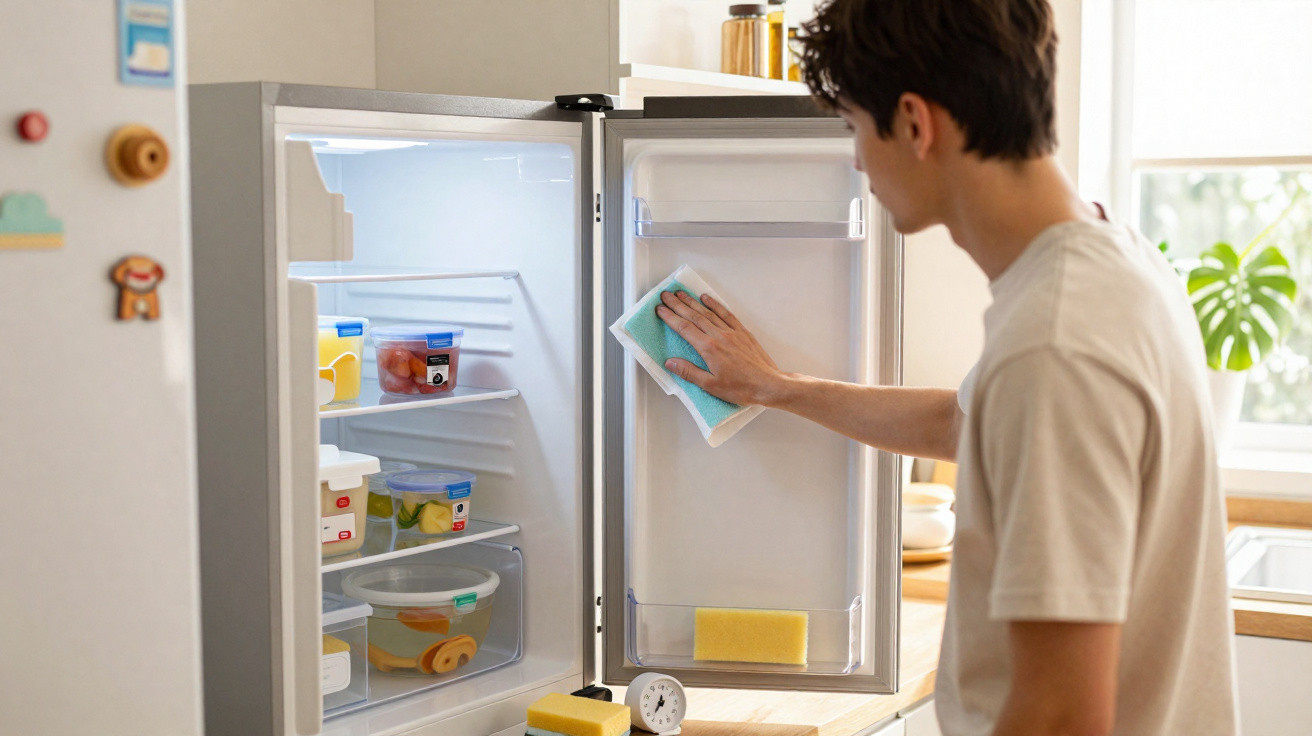
- Soak up all moisture thoroughly. Wipe with a cloth moistened with food-safe household alcohol or vinegar to dry and deodorise the interior.
- Dry the seals. If they are sticking, dust them very lightly with talcum powder to maintain a proper seal.
- Refit the shelves and drawers, then plug the appliance back in. Wait until it reaches -18 °C before returning the food.
- Record the date. In a well-organised kitchen, one cycle every 8 to 12 weeks is enough.
“Never use sharp objects or a heat gun. Repairing a punctured evaporator often costs more than the appliance itself.”
Aluminium: yes or no?
Aluminium conducts heat, which can make frost flakes easier to release. When used carefully, it can help with maintenance; when fitted carelessly, it obstructs airflow and interferes with sensors.
How to use it safely
- Never cover the rear wall, air outlets or drainage channel.
- Place removable sheets only on shelves and at the bottom of drawers, making them slightly smaller than the surface.
- Do not use adhesive tape: fold the edges to keep the sheets in place. Replace them when they turn white or begin to buckle.
- Remove them before an automatic defrost cycle if your model has one.
A longer-lasting alternative is thin silicone mats or reusable non-stick sheets, which are easy to remove and clean. The goal remains unchanged: reduce sticking and save time at the next maintenance session.
“The golden rule: protect removable surfaces, never the cooling components. Air must be able to circulate freely.”
Which freezer type develops the least frost?
| Technology | Frost | Maintenance | Energy consumption | Noise |
|---|---|---|---|---|
| Static | Visible frost on walls | Regular manual defrosting | Low to medium | Low |
| Fan-assisted cooling | Less frost, more even temperatures | Less frequent | Medium | Medium |
| No frost | Virtually no user-visible frost | Annual cleaning of drains | Medium to high | Medium to high |
Small habits that make all the difference
- Pack food in flat portions in tightly sealed bags. Less air means less moisture.
- Let food cool in the fridge before freezing it, improving temperature stability.
- Organise by zones: meat, vegetables and ice cream. You will find items faster and keep the door open for less time.
- Wipe frost from packaging before putting it back inside, so you do not add more moisture to the air.
- Test seals with a banknote: if it slips out easily, replace the seal.
- Leave 5 cm behind the appliance so heat can dissipate.
“Opening the door for 10 seconds lets in enough moisture to create frost. Decide what you need, then close it quickly.”
When you should suspect a fault
Is frost concentrated in “icicle” shapes near one corner? The seal may be misshapen. Does an even layer of frost return very rapidly after defrosting? The door may not be closing properly, or the appliance may be overloaded. Water beneath the drawers points to a drainage channel blocked by a piece of ice.
If the temperature varies by more than 4 °C in an hour when the door has not been opened, the sensor or control board should be checked. A technician can inspect the circuit pressure and the condition of the evaporator.
What this method saves in practical terms
A 200 to 300-litre freezer commonly uses 180 to 260 kWh per year. Frost-related excess consumption of 15% represents 27 to 39 kWh. At an average price of 0,23 € per kWh, that amounts to 6 to 9 € a year. The saving is greater if the appliance is old or heavily loaded.
A more stable temperature also cuts food waste. There is less freezer burn and fewer packs thrown away. A simple inventory written on the door with a marker and kept up to date reduces door openings made “just to look” and helps rotate your stock.
Practical questions everyone asks
How often should you defrost?
Take action as soon as there is 5 mm of ice. In a family kitchen, that often means 4 to 6 times a year for a static model.
Do you need to empty it completely?
Yes, if you want to do the job quickly and properly. A cool box and two ice packs will keep frozen food safe for several tens of minutes.
What about odours?
A bowl of bicarbonate of soda in one corner absorbs unpleasant smells. Replace it every month. A cloth with white vinegar is enough to neutralise them.
Aluminium, seals and ventilation: the winning trio
Removable sheets on shelves let you release ice in one movement. Clean, flexible seals keep humid air out. Good ventilation behind the appliance reduces the strain on the compressor. Together, these everyday measures keep the appliance operating at its intended performance level.
“If in doubt, choose removable, reusable protection. Nothing stuck down and nothing on the cold walls.”
Taking it further: tools and routine
- An inexpensive probe thermometer to check -18 °C between two packs.
- A wide plastic spatula and a basin of hot water kept specifically for the freezer.
- Silicone or aluminium sheets set aside for the task and stored with the tea towels.
- A calendar reminder every two months, with 40 minutes reserved.
This organisation limits fluctuations and peaks in energy consumption. It protects the compressor and makes food storage more dependable. Larger households also benefit from smoother day-to-day use, especially during spells of hot weather.





Comments
No comments yet. Be the first to comment!
Leave a Comment