
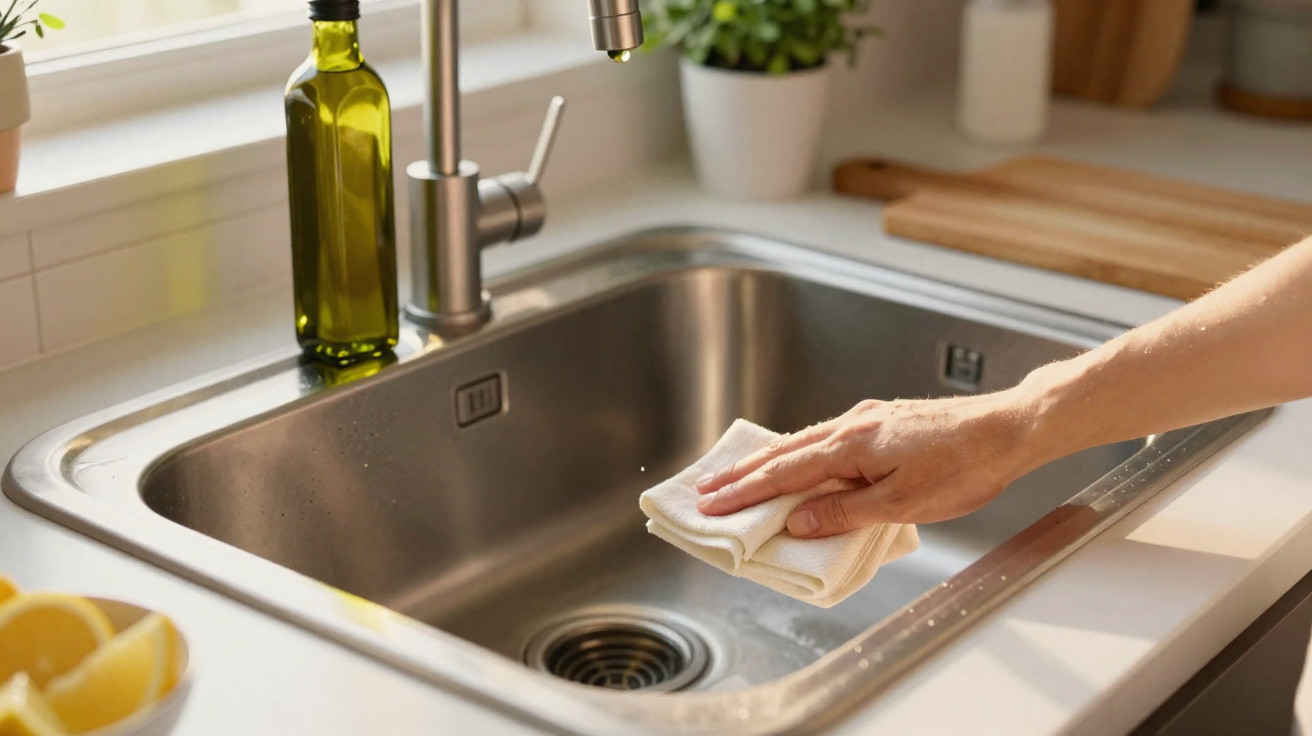
There is a particular, self-satisfied gleam in a showroom that can seem unattainable at home. My stainless steel sink had traded that lustre for fingerprints, little limescale marks and the dull haze left by hard water. Then I tried a slightly cheeky solution from the kitchen cupboard.
Every streak seemed to shout at me and each watermark looked proud of itself. The sink was technically clean, but it looked weary, like a shop window at the end of the day. I wiped it, polished it and muttered to myself, but it remained stubbornly flat. Then the olive oil bottle on the worktop caught my eye, as kitchen staples somehow do. It sounded ridiculous, which made it difficult to resist. I dabbed a little oil onto a soft cloth, moved it slowly along the grain, and watched the steel brighten as though a second sun had appeared. The hero turned out to be a salad ingredient.
Why olive oil gave my sink that showroom shine
It is a modest trick using an entirely ordinary item. Stainless steel has a subtle brushed finish, and that texture holds onto grease and water marks unevenly. Olive oil moves smoothly over it, settling into minute scratches and reducing the visual clutter. Light is then reflected more consistently, replacing dullness with gloss without the need for abrasive products. It is not a harsh glare but a warm glow. That is the shift from “nice kitchen” to “who cleaned this this morning?” The real magic is not the oil itself, but the way it alters the surface’s relationship with light.
The first time, I polished only the inside bowl. The rim and draining board remained as they were, making the sink look like a perfectly divided before-and-after picture. My partner came in and asked, “Did you buy a new sink?” I laughed and carried on, finishing the rest in unhurried, pleasing strokes. Britain’s kettles have endured far worse household experiments. This one, though, delivered an instant and unexpectedly soothing result. One cloth and one cupboard staple brought out that gentle, expensive-looking sheen. I kept returning to look at it, which may be smug, but it is true.
There is a practical explanation behind it. Oil repels water, so a barely-there layer worked into the steel makes splashes less likely to cling and slows down the appearance of new marks. The direction of the metal grain is important, too. Polishing along it keeps the reflected light even and prevents swirly streaks. You are not covering the sink in oil; you are smoothing over the tiny, unseen marks that scatter light. Use too much and you will get smears. Use almost none and you achieve the showroom shine visible from across the room. It is less a chemistry lesson than an optical shortcut that works within seconds.
How to polish a stainless steel sink without greasy streaks
Always begin by cleaning. Wash the sink with warm water and a small amount of washing-up liquid, then dry it thoroughly with a microfibre cloth. Add a tiny pea-sized drop of olive oil to the cloth rather than applying it directly to the steel. Begin in the rear corner, using long, gentle strokes that follow the grain. Leave the tap base and overflow lip until last, as these areas show smears most quickly. Turn the cloth to a fresh, dry section and remove all remaining residue until the surface feels dry under your fingers. The aim is a glow, not an oily coating. If you can see oil sitting on the surface, there is too much.
Everyone knows the feeling: visitors are ten minutes away and the sink resembles a miniature splash zone. This is the sort of quick solution that helps. Realistically, no one is likely to do it daily. Save it for the occasions when the kitchen needs a lift. Typical errors include pouring oil straight onto the steel, using lint-shedding kitchen roll, rubbing in circles and skipping the drying stage. Streaks on the tap usually mean excess product, so go over it once more with a clean cloth. If the sink has a specialist protective coating, test the method first on a small spot beneath the rim.
Olive oil is food-safe, making it a reassuring option for kitchen use. However, a thick layer may collect dust or make handles feel slippery, so the rule that less is more prevents sticky disappointment. The smallest quantity has the greatest effect. If you are concerned that the oil could turn rancid, bear in mind that it is buffed into an exceptionally thin film and the sink is washed several times daily anyway.
“Think of it like polishing shoes,” a colleague said. “You don’t slather; you buff until there’s nothing left to see, only shine.”
- Follow the grain rather than polishing in circles.
- Choose a microfibre cloth instead of paper towel.
- Keep buffing until the surface feels dry, not slippery.
- One dot of oil will cover the whole sink.
- Do not get oil on the floor or handles, as it can cause slips.
What a week with the olive oil trick taught me
By the third day, water was still beading across the draining board as it does on a new car bonnet. The inner bowl collected ordinary signs of use, including coffee rings and pasta starch, but rinsed more cleanly and quickly. I polished it twice that week, not because it required it, but because it took 30 seconds and made a tidy kitchen feel confidently sparkling. On hectic evenings, I gave only the tap and rim a brief buff. That narrow border is what people notice first. It is like the tidy collar on an otherwise plain shirt: a small detail with a big effect on the mood.
There are alternatives worth noting. Mineral oil and baby oil create much the same effect while being slower to oxidise. Some people also favour a small amount of glycerine. In a warm home, olive oil may eventually develop an off smell on wood or porous materials, so I reserve it for steel alone. The sink is washed constantly, meaning nothing remains for long. For persistent hard-water marks, wiping with white vinegar before drying is useful; the oil polish then completes the job. You can tailor the approach to your home without turning the kitchen into a laboratory.
Another unexpected benefit was that fingerprints became less of an issue. They still appeared, but a light pass with the cloth removed them instead of requiring a full scrubbing session. The finish also made old scratches, such as those left by a heavy baking tray, appear softer. They had not disappeared, merely become less noticeable. A streak-free finish is not about flawless steel; it is about making its everyday wear more forgiving. If you prefer a neat, relaxed-looking kitchen, this method earns its place in the cupboard without adding more bottles beneath the sink.
There is a quiet pleasure in discovering a solution that has been in sight all along. Olive oil will not renovate the kitchen, but in less than a minute it can change the way the room feels. The steel looks looked after, and you feel more in control. It is a small, slightly cheeky ritual that fools the eye and improves the mood. Tell the friend who loves practical magic, or save it as your own finishing touch when the light falls perfectly. The sink did not need replacing. It simply needed a gentler form of care.
| Key point | Detail | Benefit for the reader |
|---|---|---|
| Clean, dry, then oil | Wash with washing-up liquid, dry completely, then apply a dot of olive oil along the grain | Quicker shine with fewer streaks |
| Less is more | Buff until the surface feels dry rather than slippery | A showroom appearance without oily residue |
| Useful additions | Use a vinegar pre-wipe for hard water; choose baby oil as a lower-odour alternative | Lets you adapt the method to your home and routine |
FAQ:
- Will olive oil damage stainless steel? No. When used sparingly and buffed until dry, it will not damage stainless steel. Do not soak seals or rubber components, and keep oil off the floor to avoid slips.
- How much olive oil should I use? A pea-sized dot is enough for an average sink. Use more only if the cloth becomes dry; if oil is visible, you have applied too much.
- Can I use other oils instead? Yes. Mineral oil or baby oil provides a similar sheen and is less prone to oxidising. If polishing areas that contact food, select food-safe options.
- How often should I polish the sink? Polish it whenever it starts to look dull. In many homes, once weekly or after a deep clean is sufficient. Fast touch-ups on the rim and tap will keep it looking fresh.
- What about fingerprints and water spots? The oil helps repel water and makes marks easier to wipe away. Dry the sink after use where possible, then buff lightly again for an immediate lift.



Comments
No comments yet. Be the first to comment!
Leave a Comment