
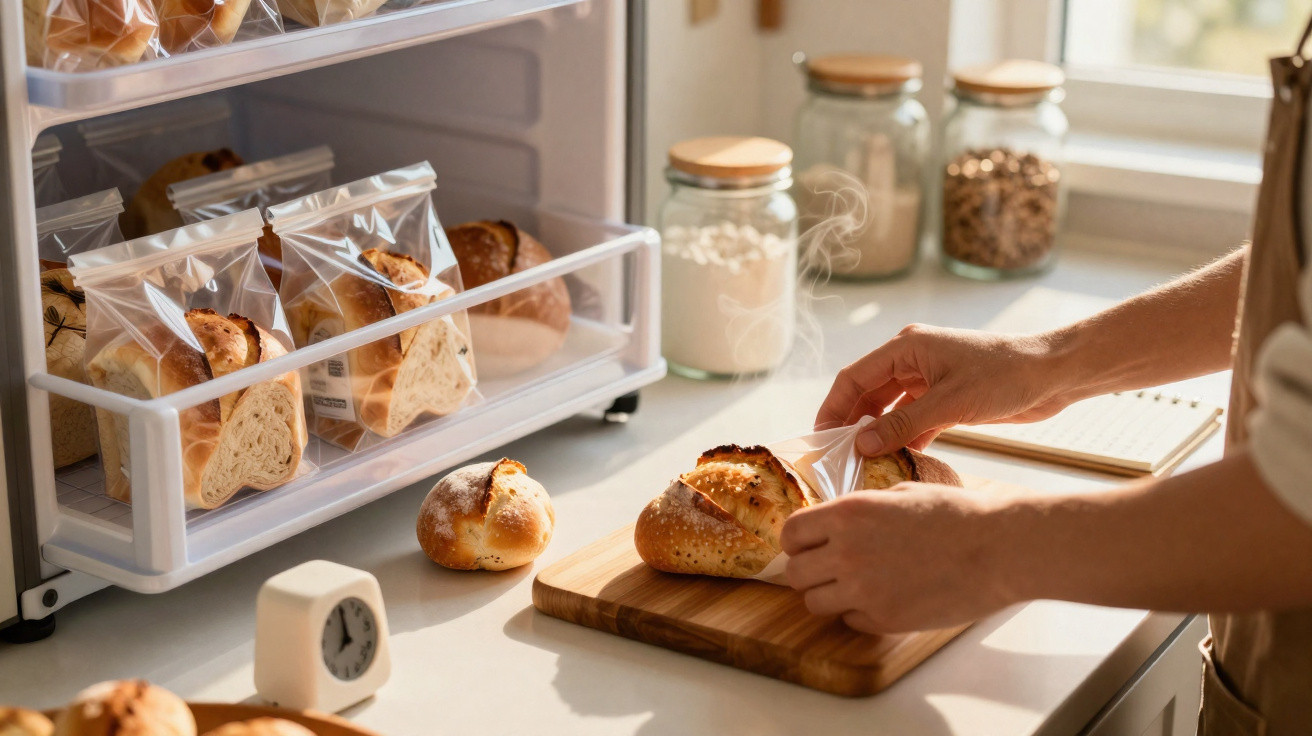
With food prices rising and daily life becoming ever busier, storing bread in the freezer has become routine in many Brazilian households.
This trick can genuinely reduce waste and ensure there is bread available at any time. However, if it is done incorrectly, it can spoil the texture and flavour, and may even alter the way this food affects the body.
Why so many people freeze bread nowadays
The habit of buying larger quantities of bread and freezing it has grown with home working, inflation and the desire to make fewer trips to the bakery or supermarket. It is convenient, seems economical and provides a sense of security.
In effect, the freezer has become a kind of backup supply of quick carbohydrates, ready for breakfast, children’s snacks or an improvised evening sandwich.
“Freezing bread makes sense as an anti-waste strategy, provided the process is considered from start to finish: from buying it to the way it is reheated.”
The issue is that many people simply put the bag of bread into the freezer and forget about it. Weeks later, when they remember it, they find bread that is whitish, rubbery or completely bland. What was meant to prevent waste then ends up in the bin.
Is freezing bread bad for your health?
From a food safety perspective, bread can be frozen without posing a risk, as long as it is not spoiled before it goes into the freezer. Low temperatures prevent micro-organisms from multiplying, but they cannot remedy food that was already compromised.
The main nutrients, including B vitamins and minerals, generally remain relatively stable during freezing. The bigger effect occurs elsewhere: in the texture, taste and the body’s response to the food.
What changes in bread after freezing
- Water in the dough crystallises, affecting its internal structure;
- Gluten loses elasticity over the freezing period;
- The crumb can become dry and crumbly or, conversely, rubbery;
- The glycaemic index may rise when the bread is reheated incorrectly.
The glycaemic index measures how quickly a carbohydrate-rich food raises blood glucose levels. The higher it is, the sharper that response is likely to be.
“When it is baked, frozen and then heated again, bread goes through a ‘second round’ of heat, which can make its glycaemic index slightly higher.”
This does not turn bread into an absolute villain, but it deserves attention from people with diabetes, insulin resistance or those trying to manage fluctuations in hunger and fullness.
How long bread can stay in the freezer
From a food safety standpoint, properly wrapped bread can remain frozen for several months. Its quality, though, declines long before then.
As the weeks pass, ice crystals rearrange themselves, drawing water out of the bread’s structure and creating that pale appearance, muted flavour and rubbery crumb.
| Type of bread | Recommended freezing time | What usually happens after that |
|---|---|---|
| Baguette / French bread roll | Up to 1 month | Loses its crispness quickly; the crumb becomes dry and elastic |
| Long-fermented or country-style bread | 1 to 2 months | Holds its texture better, but the flavour starts to become dull |
| Artisan wholemeal breads | Around 1 month | The crumb may become brittle, with a sandy feel |
| Industrial sliced loaves | 2 to 3 months | The texture holds up, but the nutritional quality remains inferior |
“After one month, bread generally loses much of its appeal, even if it is still safe to eat.”
The most common mistakes when freezing bread at home
Some seemingly harmless habits do the most damage to bread in the freezer. Many of them happen simply because people have not been given proper guidance.
Freezing it while still hot or warm
Putting freshly baked bread straight into the freezer encourages the formation of large ice crystals, which rupture the internal structure. It is best to wait until it has cooled completely.
Leaving bread unprotected
When bread goes into the freezer ‘naked’, with direct exposure to the cold air, so-called freezer burn occurs: intense dehydration, whitish patches and an icy flavour.
“Freezer bags are always worthwhile or, at the very least, wrap the bread well in cling film and then aluminium foil.”
Freezing very large loaves
Freezing a large loaf whole encourages another mistake: thawing everything at once and then trying to keep the remainder in the fridge, where it goes stale quickly.
How to freeze bread properly
A few straightforward steps can completely change the outcome when bread comes out of the freezer.
Step-by-step freezing for bakery-quality results
- Let the bread cool fully at room temperature;
- Slice it or divide it into individual portions if it is for everyday use;
- Wrap it securely, ideally removing as much air from the bag as possible;
- Label it with the type of bread and the freezing date;
- Arrange the freezer so that the oldest breads are at the front.
Slicing it beforehand makes life much easier. You can take out only what you need for breakfast or a snack, reducing waste while keeping the rest protected.
Thawing matters just as much as freezing
Many people ruin bread at the thawing stage. Leaving it on the kitchen counter for hours usually produces a limp crust and a crumb that is overly damp on the outside but dry within.
“The most effective method is to go straight from the freezer to heat: an oven, air fryer or toaster.”
In the oven, only a few minutes at a medium temperature are needed to restore a crisp crust. In an air fryer, the process is faster still, although it is important to watch it so it does not dry out.
Another rarely discussed point is that thawed bread does not keep well for long. In general, it retains a good texture for a few hours. After half a day, it starts to harden.
Good thawing practices
- Heat only the amount that will be eaten at the next meal;
- Avoid returning thawed bread to the fridge;
- For a moister result, lightly spray the crust with water before putting it in the oven;
- For toasted sandwiches, use bread that is still slightly frozen; the final cooking heat completes the process.
The effect of frozen bread on routine and health
For large families or people living far from bakeries, the freezer becomes an ally. It makes it possible to buy in bulk, take advantage of promotions and ensure children’s snacks are available without a rush.
On the other hand, having bread permanently available can encourage automatic consumption of refined carbohydrates. The situation is common: sudden hunger, little patience, and frozen bread appears to be the instant solution at any hour.
“One way to create balance is to alternate different breads in the freezer with portions of fruit, nuts and frozen vegetables, creating less monotonous snack options.”
Details that support better choices
Nutritionally, more rustic, wholemeal or naturally fermented breads tend to provide fibre, better fullness and a gentler glycaemic response than ultra-processed sliced loaves.
For people who already freeze bread, one approach is to reserve freezer space for:
- A good-quality sliced wholemeal loaf;
- A naturally fermented bread for special occasions;
- A smaller quantity of French bread rolls, for quick consumption within a few days.
Another issue worth considering is what accompanies the bread. Excessive butter, daily processed meats and high-fat cheeses may have a greater impact on health than freezing itself.
It helps to picture practical situations. A family that buys three bags of French bread rolls on Saturday, slices some of them, wraps them, freezes them and arranges them by date is likely to throw away less and maintain better quality. By contrast, someone who freezes everything haphazardly and forgets it in the freezer will usually end up with sad-looking bread that nobody wants to eat.
For anyone living with diabetes or pre-diabetes, it is worth speaking to a healthcare professional about how to spread bread consumption throughout the day, prioritising higher-fibre versions and pairing them with protein and healthy fats, such as eggs, olive oil and avocado, to soften glucose spikes.




Comments
No comments yet. Be the first to comment!
Leave a Comment