
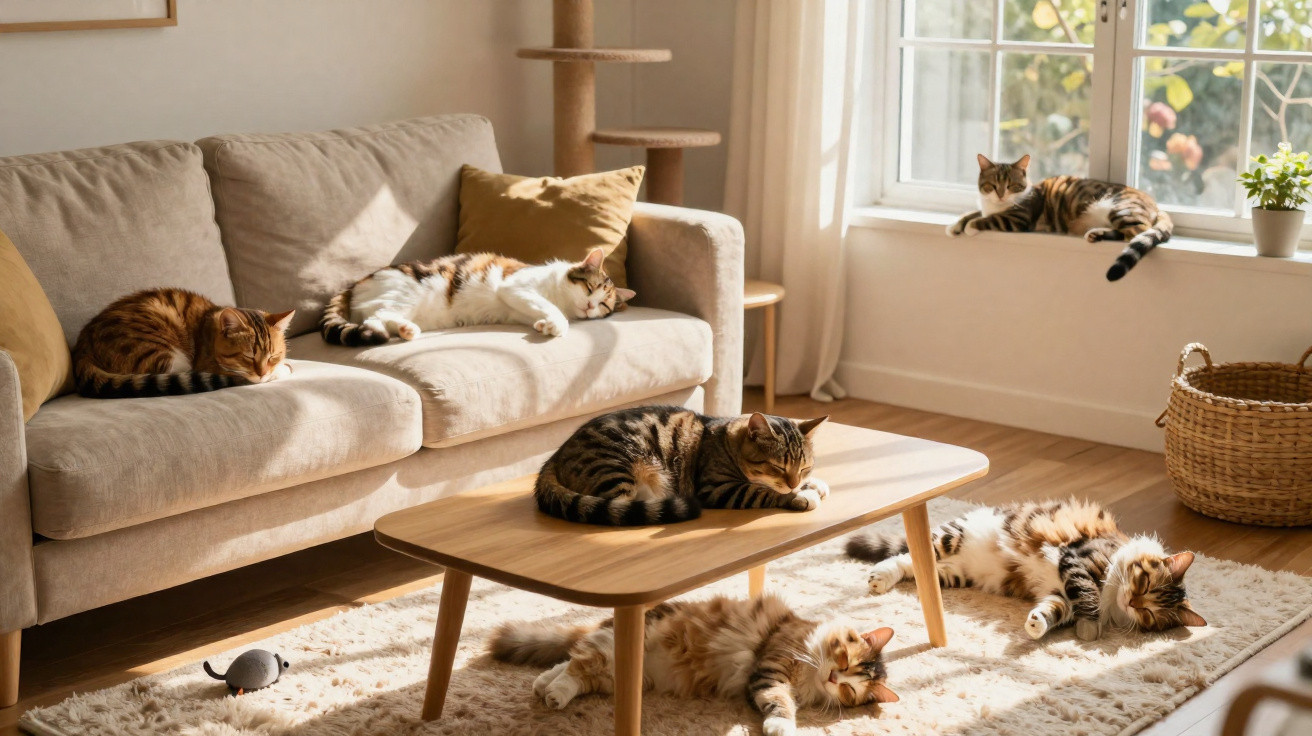
Anyone who lives with cats knows they are genuine experts at sleeping. These animals may spend around 12 to 16 hours each day resting, with this total often being even higher for kittens and elderly cats. This behaviour is linked, among other things, to feline nature itself: they alternate active periods with extended rest to conserve energy.
Over those sleeping hours, a cat will often change how it positions its body several times. Certain postures help retain warmth, while others leave vulnerable areas exposed and are more likely when the animal feels safe.
Below are the meanings behind some of the positions cats commonly sleep in.
1. Curled into a ball
One of the most familiar ways to find a sleeping cat is with its body tightly curled into a ball, usually with its head close to its paws and tail. This position is connected to cats’ natural instincts, as it keeps more vulnerable areas, such as the abdomen, protected while they rest. By drawing its body in, the animal also limits exposure to its surroundings and retains body heat, making this posture particularly cosy in cooler places.
2. Lying on its side
Sleeping on its side, with the legs stretched out or slightly bent, is another posture linked with relaxation. In this position, part of the abdomen is exposed, suggesting that the cat probably feels comfortable and protected where it is resting. It also allows the muscles to relax more fully and can support longer stretches of deeper sleep. Even so, the animal can get up quickly if it notices a stimulus or possible threat nearby.
3. In the “loaf” position
Commonly called the “loaf” position, this posture occurs when a cat tucks both its front and back paws underneath its body, giving it a rounded appearance. It generally shows that the animal is comfortable while still maintaining some awareness of its surroundings. Because it is not fully stretched out, it can rise relatively quickly if something catches its attention.
4. Sleeping on its back
When a cat sleeps on its back, with its belly fully exposed and its paws relaxed, it is usually showing that it feels secure in its environment. The abdomen contains vital organs and, instinctively, tends to be shielded from potential dangers. For this reason, leaving its belly exposed while asleep can signal trust and relaxation. This position also lets the animal keep its body more extended, which may be more comfortable, especially in warm surroundings.
5. With its paws over its face
Some cats seem to use their own paws as a mask while sleeping. As well as creating a very distinctive sight, placing one or both front paws over the eyes can serve practical purposes. The posture helps block out light, making it easier to rest in brighter environments. It may also help preserve warmth around the face and extremities, particularly when the cat is curled up.
6. Stretched out on its stomach
In this position, the cat keeps its abdomen facing the floor and may stretch its front legs forwards and its back legs behind it, resembling an animal “flying”. This posture allows it to relax and stretch its body while keeping its abdomen protected. It also makes it easier to get up and move swiftly in response to a stimulus. Temperature can affect this choice: on warmer days, some cats seek out cool floors and lie stretched out to increase bodily contact with the surface.




Comments
No comments yet. Be the first to comment!
Leave a Comment