
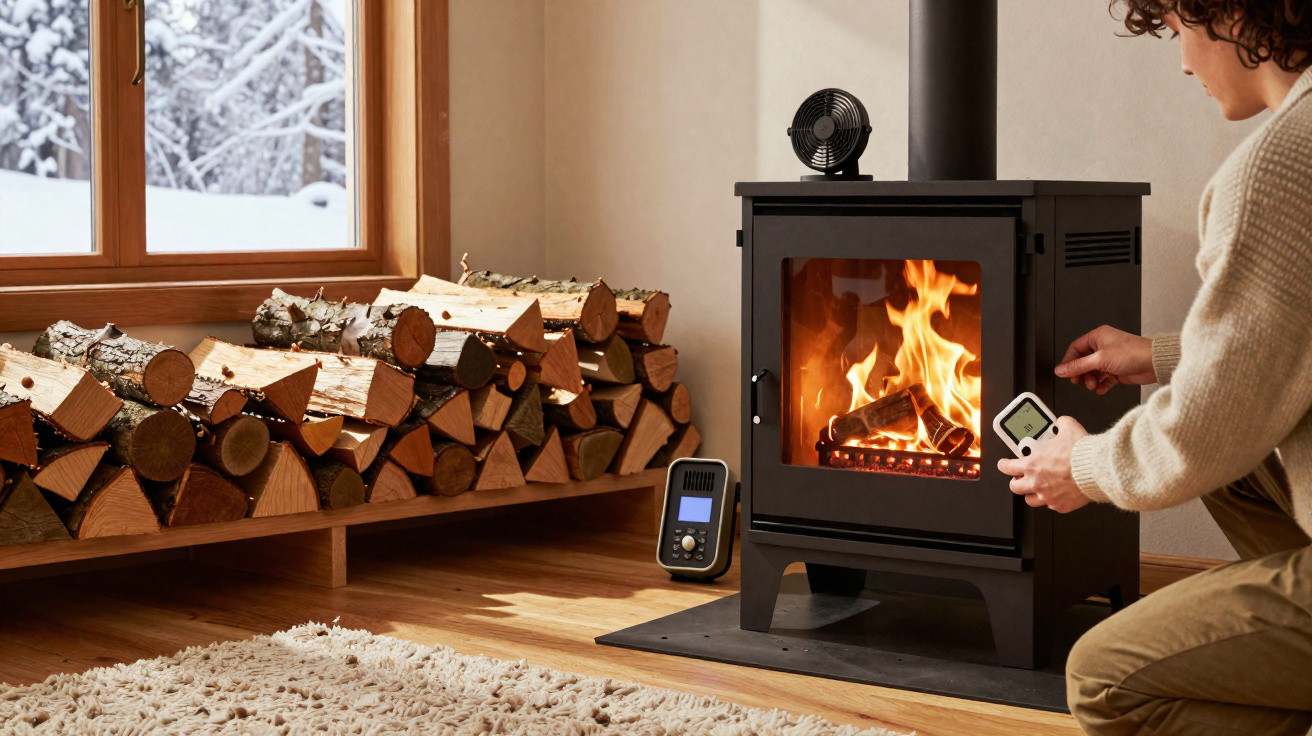
When the first frosty nights arrive, the crackle of logs becomes almost another character in the home, yet the cost of firewood can be alarming.
Households that rely on wood heating face a difficult balance: keeping the home comfortable, controlling costs and avoiding an excessive environmental impact. A few technical and everyday adjustments can reduce the amount of wood burned without sacrificing that cosy feeling - or having to wear a coat indoors.
Why wood heating is back on the agenda
As energy and gas prices have risen in several countries, wood heating has regained attention as an option seen as cheaper and, when used properly, less polluting. In rural areas and small towns, the wood-fired range, living-room stove or modern wood burner remains central to domestic life in winter.
At the same time, pressure is growing to use wood more responsibly, both because of its cost and because smoke affects air quality. The encouraging news is that straightforward changes - from selecting firewood to lighting the fire - can cut consumption significantly.
A properly adjusted installation, dry firewood and a home with basic insulation can reduce consumption by tens of per cent without compromising thermal comfort.
1. Firewood quality: the first step towards saving money
Not every type of firewood produces heat in the same way. The species, how it is cut and, above all, its moisture content have a direct effect on performance.
- Give preference to hardwoods, such as oak, beech, ash, well-seasoned eucalyptus or suitable local equivalents.
- Avoid green or freshly cut wood: much of its energy becomes water vapour rather than heat.
- Aim for moisture below 20%, which generally means drying it for at least 18 to 24 months in a ventilated place.
Damp wood produces more smoke, dirties the appliance glass and flue, raises the risk of soot-related fires and requires far more wood to achieve the same sense of warmth.
Dry firewood delivers more heat per log, makes lighting easier, reduces dirt in the system and lowers local pollutant emissions.
2. Keep maintenance up to date: a dirty chimney means waste
Cleaning the installation is one of the most overlooked aspects. Built-up soot, creosote and ash restrict airflow, weaken the draught and reduce the appliance’s efficiency.
What to check regularly
- Have the flue swept at least once a year, or twice when the appliance is used heavily.
- Remove ash from the firebox regularly, while leaving a thin layer to help protect the firebrick lining.
- Check the seals around doors and glass, as damaged seals alter the air supply.
Maintenance professionals report that older appliances which are kept clean can sometimes perform better than neglected modern models. Dirt acts as an “invisible tax” on every log.
3. The right air at the right time: fine-tuning combustion
Controlling the air intake is central to efficiency. Too little air starves the fire and causes incomplete combustion; too much cools the fire and carries heat away through the chimney.
In practice, it is worth watching the flames and smoke:
- A lively, yellow and steady flame suggests good combustion.
- A large amount of thick smoke at the outlet points to inefficient burning or damp firewood.
- Embers that disappear quickly may indicate excessive airflow because the vents are opened too far.
Adjusting the airflow for each stage of the fire - lighting, active flames and embers - is one of the cheapest ways to save firewood.
4. An insulated home makes wood heating more economical
Even the best wood burner in the neighbourhood is of little use if the house behaves like a thermal sieve. A considerable share of the wood burned merely offsets cold draughts from poorly sealed windows, doors without draught seals or an uninsulated roof.
Simple improvements that make a difference
- Fit draught excluders to doors and windows.
- Use heavy or thermal curtains at night.
- Lay rugs over cold floors, particularly on uninsulated concrete slabs.
- Close off rarely used spaces during winter.
These measures do not replace a professional insulation scheme, but they reduce heat loss and, in practice, allow the fire to be run more moderately while using less wood.
5. Distributing heat more effectively around the home
In many homes, the living room becomes almost unbearably hot while the bedroom remains cold. The result is predictable: the fire is increased in an attempt to warm the rest of the house, and consumption rises sharply.
Simple equipment can help redistribute heat:
- A stove fan, placed directly on the appliance and powered by its own heat.
- Heat distributors or ducting, which channel warm air into other rooms.
The more even the temperature between rooms, the less temptation there is to “open up the wood-burner vent” simply to make up for a cold bedroom.
6. Lighting techniques that use less firewood
How a fire is lit affects not only comfort but also the amount of wood used over the course of the day. One increasingly popular method is “top-down” lighting.
How top-down lighting works
- Place the largest logs at the bottom.
- Arrange medium-sized pieces above them, then kindling and firelighters in the top layer.
- Light the top layer, close the door and adjust the initial air intake.
The fire gradually burns downwards, making better use of the gases released by the wood. This approach tends to create less smoke and dirt, while providing a steadier heat curve.
7. Upgrading the appliance: upfront cost, ongoing savings
Very old appliances often have low efficiency, sometimes close to 50%. This means half the energy in the firewood is lost through the chimney. Modern wood burners, inserts and double-combustion models can exceed 75% efficiency.
| Appliance type | Typical efficiency | Effect on consumption |
|---|---|---|
| Old open fireplace | 30–40% | High consumption, substantial heat loss |
| Basic old wood burner | 50–60% | Moderate consumption, more intense smoke |
| Modern wood burner/insert | 75–85% | Less firewood for the same comfort |
Replacement requires investment, but in areas with long winters, the savings on firewood over several years are likely to offset the purchase, alongside improved safety and lower emissions.
Practical scenarios: how much can be saved?
Consider a 90 m² home heated with wood every day for four months. With an old installation, damp firewood and limited draught-proofing, consumption can easily reach 10 to 12 cubic metres per season.
With dry firewood, draught excluders on the main windows, top-down lighting and annual flue cleaning, this volume can fall to between 7 and 9 cubic metres without the house feeling colder. Replacing the appliance with a modern model is likely to reduce it further.
Savings rarely come from a single decision. They emerge when small improvements are combined: better firewood, a less draughty home and a more carefully controlled fire.
Risks, precautions and sensible combinations
When aiming for greater efficiency, certain risks require attention. Closing the air inlets too much to “keep the fire in” can increase carbon monoxide and soot production. This is why dry firewood and good room ventilation remain essential.
Another increasingly common combination is to use wood heating alongside other systems, such as heat pumps or electric heaters at particular times. Firewood is then used on the coldest evenings or at weekends, helping to reduce peak energy demand and providing some independence if the grid fails.
Finally, anyone considering growing some of their own firewood needs to take long cycles into account. Fast-growing species provide lighter, less dense timber, meaning the greater volume required must be allowed for. Planning to use different species together, alternating dense and lighter firewood, can create an appealing balance between ease of lighting and how long the fire lasts.




Comments
No comments yet. Be the first to comment!
Leave a Comment