
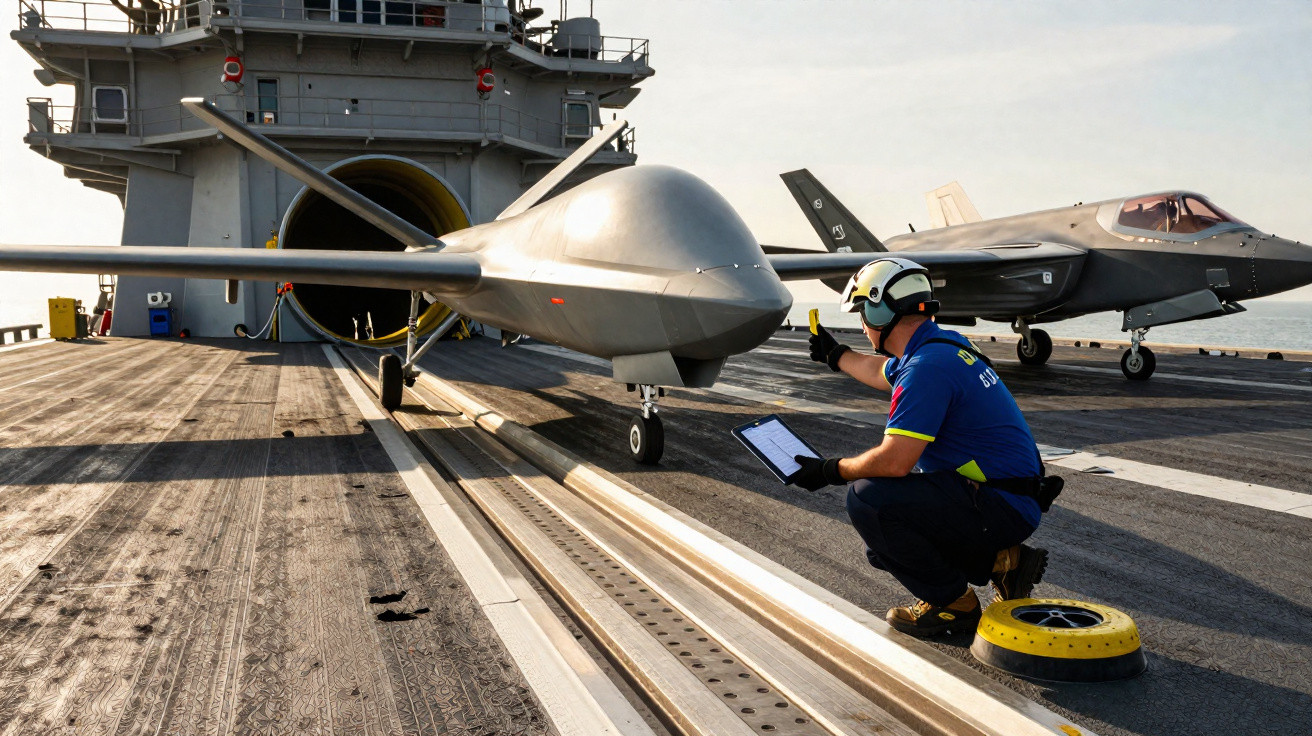
The U.S. Navy is discreetly transforming its most potent means of controlling the seas.
Washington is accelerating the completion of its latest supercarrier, USS John F. Kennedy, as the first Ford-class vessel demonstrates its capabilities in live combat operations.
Washington fast-tracks Kennedy after USS Ford’s combat debut
During a visit to Huntington Ingalls Industries’ Newport News Shipbuilding facility in Virginia on 6 January 2026, U.S. Secretary of War Pete Hegseth confirmed that work on USS John F. Kennedy (CVN-79) is being brought forward.
The second Ford-class aircraft carrier is now due to be handed over to the U.S. Navy and commissioned at about March 2027, several months ahead of the initial timetable. It is currently in the final outfitting stage, during which sophisticated combat systems, electronics and aviation equipment are fitted and tested.
The Pentagon is tightening the schedule for USS John F. Kennedy after gaining confidence from USS Gerald R. Ford’s first combat deployment off Venezuela.
The move comes after a significant achievement for the class’s lead ship. On 3 January 2026, USS Gerald R. Ford (CVN-78) was confirmed as having supported a U.S. Special Operations Forces operation off Venezuela’s coast, supplying intelligence, surveillance and reconnaissance (ISR), electronic warfare co-ordination and rapid air support. This was the first use of a Ford-class carrier in a combat capacity.
Ford-class: a decisive shift from the Nimitz era
The Ford-class represents the most extensive redesign of the U.S. Navy’s nuclear-powered aircraft carriers since the Nimitz vessels introduced in the 1970s. In overall dimensions, Ford and Nimitz carriers are comparable: each displaces roughly 100,000 tonnes, measures 333 metres (1,092 feet) in length and has a flight deck approximately 78 metres (256 feet) wide.
However, beneath the exterior, their engineering and operational approaches differ substantially. The Ford-class is designed with greater electrical capacity, quicker aircraft movement and provision for future weapons and sensors that have yet to enter service.
Where the Nimitz was optimised for Cold War air wings, the Ford is designed to handle manned fighters, drones, and emerging systems on the same flight deck.
EMALS, AAG and a faster air-operation tempo
The clearest advance lies in aircraft launch and recovery. Ford-class carriers employ:
- EMALS (Electromagnetic Aircraft Launch System) rather than steam catapults
- AAG (Advanced Arresting Gear) in place of older hydraulic arresting systems
EMALS uses electromagnetic force to propel aircraft into the air with more accurate control than steam catapults. This enables crews to adjust launches according to an aircraft’s weight, reducing airframe strain and allowing lighter aircraft or unmanned systems to be used.
AAG serves a comparable function during recovery, giving crews more precise management of deceleration forces and accommodating a broader aircraft range, from heavy fighters to drones.
Together, these technologies increase the number of sorties the vessel can maintain. In standard high-intensity operations, the Ford-class is intended to sustain around 160 sorties daily and exceed 270 during short surges. Comparable Nimitz-class carriers generally reach around 120 sorties per day, with less capacity to increase their output during a crisis.
Spare power for future weapons
The Ford-class also features a new nuclear power plant centred on two A1B reactors. Each produces considerably more electrical power than the A4W reactors used aboard Nimitz carriers.
Public estimates place Ford-class electrical generation above 100 megawatts, against approximately 30 megawatts for Nimitz ships. While EMALS and AAG already require more power than older systems, the capacity was intentionally made larger than immediate requirements.
The Ford-class is wired not just for today’s combat systems but for future power-hungry technologies like lasers, advanced jammers and next-generation radar.
This additional electricity offers the Navy flexibility: directed-energy missile-defence weapons, more capable electronic warfare systems and high-resolution surveillance equipment can all be incorporated without significant structural alterations.
A flight deck designed for crewed jets and drones
Nimitz and Ford carriers have air wings of broadly similar size-around 75 aircraft-but their composition and adaptability are different.
| Carrier class | Typical air wing highlights | Unmanned & tiltrotor support |
|---|---|---|
| Nimitz-class | F/A-18E/F fighters, EA-18G, E-2D, MH-60, C-2A cargo aircraft | Limited; drones and tiltrotors need modifications |
| Ford-class | Similar core, plus MQ-25 Stingray and CMV-22B Osprey integration | Native design support for unmanned and tiltrotor aviation |
On Ford-class carriers, the older C-2A Greyhound cargo aircraft is succeeded by the CMV-22B Osprey tiltrotor, which can land on a far wider range of platforms within a strike group. The vessel is also designed to operate the MQ-25 Stingray, an unmanned aerial refuelling drone that increases the striking range of fighter aircraft.
In time, the Navy intends to introduce F-35C stealth fighters and future Next Generation Air Dominance (NGAD) platforms. Compared with their predecessors, Ford-class carriers are designed around greater reliance on data links, networked targeting and unmanned support aircraft.
Redesigned island and weapons elevators
On the Ford-class, the island-the tower on the starboard side of the flight deck-has been made smaller and repositioned. This creates additional deck room to park, arm and move aircraft, while improving sightlines for flight-deck crews.
Three electromagnetic weapons elevators beneath the deck transport bombs and missiles from magazines to the flight deck more quickly. Their earlier reliability problems prompted substantial criticism, but more recent improvements have raised performance, and Kennedy will receive these refinements from the outset.
Global benchmarks: China, Russia and France remain behind
Ford-class carriers do not operate without competition. Other major powers are making significant investments in carrier aviation, yet none currently deploys a ship with comparable reach.
- China’s Fujian (Type 003) displaces approximately 85,000–90,000 tonnes and employs electromagnetic catapults. It has conventional propulsion and is not yet fully operational.
- Russia’s Admiral Kuznetsov is smaller, conventionally powered and affected by maintenance problems that have restricted its deployments.
- France’s Charles de Gaulle is nuclear-powered but displaces about 42,000 tonnes and carries roughly 30–40 aircraft. It is suited to NATO operations, though not to maintaining a continuous worldwide presence.
In terms of endurance, tonnage, and sustained sortie generation, the Ford-class remains unmatched among current or near-term rivals.
Washington is monitoring China’s programme particularly closely. Fujian’s catapult arrangement indicates a move towards heavier, more capable carrier aircraft and longer-range operations for the People’s Liberation Army Navy. Nevertheless, its lack of nuclear propulsion and smaller air wing mean it still cannot match the Ford-class’s global reach.
Kennedy’s place in an expanding Ford-class fleet
USS John F. Kennedy will become the second operational Ford-class carrier, benefiting from lessons learned during both construction and Ford’s first deployment. CVN-79 is receiving software upgrades, improved combat-system integration and more dependable weapons elevators.
The programme extends beyond those two ships. The following vessels, CVN-80 (Enterprise) and CVN-81 (Doris Miller), are being built in phases, while two additional hulls-CVN-82 and CVN-83-are at an advanced planning stage. This extended production pipeline is intended to ensure that U.S. carrier forces remain modern through the 2050s and beyond.
Accelerating Kennedy is less about one ship and more about ensuring that a new generation of carriers reaches operational strength fast enough to deter rising naval powers.
As ageing Nimitz-class vessels leave service, Ford-class ships will progressively become the core of U.S. carrier strike groups. A carrier normally deploys alongside guided-missile cruisers and destroyers, attack submarines and logistics ships, creating both a mobile airbase and a surface action force.
Why speed matters: deterrence, presence and risk
For the Pentagon, Kennedy’s delivery date is more than a shipyard target; it reflects a strategic judgement. The United States faces concurrent pressure across the Indo-Pacific, North Atlantic and broader Middle East, as Russia and China expand their naval activity and invest in anti-ship missiles.
A larger Ford-class fleet allows the Navy to maintain at least one advanced strike group deployed in sensitive areas, while a second trains and a third receives maintenance. Delays to new vessels compel older carriers to deploy more frequently, increasing both wear and the likelihood of failures.
There are associated risks. The Ford-class is expensive and highly complex, and an accelerated build can worsen early reliability problems if defects are not identified promptly. Navy leaders and shipbuilders must continually balance schedule demands against rigorous testing.
Key concepts behind carrier power
Several concepts are central to discussions about the Ford-class:
- Sortie generation rate: the number of aircraft missions a carrier can launch and recover over a set period. A higher rate directly means more bombs delivered on target or more patrols kept in the air.
- Nuclear endurance: a nuclear-powered ship’s capacity to operate for years without refuelling, constrained chiefly by food, spare parts and crew fatigue rather than fuel supplies.
- Distributed operations: a strategy in which forces are dispersed over a larger area, making them more difficult to target while allowing their effects to be concentrated through networks and long-range weapons.
In a crisis near Taiwan or the Persian Gulf, for instance, a Ford-class carrier could remain hundreds of miles offshore while continuing to conduct sustained strikes with MQ-25 drones providing air-to-air refuelling. Its aircraft could simultaneously deliver airborne early warning, anti-submarine patrols and electronic warfare, influencing the complete air and maritime picture for joint forces.
Such situations illustrate why the United States is prepared to invest billions in the Ford-class and why Kennedy’s accelerated timetable is significant. Carriers are still vulnerable to modern missiles and submarines, but alongside escorts, defensive systems and careful tactics, they continue to provide something no other platform fully replicates: a mobile, sovereign airfield able to arrive near almost any coastline on Earth without requiring permission from a host nation.






Comments
No comments yet. Be the first to comment!
Leave a Comment