
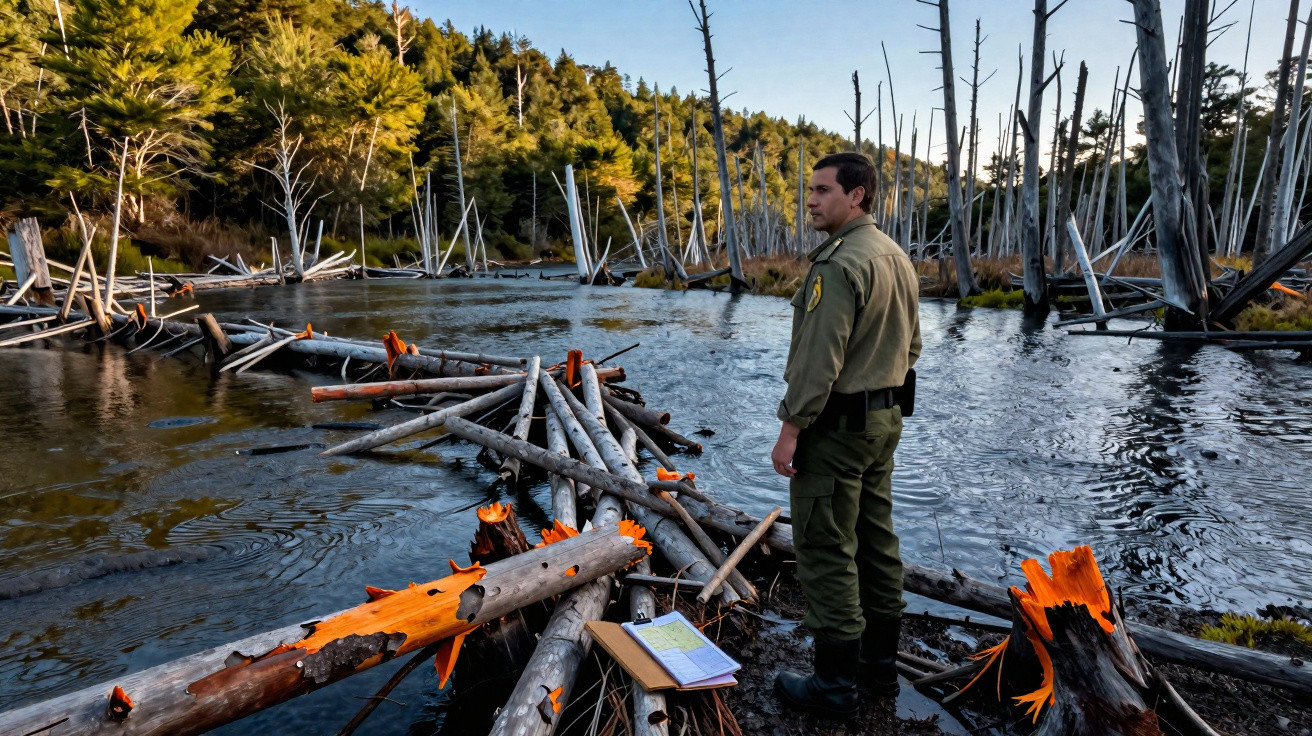
In 1946, Argentine authorities released 20 Canadian beavers on Isla Grande de Tierra del Fuego, intending to encourage a fur industry. With none of the predators that kept their numbers in check in North America, the animals multiplied and began reshaping rivers, forests and wetlands on a scale no one had anticipated.
Why were beavers taken to Tierra del Fuego?
The introduction was driven by economic aims. The North American beaver was prized for its fur and transported to Argentina’s far south in the hope of creating a population that could support commercial activity. The scheme did not succeed as intended, but the animals found favourable conditions in which to survive and breed.
How did just 20 animals spread so widely?
In Tierra del Fuego, beavers encountered virtually no natural predators able to curb their growth. An abundance of waterways and available vegetation enabled new colonies to become established one after another, with the population also extending into the Chilean side of the island.
Their expansion was aided by the combination of reproduction, a lack of biological control and their ability to alter their own habitat:
- Beavers build dams across streams and small rivers;
- The dams create flooded areas suitable for colonies;
- As numbers increase, new groups occupy nearby stretches of water;
- Trees are felled for food and construction;
- The altered environment helps the animals remain in place.
Why did beaver dams cause such extensive forest damage?
Dams raise water levels and flood land that had previously remained dry. Native trees adapted to forest soils are left with their roots submerged for long periods, causing them to die and creating large clearings. The resulting landscape is characterised by dead trunks, artificial channels and areas turned into marshland.
Why can lenga recovery take so many decades?
Lenga, one of the defining trees of southern forests, grows slowly and did not evolve under the constant pressure of beavers felling trunks and flooding its roots. In some degraded locations, rebuilding the forest structure may take many decades, reaching timescales close to two centuries.
The principal effects on vegetation and soil include:
- Tree deaths caused by prolonged flooding;
- Disruption to the forest’s natural regeneration;
- Changes to the course and speed of water;
- Sediment build-up behind dams;
- Replacement of forest sections with wetland habitats;
- Continued enlargement of areas occupied by colonies.
The Tierra del Fuego beavers became a warning about introduced species
This episode demonstrates how an apparently limited economic decision can alter ecosystems for generations. The release of only a few dozen animals triggered impacts across extensive areas of Patagonia and transformed forests that had developed without large dam-building rodents.
The story of beavers introduced in Argentina has become a clear example of the danger associated with invasive alien species. When an animal arrives in an environment without predators, competitors or natural control mechanisms, an attempt at commercial exploitation can result in decades of environmental management and habitat restoration.






Comments
No comments yet. Be the first to comment!
Leave a Comment