
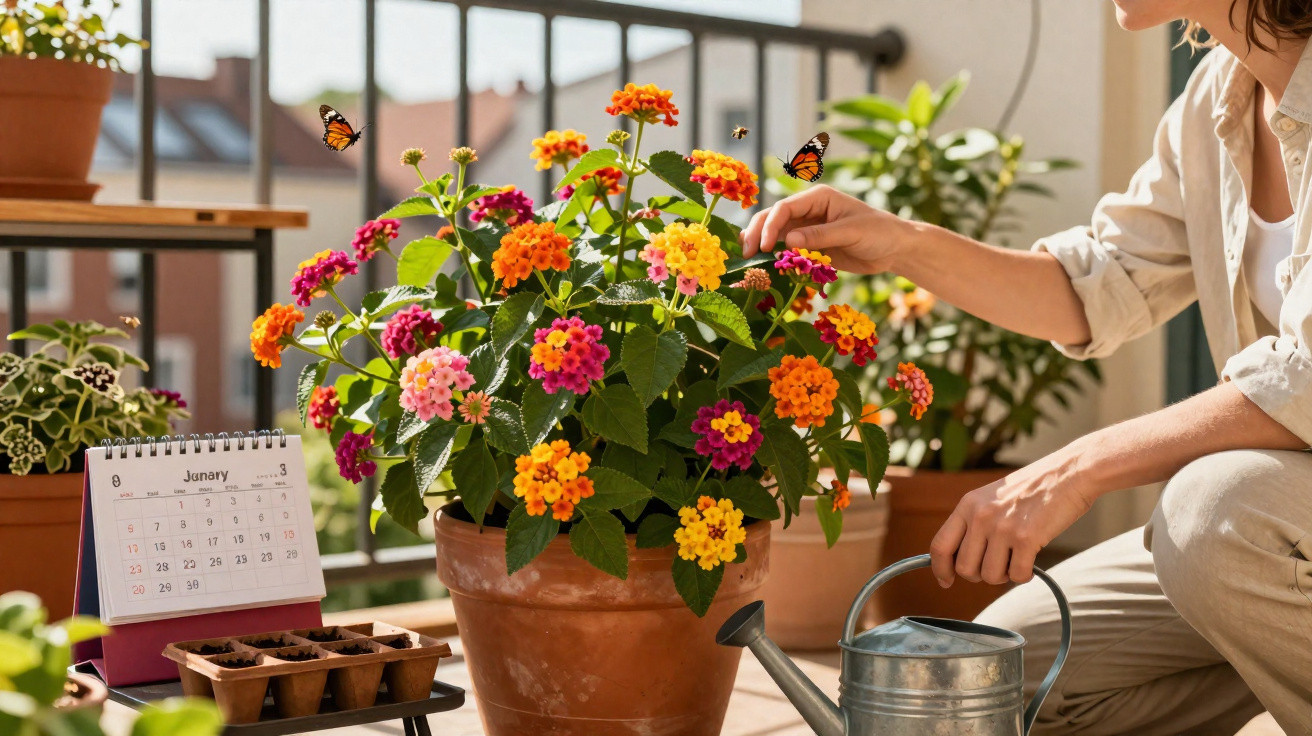
Yet this is precisely the point at which one particular shrub discreetly begins to establish itself, putting down roots while everything around it is dormant and preparing to burst into colour at the first sign of warmer weather.
Lantana, the colour-changing shrub that does more work than you do
Often marketed as an ordinary bedding plant, Lantana camara is far more impressive than that description suggests. This shrub acts rather like a botanical mood ring: its flower clusters shift in shade as they mature. A single cluster may display yellow, tangerine and rich red blooms at the same time.
In gentle conditions, lantana flowers from late spring until the first frosts. In sheltered courtyards or warm urban settings, it may seem never to pause, continually producing fresh flower heads as the older blooms fade and intensify in colour.
Plant once, at the coldest time of year, and you can get months of moving colour with barely any extra work.
Although the flowers attract most of the attention, the foliage has an important supporting role. Its leaves are faintly rough and release an aroma when rubbed, while in milder areas they often stay on the plant. They set off the flowers and ensure the shrub still has presence on days when it carries fewer blooms.
The secret: plant in January, enjoy the rewards in June
Putting a sun-loving, heat-tolerant shrub in place during midwinter may appear strange. However, the focus at this stage is on root growth rather than flowers.
In very mild, frost-free coastal locations, lantana may be planted directly in the ground in January, provided the soil can be worked and is not saturated. During these cold, still months, the roots begin to grow downwards and outwards, searching for moisture well before summer dries the top layer of soil.
The approach changes a little in colder parts of the UK. Buy and pot up lantana in January as planned, but keep it protected from the weather.
Starting early under cover gives the plant a head start: more roots, more branches, and a noticeably earlier flush of flowers when temperatures rise.
How to manage lantana in different climates
- Mild, frost-free zones: put it in the ground in a sunny, free-draining position that is sheltered from cold winds.
- Areas with light frost: plant it in large containers now, keep the pots under cover, and move them outdoors after the last frost.
- Colder climates: grow lantana exclusively in pots and overwinter it somewhere cool and bright, such as a porch or unheated conservatory.
Garden centres frequently offer shrubs at lower prices in winter, when visitor numbers are down. Buying in January can spread the cost of gardening across the year, while also costing less than purchasing instant colour at the last minute in May.
The low-maintenance option for hot, dry summers
After it has established, lantana handles heat and dry spells remarkably well. It developed to cope with intense sun and poor soils, making it well suited to hosepipe bans and increasingly expensive water bills.
Its slightly coarse leaves reduce water loss through transpiration, allowing the plant to cope in full sunshine on a south-facing patio. Once mature, it generally needs only occasional thorough watering instead of daily watering-can attention.
Lantana rewards restraint: less fuss, less fertiliser, and thoughtful watering lead to a tougher, longer-flowering plant.
In most cases, simple care is all that is needed: free-draining soil or compost, plenty of sun, and a gentle spring trim to maintain a neat shape. Lantana usually resists many familiar garden pests and seldom requires chemical treatment, making it suitable for gardeners creating a wildlife-friendly space with few inputs.
Ideal for balconies and small patios
A large garden is not something everyone has. Lantana is especially effective in containers, where its compact, bushy shape can be displayed at eye height on balconies, roof terraces and compact courtyards.
Drainage is the crucial consideration. The roots dislike sitting in cold, dense compost, particularly over winter. Preparing the container properly in January prevents difficulties further down the line.
Preparing a container for lantana
- Select a pot with drainage holes that is at least 30 cm wide and deep, giving the roots enough room to develop properly.
- Place a layer of gravel or clay pebbles in the bottom to prevent water from collecting.
- Fill it with quality multipurpose compost mixed with a little garden soil or coarse sand to maintain an open texture.
- Once frost is no longer a threat, place it in the sunniest possible position, preferably beside a warm wall.
Trailing types can cascade over the edges of hanging baskets and tall pots, softening the appearance of hard lines and steps. Upright varieties make effective centrepieces in larger containers, with contrasting plants such as silver-leaved artemisia or compact grasses planted around them.
Good for you, good for pollinators
Lantana blooms contain plenty of nectar, making them particularly appealing to bees, bumblebees and butterflies. On a calm summer evening, one shrub may be alive with activity while the plants beside it appear still.
| Benefit | What you see in the garden |
|---|---|
| Abundant nectar | Regular visits from bees and butterflies on warm days |
| Long flowering season | Continuous food source for pollinators across the summer |
| Compact habit | Ideal for city balconies and small terraces |
For people looking to make a rented balcony or small yard more welcoming to wildlife, one or two pots of lantana are an easy starting point. The plant makes an impact in mixed containers with herbs including thyme and lavender, forming a small insect buffet from late spring onwards.
Planning a flower-filled 2026 from the sofa
January is often the month when gardeners look through catalogues wrapped in a blanket with a mug of tea. Including lantana on that list can alter the feel of the whole year. Rather than rushing out in May for partly grown plants, you begin with a compact, rooted shrub that has been quietly becoming stronger while you got on with other things.
By early summer, lantana can serve as the main structural plant in a pot, with seasonal partners added around it: trailing verbena, compact salvias, or even edible crops such as cherry tomatoes in larger containers. The shrub provides the framework, while annuals bring speedy filling, colour and added texture.
Practical tips, risks and small print
A few points are worth bearing in mind. In certain very warm countries, lantana can become invasive in the wider landscape; in the UK, that possibility is greatly reduced when it is grown as a tender shrub and often overwintered in pots. Its seeds and berries must not be eaten, and it can be mildly toxic if swallowed, so households with small children or pets may prefer to place containers out of their reach.
On the positive side, its ability to withstand difficult conditions can work to your advantage. Lightly pruning in early spring, by taking out dead wood and cutting back leggy stems, will normally encourage a new surge of shoots. Slow-release fertiliser incorporated into the potting mix, or a single liquid feed each month during summer, is generally sufficient to maintain the display.
For new gardeners, lantana provides a helpful lesson in timing. It demonstrates how a choice made during the coldest months can influence the full season that follows. Begin with one plant this January, allow it to form roots under cover, and move it outdoors when the cold finally begins to lift. By high summer, its daily flowers will seem like a gentle reward for the decision you made while the garden still appeared asleep.






Comments
No comments yet. Be the first to comment!
Leave a Comment