
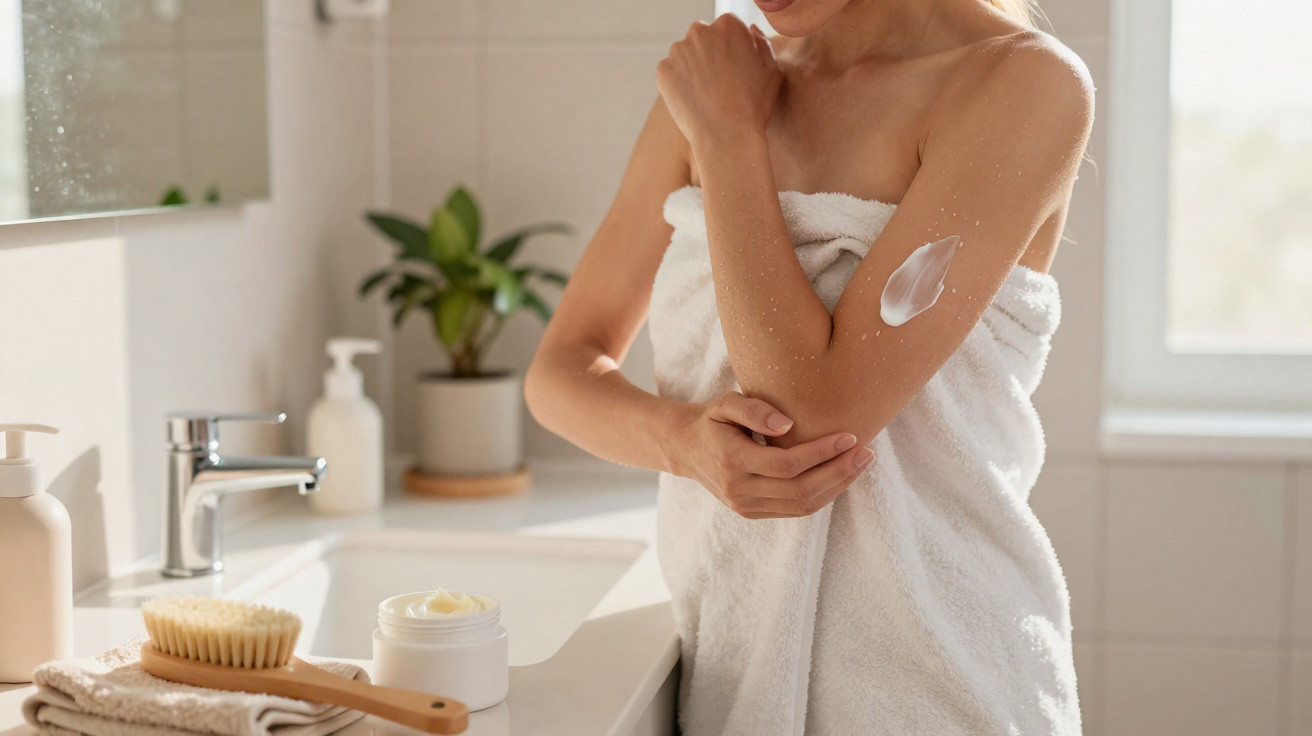
Elbows often feel rougher than other parts of the body, particularly when the skin is dry. One straightforward change to your routine may help improve this feeling: apply moisturiser immediately after showering, while the skin is still slightly damp. This practice can limit water loss and support the skin barrier.
Why does elbow skin tend to be drier?
The elbow area is regularly exposed to friction and has characteristics that can encourage a rougher appearance. Resting your arms on surfaces, for instance, causes repeated contact that may contribute to discomfort.
When skin loses too much water, it may look whitish, rough or flaky. Dry weather, very hot showers and overusing cleansing products can also worsen this sensation for some people.
Why moisturise elbows straight after showering?
Although the skin comes into contact with water during a shower, this does not mean it will stay moisturised for long. As the water evaporates, some of that moisture may be lost too.
Using a moisturising cream or ointment while the skin remains slightly damp helps hold water at the surface. For this reason, applying it immediately after a shower can be more beneficial than waiting until the skin is fully dry.
How should you apply moisturiser to your elbows?
After showering, pat your body dry gently rather than rubbing it vigorously with a towel. Then apply enough moisturiser directly to the elbows, smoothing it over the area until it creates an even layer.
Thicker products may be useful when the area is especially dry, as they help form a barrier that limits water loss. You can reapply them during the day if the skin starts to feel tight again.
Can a hot shower worsen dry elbows?
Yes. Very hot water may strip away some of the skin’s natural oils, which help protect its surface. Long showers also extend exposure time and may encourage dryness in people who are already prone to it.
An alternative is to choose lukewarm water and shorter showers. It is also worth avoiding repeatedly scrubbing the elbows with rough sponges, as friction can irritate an area that is already sensitive.



Comments
No comments yet. Be the first to comment!
Leave a Comment