
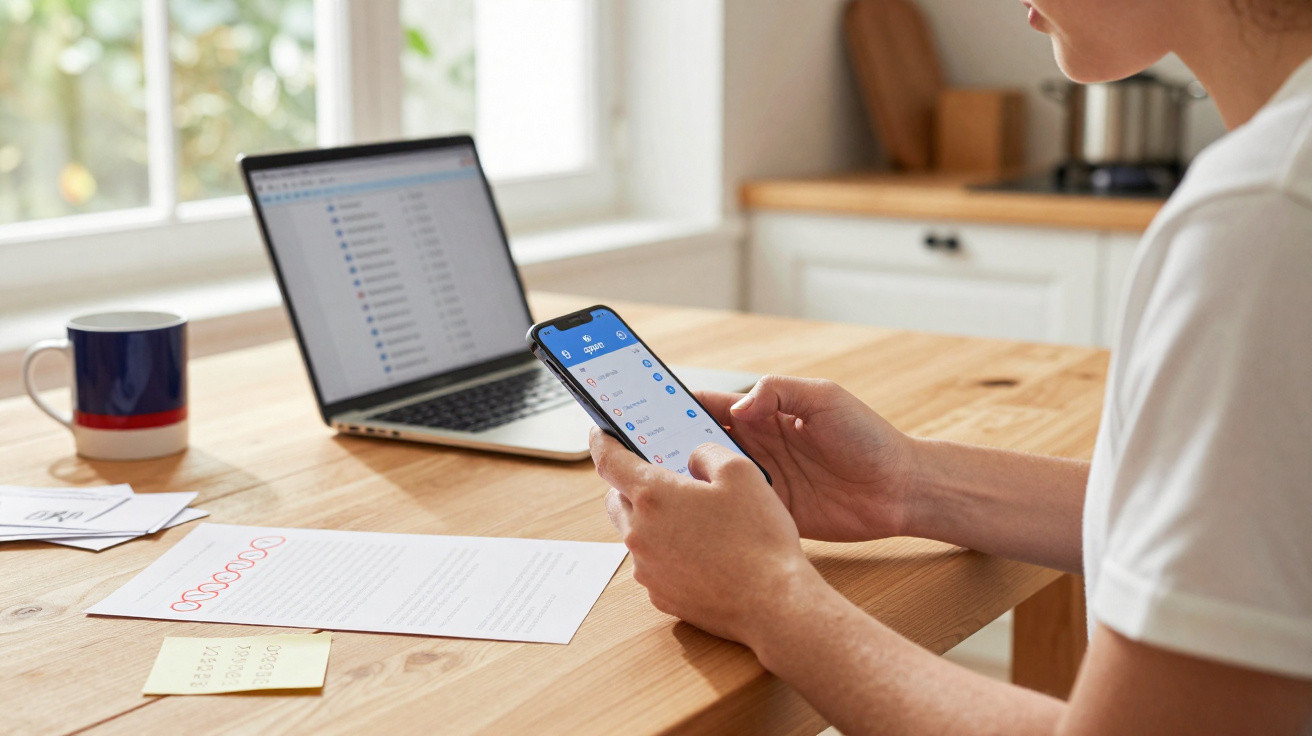
Among the many call centre numbers that keep ringing you, several can be identified easily - and blocked.
Telephone canvassing is a genuine scourge in France, as everyone knows. Consumer groups such as UFC-Que Choisir regularly speak out about the customer experience, yet nothing seems to change. Even government measures intended to set clearer rules for call centres and reduce the harassment of the public have made little difference.
This is all the more irritating because much of this canvassing takes place at times when people want to be left alone, including evenings, weekends and public holidays. Call centres know this and use those periods to reach prospective customers.
How to spot a suspicious number
A study by ARCEP, with findings published in April 2024, found that 65% of French people “never or only rarely answer the telephone when the calling number is not identified”. This proportion has risen steadily year after year as telephone canvassing continues to intensify.
A few years ago, however, the government introduced a strict decree containing several helpful provisions: call centres may only ring between 10:00 and 13:00, and then between 14:00 and 20:00. Calls on public holidays, Sundays and in the evening are no longer permitted.
Telephone canvassing prefixes in France
The state has also imposed restrictions on the numbers that may be used to make calls. If you receive a call from a number beginning with 06 or 07, you can rest assured that it will not be a call centre. Such operators are no longer allowed to use these prefixes to contact customers without their prior consent.
Above all, the government has introduced new prefixes for telephone canvassing. If a number begins with 0162, 0163, 0270, 0271, 0377, 0378, 0424, 0425, 0568, 0569, 0948 or 0949, it is necessarily a canvassing call. In other words, if you want some peace and quiet, it is best not to answer these calls. Call centres operating lawfully - unfortunately, not all of them do, editor’s note - must follow this rule or face a substantial fine.
These four-digit prefixes apply specifically to metropolitan France. In Guadeloupe, Saint-Martin and Saint-Barthélemy, however, the permitted prefix is 09475. It is 09476 in French Guiana and 09477 in Martinique. In Réunion and Mayotte, 09478 and 09479 are the only two prefixes authorised for telephone canvassing calls to customers.
From 11 August 2026, French law will ban telephone canvassing without the consumer’s prior consent, apart from exceptions connected with an existing contract. It remains to be seen whether this system will prove effective.
Getting rid of spammers
If you have tried it already, you will probably know that the Bloctel register is no longer effective: being listed on it does not mean you will receive fewer telephone canvassing calls. Although operators are officially prohibited from contacting numbers on this register, they sometimes disregard the rule in their search for customers.
One of the most effective tools against telephone canvassing is Orange Téléphone. Thanks to its active community, this application systematically blocks numbers associated with canvassing. Millions of French people have downloaded it and can flag a number linked to canvassing. It is then blocked for other members of the community. The app is free and available on iOS and Android.
Reporting unwanted calls and fraudulent SMS
You can also report a telephone number linked to a call centre directly on the www.33700.fr website, managed by the Association Française pour le développement des services et usages Multimédias Multi-opérateurs (AF2M). This applies both to telephone calls and to fraudulent SMS messages designed to obtain personal information.
Finally, we recommend the Saracroche app. Developed by a French programmer, it is free, works very well and can block 15 million numbers identified as spam.




Comments
No comments yet. Be the first to comment!
Leave a Comment