
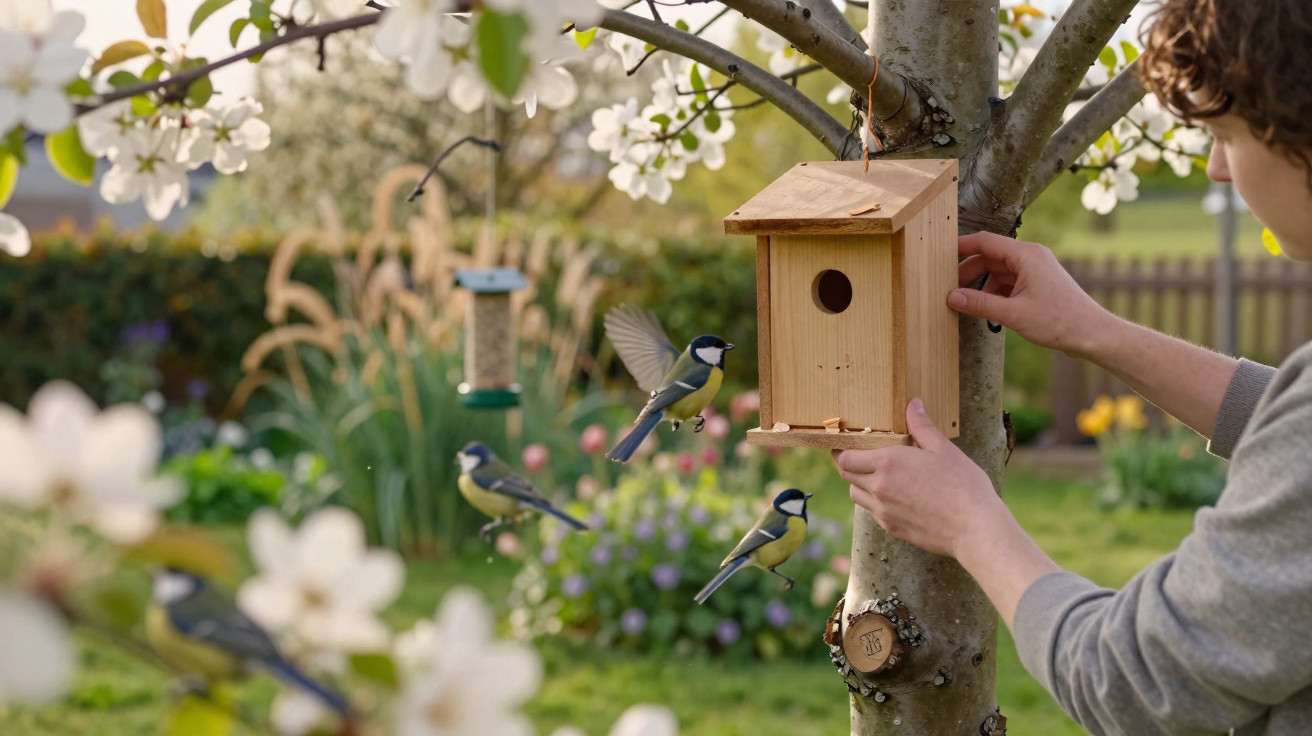
Many people look out onto a garden that is surprisingly quiet: tidy, clean, yet somehow lacking in life. This is exactly where a simple idea can meet two aims at once – bringing more nature right to the doorstep while creating a healthier garden environment. By rethinking an outdoor space just a little, it is possible to attract tits almost as if by magic. These small birds offer far more than attractive birdsong.
Why tits are such a winning addition to the garden
Tits are not merely pleasant to watch. In the garden, they are remarkably hard-working allies. During the breeding season, a single family of tits consumes thousands of caterpillars, mosquitoes and other pest insects. This is especially valuable for gardeners who want to avoid using chemicals.
"In the garden, tits take over much of the work otherwise done by sprays – quietly, continuously and free of charge."
Attracting tits therefore brings a natural pest-control team into the garden. Roses put on stronger growth, fruit trees are less often stripped bare, and vegetable plants recover more quickly. At the same time, a bird-friendly garden supports biodiversity. Populations of many native bird species have been declining for years, particularly in densely built-up residential areas.
Every balcony, back garden or terraced-house garden can serve as a small refuge. Tits are among the species that quickly make use of such opportunities when the conditions are right. They are adaptable and inquisitive, and rapidly discover new food sources.
The right nest box: this is where much is decided
A well-designed nest box is the key element in welcoming tits. Many inexpensive models from DIY shops may look appealing, but are poorly suited to birds or last for only one season.
Materials and construction: simple is better than colourful
- Wood rather than plastic: Natural, untreated wood offers protection from heat and cold while absorbing moisture more effectively.
- Adequate wall thickness: Timber measuring around 18–22 millimetres thick provides good protection against temperature extremes.
- No varnish inside: The interior should remain untreated so that air can circulate and birds have a secure grip.
- A hinged front or roof: This is the only way to clean the box easily in autumn.
There is no need for decorative extras. For tits, safety, suitable dimensions and a dry interior are what matter. Colour is useful only on the outside – and then it should be applied with environmentally friendly, low-pollutant wood stain.
The correct entrance-hole size: millimetres matter
Just a few millimetres determine whether tits will actually move in. An entrance hole that is too large can attract bigger species or even starlings, while one that is too small puts off every bird.
| Species | Recommended entrance-hole diameter |
|---|---|
| Blue tit | approx. 28 mm |
| Great tit | approx. 32 mm |
These dimensions also make it less likely that nest predators such as magpies or crows can get inside. At the same time, competing species such as sparrows have fewer opportunities to occupy the box.
Location: where a nest box is genuinely accepted
Many people hang nest boxes where they themselves can watch them easily. Tits have different priorities. Their first concerns are safety and peace.
Height, direction and surroundings
- Minimum height: Around two metres above ground, preferably slightly higher. This makes access much harder for cats and martens.
- Orientation: An east- or south-east-facing position is ideal. It catches the morning sun while avoiding intense midday heat.
- A quiet area: Do not place the box directly beside the patio, a children's trampoline or a noisy garden gate.
- A clear approach: There should be some open space in front of the entrance hole, with no dense branches immediately in its way.
A box fixed to a tree trunk and tilted slightly forwards will usually work well. Anyone without a large tree can use a sturdy exterior wall instead, provided the front is not exposed to blazing sun or constant rain.
The best time to put up a nest box is from late winter to early spring. This is when birds are actively looking for breeding sites and note promising options. If the box remains empty in its first year, it should still be left in place. Birds sometimes need a season before they gain confidence.
A bird paradise garden: more than just a nest box
A box alone is rarely enough to persuade tits to stay. They need food, cover and features that support insect life. A meticulously manicured lawn with gravel beds offers them very little.
Plants that tits truly value
Native shrubs and trees are especially useful. They provide berries and seeds, while also housing countless insects – effectively a buffet for young tits.
- Serviceberry, elder and rose hips
- Hedges of hazel, dogwood or privet
- Fruit trees such as apple, cherry or plum
Leaving small wild areas untouched – for example, a corner with long grass, nettles or fallen leaves – adds even more value. Butterfly caterpillars, beetles and spiders live there. These are precisely the foods that tits need in large quantities for their young.
"A few wild square metres in the garden often provide more food for birds than a perfectly maintained ornamental garden filled with expensive exotic plants."
A lawn that does not need constant close mowing
A very short lawn that is mown frequently attracts hardly any insects. Mowing only every few weeks, while allowing small patches of daisies, clover or oxeye daisies to grow, noticeably increases the food available to birds. A so-called wildflower meadow does not have to look immaculate – it may appear untidy. That is exactly what makes it appealing to wildlife.
Feeding: when a bird feeder is useful
A garden designed with nature in mind can support tits for much of the year. During severe winters or extended cold spells, supplementary food can help support them.
- Suitable: Sunflower seeds, unsalted nuts and special fat balls for tits without nets.
- Unsuitable: Bread, salted nuts and food scraps.
- Hygiene: Clean bird feeders regularly and remove dirt and old food remains.
The nets around fat balls should always be removed. Birds and hedgehogs can become entangled in them. Holders or feeders with a fixed metal grid are a better choice.
How the garden changes when tits move in
Anyone adapting their garden in this way will, after a while, notice a distinctly different atmosphere. Birdsong is the first sound in the morning. By late summer at the latest, when small families of tits dart through the branches, the value of the effort becomes clear.
Many amateur gardeners report that familiar problems, such as aphid infestations or apple trees stripped bare, occur much less often when tits are regularly present. Chemical treatments quickly become less important. The garden feels "more alive" because tits often attract other species as well: blackbirds, robins, sparrows and sometimes even a nuthatch.
For households with children, the nest box can become a small wildlife observation point – provided there is some distance and no one plays immediately in front of it. The feeding period is particularly fascinating, when the parents arrive every few minutes carrying caterpillars.
Practical advice and small pitfalls
Nest boxes should be cleaned in autumn. Old nesting material often contains parasites that can reduce breeding success the following year. Open the box once a year, remove the nest and give it a brief brush out – nothing more is needed.
Metal hooks that become very hot are less suitable for fixing a box in place. Screws or sturdy wire loops around the tree trunk are better, with a small piece of wood underneath so the bark is not damaged.
People who keep cats can greatly reduce their hunting success by fitting a bell to the collar or using a conspicuous warning collar cover. This also protects tits and other garden wildlife.
One further point is often misunderstood: a garden does not look "unkempt" simply because it takes wildlife into account. Many modern designs combine defined paths and seating areas with wilder border zones. The result is a balance of comfort and nature conservation – and it is exactly this combination in which tits feel particularly at home.


Comments
No comments yet. Be the first to comment!
Leave a Comment