
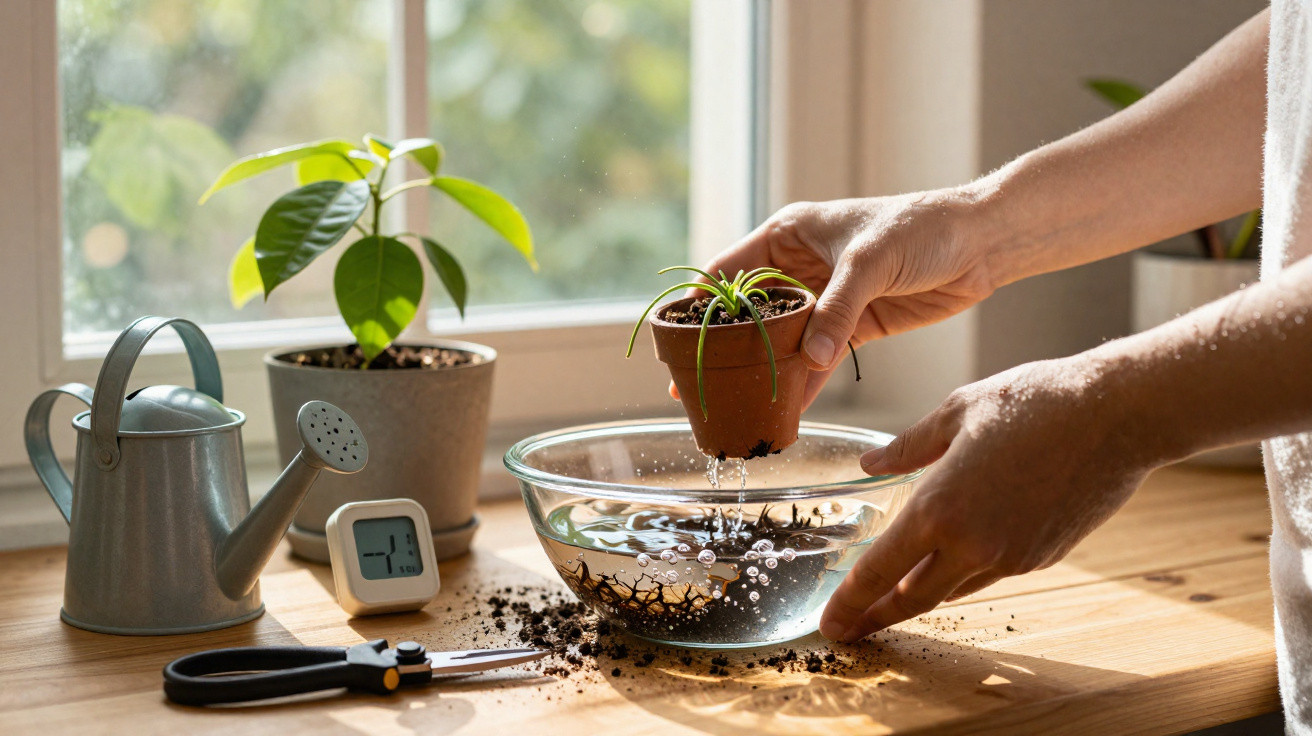
Finding pots with leaves completely drooping can be immediately discouraging, yet this does not always mean the plant has reached the end of its life. With the right intervention, it is possible to restore its vigour through a simple process of deep hydration, bringing back its health quickly.
Why do plants suffer from water stress?
When a plant goes without water for extended periods, its internal structure loses the natural support that keeps its stems upright. This affects cellular turgor, causing the foliage to wilt and take on an obviously weak appearance.
Extreme dryness also prevents sap from moving easily towards the ends of the stems. Spotting the early signs makes it possible to act before the damage becomes irreversible, restoring the balance needed for proper growth and full vitality.
What is the secret to saving dried-out plants?
The soaking technique returns moisture to a dried-out root ball when ordinary watering simply runs through it... Read more
How does the soaking technique work in a pot?
Normal watering over dry soil often fails because the water runs straight down the sides of the container. The soaking method makes the liquid penetrate every layer, efficiently rehydrating the roots from the bottom upwards.
When the pot is submerged in a container of water, air bubbles are gradually released. This ensures that the growing medium takes in the right volume of water, restoring cellular pressure and encouraging the previously drooping foliage to recover.
Below is a video from the Spagnhol Plantas YouTube channel that explores the points discussed in this topic in greater depth:
What is the step-by-step process for hydration?
To carry out the process, simply place the pot in a basin of clean water, filling it to halfway up the pot’s height. This controlled soak promotes even absorption, preventing the soil from remaining compacted and ensuring a long-lasting result.
The average soaking time is usually between ten and twenty minutes, or until the bubbles stop completely. Once the pot has been removed, allow all surplus water to drain away to avoid rot problems in the root system of your home planting.
Essential Recovery Kit
Essential items: practical resources for saving pots with extremely dried-out soil:
- A roomy basin or bucket large enough to hold the pot;
- Room-temperature water for the soak;
- A saucer or stand that provides good drainage afterwards.
What care is needed after soaking?
Once the procedure is complete, place the plant somewhere bright but sheltered from direct sunlight. This precaution protects the newly restored moisture, allowing the leaves to regain their support without facing further heat-related stress.
The watering routine should then be adjusted to match the genuine needs of each species being grown. Checking the soil by touch helps prevent further severe drought and ensures that drainage works properly to maintain a consistent balance.
The main signs seen while treated plants recover include:
- Gradual lifting of stems that had previously drooped;
- The return of shine and firmness to the leaves;
- Even moisture throughout the entire pot.
When is it worth trying to recover a plant?
Before throwing away a pot that appears dry, check the flexibility of the main branches and the base of the stem. If there is still green or pliable tissue, the plant retains enough biological reserve to respond positively to the applied stimulus.
Patience is essential when monitoring the gradual response of plant tissues in the days after treatment. With persistence and the right care, you can avoid premature disposal and celebrate the revival of a beautiful specimen at home.



Comments
No comments yet. Be the first to comment!
Leave a Comment