
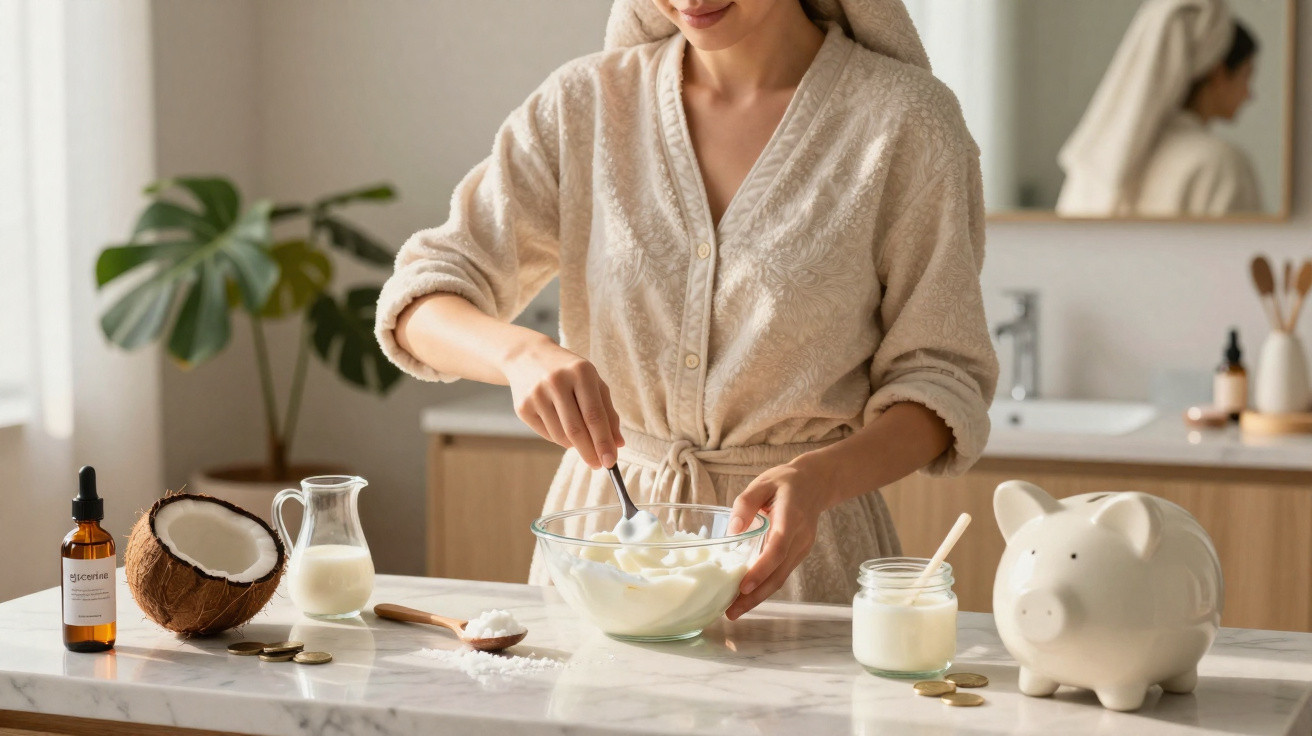
A supermarket or pharmacy shelf contains low-cost ingredients that can support straightforward care routines, provided each one has a clearly defined purpose. Rather than claiming that one recipe works for hair, face, nails and dark circles, the four mixtures below specify their aim, application area and contact time.
How should cosmetic glycerine be used on hands?
To reduce the feeling of rough skin, combine one drop of cosmetic glycerine with an amount of hand cream and apply it after washing. Mix them in your palm rather than inside the tub, and use less glycerine if the result feels sticky.
Its role in this case is to help the moisturiser hold water in the skin’s outer layer. Only use a product labelled for cosmetic use, and do not apply it to broken skin. Ongoing irritation, cracks or dermatitis require professional assessment. Products labelled for cosmetic use have their own purity standards and instructions; food ingredients, meanwhile, must be prepared immediately and must not be added to the full contents of hair masks and conditioners.
Can starch make a hair mask thicker?
Make a small paste by dissolving starch in water and heating it until it thickens. Let it cool, then add it only to the amount of hair mask you intend to use. Apply from the mid-lengths to the ends, then rinse after the time stated on the product.
- Cosmetic glycerine is used only for dry-hand care.
- Starch is used solely to thicken one application of a hair mask.
- Coconut milk is combined with a small portion of rinse-out conditioner.
- Natural yoghurt is included only in a quick treatment for rough-feeling hair.
This use may suit thick, dry hair but can weigh down fine hair. Do not apply starch powder directly, keep no leftovers, and do not regard the result as permanent repair. The expected effect is cosmetic and noticeable by touch. Glycerine is a humectant and performs best within a balanced formulation, which is why one drop should be mixed with cream instead of being applied neat in a large amount.
How can coconut milk and conditioner be combined?
Add a few drops of coconut milk to the portion of conditioner placed in your hand, then spread it through freshly washed lengths. Rinse thoroughly after a few minutes, keeping the mixture away from the roots, especially if the hair is oily.
Do not change the contents of the original bottle or sleep with food in your hair. The intention is to use a minimal amount to add creaminess to care for thick, dry hair. A basic mask can become denser with a few drops without changing the original container. Making a note of which mixture was used and how the skin or hair responded helps prevent automatic repetition and separates an immediate sensation from a benefit that genuinely lasts afterwards.
Watch the video shared by the YouTube channel Patricia Elias, which shows how to use glycerine on hands and its benefits.
When should natural yoghurt be mixed into a hair mask?
Anyone whose hair feels rough can try a small spoonful of unsweetened natural yoghurt in that day’s portion of hair mask. Use it straight away, apply only to the lengths, and rinse well. Carry out a patch test first if you have sensitive skin or a dairy allergy.
As it is perishable, yoghurt should not be left on for hours or stored after mixing. Fine hair may lose movement, while any smell or discomfort means use should be stopped.
Which rule stops saving money from becoming a problem?
Use one mixture at a time, make only what is needed, and keep utensils clean. The more ingredients included in a recipe, the harder it becomes to identify what caused heaviness, irritation or a positive result. Keeping things simple also protects your budget.
These combinations are occasional care options, not universal treatments. One purpose for each ingredient keeps expectations more realistic. Test a small amount, rinse when instructed, and abandon the idea if your skin or hair reacts badly.






Comments
No comments yet. Be the first to comment!
Leave a Comment