
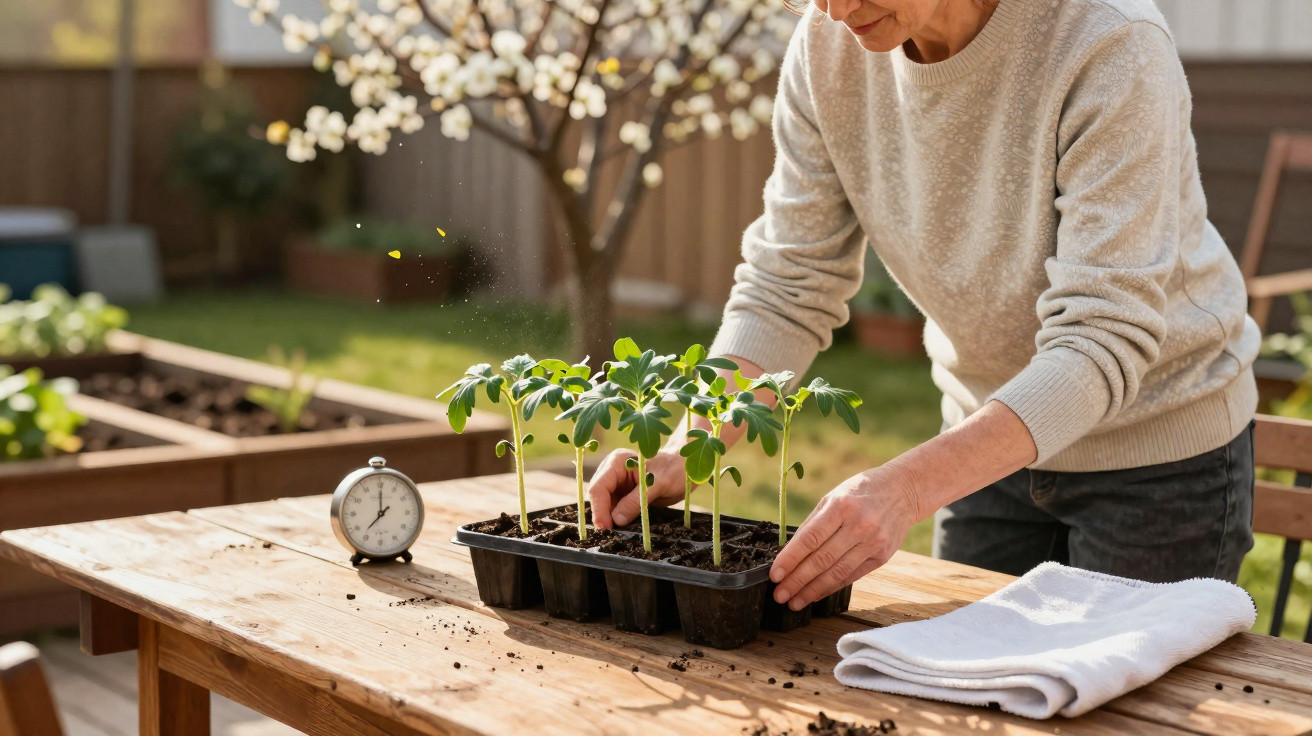
Professionals do one crucial thing differently before planting.
Anyone walking through garden centres in spring is quickly tempted to put the first tomatoes into the vegetable bed. Young plants, fresh compost and sunshine all signal the start of the season. Yet this is where the same mistake is made every year: plants are moved from a cosy windowsill straight into the harsh outdoors without preparation. Professional vegetable growers would never do this. Instead, they follow a particular routine that can determine whether summer brings success or frustration.
Why outdoor tomato plants suddenly wilt
Temperature shock: from the living room to the cold
Most young tomato plants have been raised on a bright windowsill, in a warm conservatory or inside a well-heated greenhouse. Temperatures there are generally around 20°C, frequently even overnight. There is barely any wind and almost no variation in temperature.
Put these plants outside without preparing them and this is what can happen: daytime conditions may be manageable, but overnight temperatures can rapidly drop to 5 or 6°C. For tomatoes, this is not a minor change but a severe shock.
"The sudden change from constant warmth to cold puts the plant under such stress that it effectively stops growing."
As a result, the tomato may stop developing for days, turn yellow, become more vulnerable to disease and fail to reach its potential throughout the summer. Many home gardeners put this down to "bad luck" or poor-quality seed, when in fact they simply sent the plant outdoors unprepared.
Soft stems because they have never practised in the wind
Wind is the other major issue. There are no gusts in a living room. Tomato plants therefore grow tall, soft and full of water. Although such a stem may look attractive, it is mechanically weak.
When a strong spring gust sweeps over the young plants outdoors, one of the following can easily occur:
- The plant bends over and does not straighten again.
- The stem snaps off right at soil level.
- The plant remains permanently tilted, grows unstably and produces fewer flowers.
Professionals understand this risk very well. That is why they do not send their tomatoes onto the "wind-and-weather playground" without training, but deliberately acclimatise them first.
The professional trick: hardening off tomatoes before planting
Hardening off: short daily trips outdoors
Gardeners call this process "hardening off" or "acclimatisation". It is essentially a training programme for plants. Its purpose is to teach a young tomato plant to cope with cooler temperatures, moving air and genuine sunlight without immediately collapsing.
In practical terms, it works like this:
- Starting phase: On a mild day, place the pots outdoors for 1–2 hours, sheltered from wind and away from intense direct sun.
- Return indoors: Afterwards, bring the plants back inside, into a garage or to a protected greenhouse.
- Repeat: Continue this pattern over several days.
- Increase gradually: Leave the plants outdoors for a little longer each day.
During this period, something remarkable happens inside the tomato plant: in response to wind and changing temperatures, it produces more lignin, a fibrous material that strengthens its cells.
"After just three to four days, you can notice it: the stem feels firmer, the plant seems more ‘muscular’ and less fragile."
A thin, watery shoot develops into a compact, sturdy plant. This is precisely the structure it will need in the vegetable bed to withstand wind, rain and temperature fluctuations.
Light training: adapting gradually to real sunshine
Light matters just as much as temperature. Sunlight passing through glass is filtered and considerably gentler. Outdoors, UV radiation reaches the plant unfiltered, and this can scorch leaves in a very short time.
Anyone who places young tomato plants directly in full midday sun risks:
- pale, scorched patches on the leaves
- wilting foliage even though the compost is moist
- leaves being shed because of stress
The answer is to keep plants outside in partial shade for the first few days, perhaps beside a north-facing wall, beneath a table or under light garden fleece. Then extend their exposure to direct sun step by step-starting with morning or evening sunshine and eventually including the stronger midday sun.
Beyond the tomato bed: frost risks for fruit trees
Check fruit tree blossoms early
While tomato plants are still being moved between indoors and outdoors, it is also worth checking the orchard. Cherry, plum and apricot trees are often already in full bloom at this point. Their flowers are extremely sensitive to frost.
An early-morning walk through the garden and a look at the blossoms can quickly reveal how critical the night has been. Healthy flowers have centres that look pale and fresh. If the pistil has turned dark or black, frost damage has already occurred.
Anticipating late frosts and taking action
When cold air arrives, prevention is the only effective response. Typical protective measures include:
- covering small trees and shrubs with purpose-made covers or old bed sheets
- ensuring air can circulate so that icy air does not collect near the ground
- temporarily moving sensitive container plants into a garage, carport or hallway
Anyone who takes this routine seriously a few times each season will experience significantly fewer crop losses from late frost, whether with tomatoes or fruit.
How gardeners manage the transition into spring
Practical overnight protection for young plants
To prevent the daily task of carrying plants in and out from becoming a nightmare, many gardeners create a kind of halfway station. This could be a makeshift frame of timber battens with a transparent cover, or a small polytunnel set over a pallet.
The important points are:
- the cover can be opened during the day so that plants receive air and light
- it is closed in the evening to reduce the impact of overnight cold
- the structure is sheltered from wind but not left in complete darkness
This keeps plants noticeably warmer overnight than they would be in an open bed, while still exposing them to conditions that are more realistic than those in a living room.
A 10 to 15-day training programme
Ideally, the hardening-off period lasts around ten to fifteen days. Throughout this time, plants move regularly between protected and exposed locations. Consistency is crucial: no plant should remain outside permanently before the danger of frost has passed.
Many people use the Ice Saints in mid-May as a guide. Before then, tomatoes should spend the night indoors, in a garage or beneath the temporary shelter. During the day, they can experience as much outdoor exposure as possible, without having to sleep in the cold.
When tomatoes can really be planted in the bed
The signs professionals look for
Experienced gardeners do not rely on the calendar alone, but assess several factors at once:
- The soil no longer feels cold and clammy, but has warmed slightly.
- The forecast no longer predicts overnight temperatures close to freezing.
- Plants appear robust, with thick stems and compact growth rather than being thin and leggy.
- Their leaves can already tolerate several hours of direct sunshine without damage.
Once these conditions are met, the likelihood of a setback falls dramatically. Planting then becomes not a gamble, but the logical next step after a well-prepared spring.
How tomatoes remain stable from the moment they are planted
There is another useful trick when planting: tomatoes can be planted deeper than they stood in their pots. The buried parts of the stem form new roots, anchoring the plant even more securely.
If an already well-hardened, vigorous tomato is placed slightly at an angle and a little deeper in the soil, it gains:
- a strong root network
- stable support against wind
- a plant that absorbs nutrients more efficiently
Combined with the earlier training programme, this greatly improves the chances of harvesting heavy, flavoursome fruit in summer.
Why patience with tomatoes always pays off
Small mistakes, major differences in yield
Many problems in the vegetable garden can be traced back to impatience: sowing too early, planting too early or overloading plants too quickly. Tomatoes react especially sensitively because they prefer warm, stable conditions.
Those who instead devote two weeks to controlled hardening off will have plants that cope much better with stress. They recover more easily from gusts of wind, tolerate brief temperature drops and remain healthier.
More practical ideas for strong young plants
Hardening off works well alongside several simple extra measures. A small fan indoors that gently moves the plants imitates wind and strengthens their tissues before their first trip outside. Growing plants in the brightest possible location prevents long, thin shoots. Watering tomatoes moderately rather than constantly also encourages a more resilient root system.
Step by step, this creates exactly what professionals want in spring: not pampered houseplants, but hardy crop plants that do not buckle at the first change in the weather during summer.



Comments
No comments yet. Be the first to comment!
Leave a Comment