
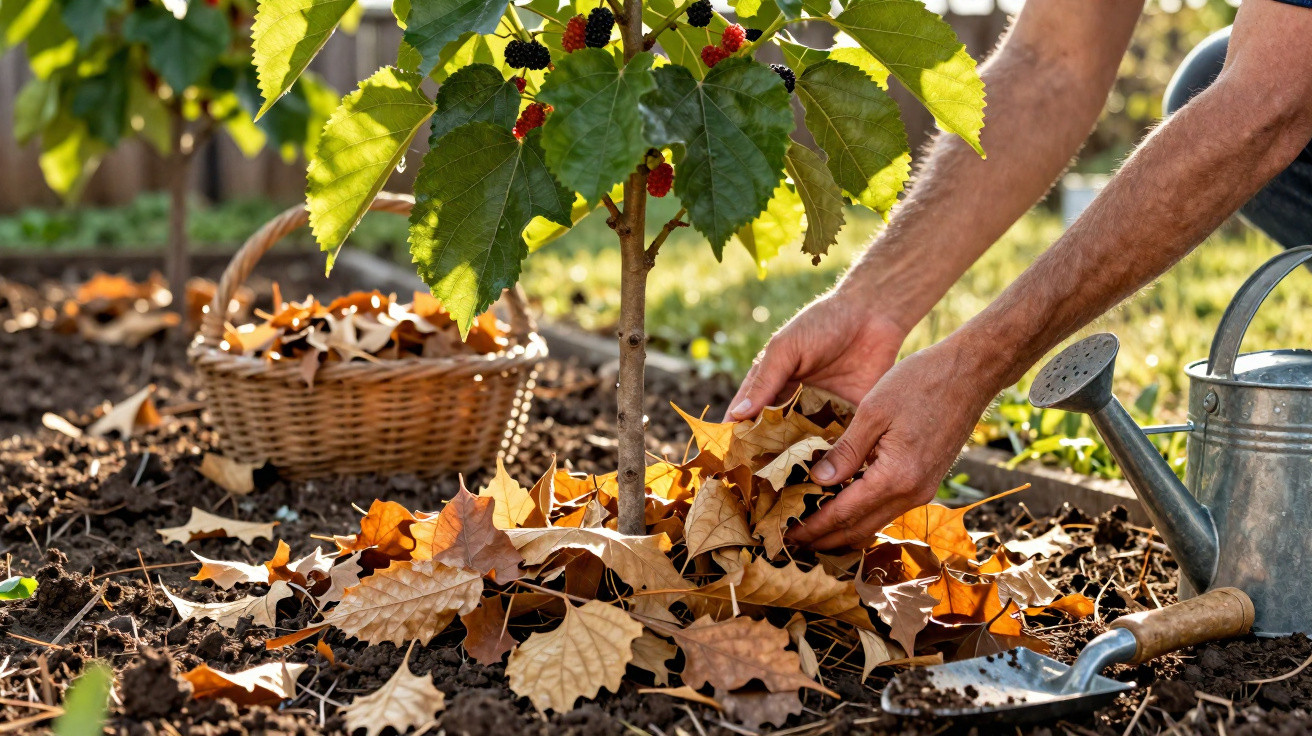
Accumulating organic matter in the garden provides major benefits for fruiting plants. By reusing fallen leaves from your own garden, you can enrich the ground, shield the root system of the mulberry tree and support healthy growth.
Why use dry leaves around the mulberry tree?
Placing plant material beneath a tree’s canopy is an effective long-standing agricultural practice. This ground cover shields the surface from weather conditions, supports the biological life of the soil and improves the uptake of nutrients.
As well as being a free and sustainable resource, this layer gradually fertilises the ground. As it naturally breaks down, it slowly releases essential elements, continually conditioning the soil and giving the plant excellent vigour.
How can you ensure juicy fruit on your mulberry tree before winter?
Adjusting care practices before the colder months improves productivity and protects the plant against… Read more
How does leaf decomposition benefit the soil?
The natural breakdown of organic material attracts a range of beneficial microorganisms to the soil ecosystem. These tiny organisms continuously convert the leaves into rich substances that feed the ground, improving aeration and the structure of the growing medium.
This process balances carbon levels in the growing environment and prevents excessive depletion of cultivated soil. Regular use of this organic covering reduces the need for frequent chemical treatments, preserving biological balance in a natural and lasting way.
Below is a video from the Minhas Plantas (YouTube) channel on YouTube, which explores the points discussed in this topic in greater depth:
What are the advantages for moisture retention?
Keeping the ground covered helps retain irrigation water for much longer and more consistent periods. The protective layer reduces direct evaporation caused by the sun, preventing the tree’s roots from experiencing water stress on days of more intense heat.
In colder seasons, this same plant-based barrier insulates the ground from extreme temperature fluctuations. Thermal control maintains ideal moisture levels in the soil, ensuring the root system remains protected and properly aerated throughout the entire development period.
Natural Protection and Nutrition
Essential benefits of this care practice: Using dry leaves around the tree brings significant improvements to cultivation:
- 1
Continuous preservation of soil moisture; - 2
Slow release of organic matter; - 3
Protection for roots against climatic variations.
What is the correct way to apply dry leaves?
Apply the plant material by spreading it evenly around the area covered by the canopy. It is important to distribute the leaves without compacting them too firmly, allowing rainwater and air to reach the surface of the ground freely.
It is also advisable to leave a small gap around the plant’s main trunk. This clear space prevents excessive moisture from collecting on the stem, avoiding unwanted fungal growth and keeping the tree’s base protected and healthy.
Follow these key guidelines to ensure the ground cover is used correctly in the garden:
- Leave a safe gap around the tree trunk.
- Add fresh dry leaves periodically as the existing layer decomposes.
- Lightly moisten the first layer to secure the material to the soil.
Why does traditional gardening value this practice?
Reusing plant debris reflects the natural forest cycle in a domestic setting. Growers in many parts of the world use this method because they understand that soil needs continuous organic replenishment to retain its natural fertility in a balanced and efficient manner.
Turning swept-up garden waste into a valuable resource reduces waste and improves the health of the orchard. This sustainable approach strengthens mulberry tree cultivation, ensuring protected roots and ground increasingly rich in life and nutrients essential to the plant.





Comments
No comments yet. Be the first to comment!
Leave a Comment