
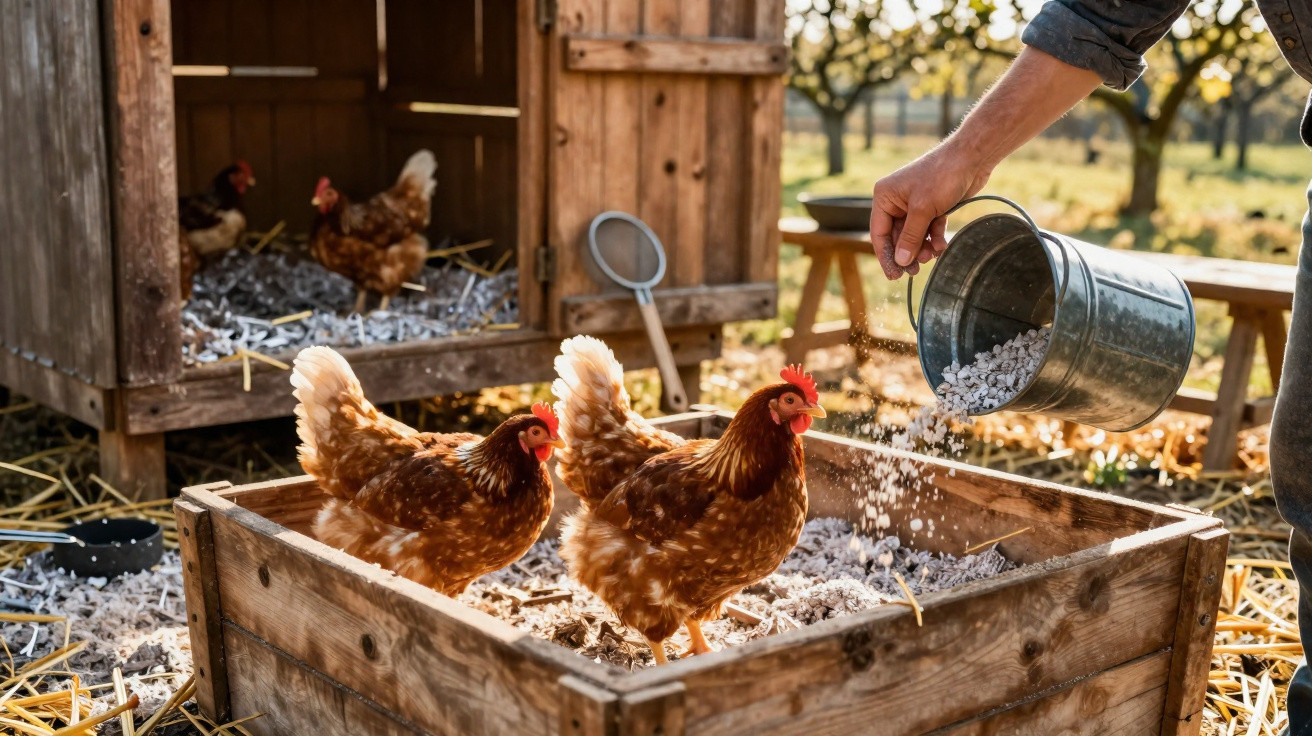
An unobtrusive alternative is often already sitting in the fireplace.
Wood ash from a stove or fireplace is frequently thrown away without a second thought. For anyone keeping chickens, it is a free resource that can noticeably improve air quality, hygiene and wellbeing in the coop. However, the method only works if you follow a few basic rules – otherwise, this clever solution can quickly become a health risk for your birds.
Why wood ash works in the chicken coop
Wood ash is the mineral residue left once wood has burned completely. It contains no fat or sugar, only minerals. Its typical components include:
- Calcium
- Potassium
- Phosphorus
- Magnesium
Wood ash also has a very high pH value, which can approach 13. In other words, it is strongly alkaline.
The porous structure of wood ash absorbs moisture and binds some of the ammonia from chicken droppings – odours and germs are noticeably reduced.
Ammonia is a particular concern in heavily used coops. Its fumes irritate the respiratory system, weaken natural defences and make birds more susceptible to illness. Used carefully, ash can make the air noticeably better – provided it comes from a suitable source.
Which ash is permitted – and what is strictly off limits?
Only ash from untreated natural wood should be used in the coop. Everything else must be kept out.
Suitable sources
- Ash from wood-burning stoves using untreated logs
- Wood from your own garden that has not been painted or pressure-treated
- Residue from traditional wood ranges, as long as only clean, untreated wood has genuinely been burned
What must never go into the chicken coop
- Wood with paint, varnish or wood stain
- Chipboard, OSB or pressed wood
- Pallet wood, which is often treated or contaminated
- Briquettes containing binding agents
- Charcoal or barbecue briquettes, particularly those used with firelighters
These materials can contain heavy metals, solvents, synthetic resins and other toxins. They may enter the birds' bodies through their skin, airways or beaks. Many keepers only notice the issue when their chickens become sluggish, eat less or lay fewer eggs.
Most importantly, always allow ash to cool completely – ideally for at least 48 hours. Smouldering remnants in a coop would be a serious fire hazard.
How to prepare wood ash properly for your chickens
Before ash is allowed into the coop, it needs a little preparation:
- Collect it in a metal bucket and leave it for at least two days.
- Sieve it thoroughly using a fine sieve or an old mesh screen.
- Remove large pieces of charcoal, nails, screws and any other debris.
What remains should be a fine, even ash powder, grey to off-white in colour. Sieving creates dust, so simple protection for your mouth and nose will help protect your own airways, especially indoors.
Ash in bedding: less smell and drier floors
Inside the chicken coop, ash acts as a natural drying agent for bedding. It absorbs moisture, slows the growth of certain bacteria and fungi, and reduces the smell of ammonia.
How to use ash correctly in bedding
- Sprinkle only a thin layer of ash directly onto the coop floor.
- Add straw, hay or wood shavings over it as usual.
- Apply a light additional dusting during major coop cleans, roughly every one to two weeks.
There is a useful practical test: if the chickens scratch in the bedding and a dense grey cloud of dust rises up, there is too much ash in the coop. Remove some of it and top up with fresh bedding instead. Excess dust irritates the airways of both chickens and people.
A fine layer of ash beneath the bedding supports hygiene, but it does not replace regular mucking out and ventilation.
Ash as a wellbeing bath: a dusty spa against parasites
Chickens love dust baths. They roll around, flap their wings and work the fine material right down to their skin. This is not simply play; it is their most important defence against parasites.
How to set up an effective dust bath
A sturdy box or an old tub, 20 to 30 centimetres deep, is ideal. Fill it with a dry mixture of:
- one part very dry garden soil
- one part fine sand
- one part sieved wood ash from untreated wood
The dust bath should be positioned somewhere dry and preferably sunny, such as a sheltered corner of the run or beneath a covered area.
In a dust bath, ash performs several functions at once:
- It has an abrasive, drying effect on the outer coverings of mites, lice and fleas.
- It helps chickens get rid of skin and feather parasites.
- It provides activity and reduces stress within the flock.
Some chickens peck at small amounts of ash. This supplies only tiny quantities of minerals and is no replacement for a balanced feed. As long as it remains occasional pecking, it is generally not a problem.
Where ash has limits – common mistakes when using it
Wood ash is a preventative aid, not a miracle cure. A dust bath alone will not be enough against a severe infestation of red poultry mites. Birds that appear ill or are very weak need targeted treatment and professional advice, for example from a veterinary practice or experienced breeders.
These mistakes are common in practice:
- Ash is spread thickly into every corner, leaving the entire coop dusty.
- Chickens are made to live permanently in heavily dust-laden air.
- Large amounts of ash repeatedly end up in drinking water or feed.
This does not help the birds; it risks irritation to their eyes and mucous membranes as well as long-term respiratory problems. Ash belongs as a thin layer in bedding and in a clearly limited quantity in the dust bath – not in every crack and not in the feed trough.
What should happen to used ash bedding?
Once bedding is saturated with droppings and ash, the question is what to do with it. Tipping it directly onto garden beds is not a good idea. The mixture of manure and ash contains plenty of nitrogen and has a strongly alkaline effect. Sensitive roots could be scorched, especially those of plants that prefer acidic soil.
Old bedding containing ash belongs on the compost heap – where it changes from a problematic material into a valuable component of future fertiliser.
On the compost heap, ash contributes minerals, while plant waste and other organic material provide the necessary nitrogen. After maturing for several months, it becomes a balanced compost that you can use in moderate amounts in the garden.
As a rough guide, use around 80 grams of pure wood ash per square metre each year – added via compost rather than spread neat. If you have plenty of ash and many chickens, use it sparingly and rotate its application between several beds.
Risks, limitations and useful additions to daily chicken care
The ash's high pH value can be helpful in the coop against odours and certain germs, but excessive use can irritate skin and mucous membranes. Keepers of small, poorly ventilated coops should be particularly alert to dust levels and their chickens' behaviour. Coughing, frequent sneezing or watery eyes are warning signs.
Ash cannot replace the foundations of good chicken keeping: dry bedding, regular cleaning, adequate ventilation, a well-planned feeding regime and protection from damp remain essential. It can be highly effective as one part of this overall approach, but it is not an all-purpose solution.
Combining it with other natural materials can also be worthwhile. A little dried sand, soil from a sunny, dry area and the occasional handful of dried herbs in the dust bath provide variety and extra stimulation. Chickens often respond surprisingly well to these small changes in their surroundings.
So, if you have been emptying your fireplace without thinking for years, a little care can turn that grey powder into a free helper for coop hygiene, parasite control and garden fertiliser. The effort is modest, while the benefits for chickens and the garden are often clearly noticeable.


Comments
No comments yet. Be the first to comment!
Leave a Comment