
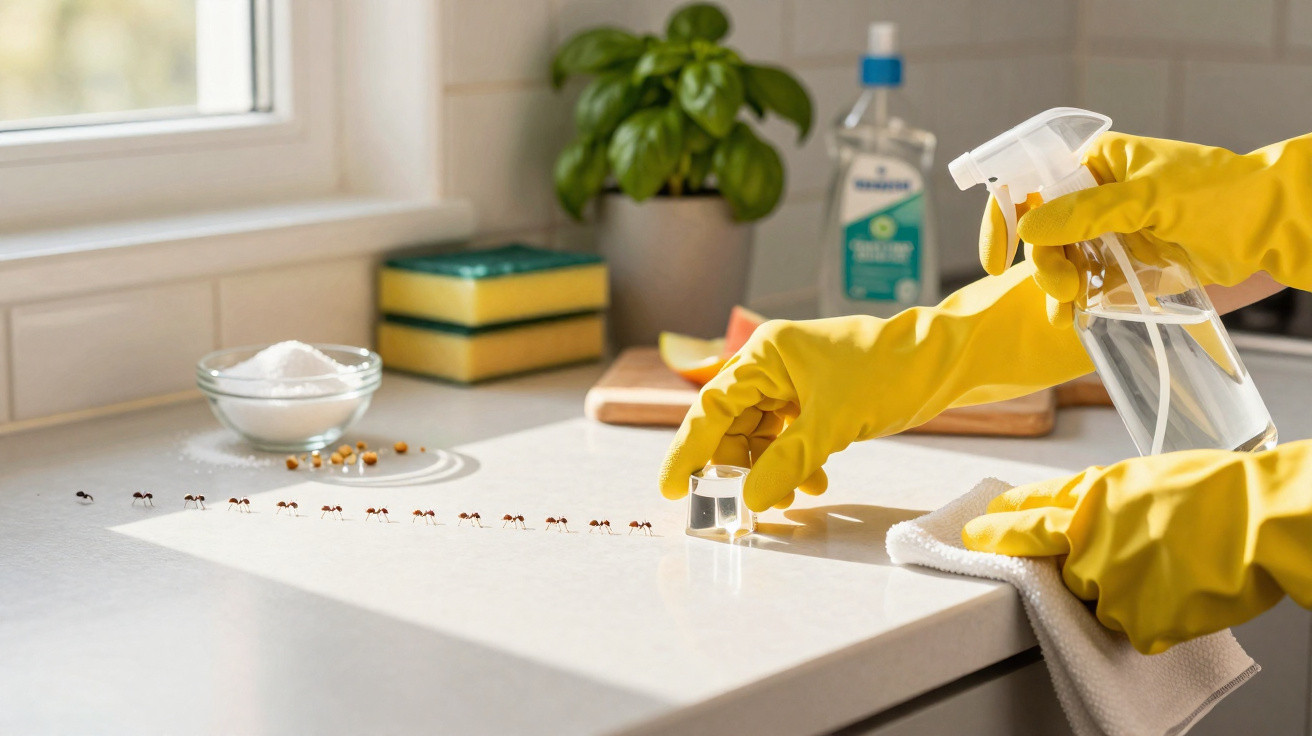
Removing ants from the kitchen requires more than killing the insects visible on the worktop or near food. Worker ants make up only a small proportion of the colony, following chemical trails to sources of food and water. To stop the issue, you need to target the nest, remove these traces and reduce what is drawing ants into the home.
Why do ants return even after cleaning?
As they travel between the nest and a food source, worker ants leave a pheromone trail behind them. Other members of the colony can follow this chemical route, which is why lines of ants repeatedly reappear in the same area of a worktop, skirting board or cupboard.
Killing only the ants you can see disrupts the trail briefly, but it does not remove the queens, larvae or workers that remain hidden. As long as food is available and the kitchen can be accessed, new ants may recreate the route.
- Wipe up crumbs and food debris as soon as they appear;
- Do not leave dirty washing-up overnight;
- Store sugar, flour and other foods in sealed containers;
- Dry any water collecting around the sink;
- Keep the bin covered and dispose of rubbish regularly.
Why do ant baits work better than killing worker ants?
Ant baits are designed to be carried back to the colony by worker ants. Rather than killing the insect immediately, the active ingredient works slowly enough for the bait to be shared with other ants inside the nest. For this reason, the number of insects may even seem to increase shortly after the bait is put down.
How can you remove the trail that brings ants into the kitchen?
Once activity has reduced, clean the surfaces travelled over by the ants to remove grease, food remnants and some of the chemical trail they use for navigation. Water and mild washing-up liquid are usually enough for washable worktops, floors and skirting boards, provided the surface material is suitable for this type of cleaning.
It is also important to find where the ants are entering. Small gaps near windows, doors, pipes and skirting boards can provide a regular route in. These points should be sealed only after the colony has been controlled, as blocking an entrance during heavy activity may simply divert the trail to another opening.
- Clean the full length of the trail with water and washing-up liquid;
- Dry the surface thoroughly after cleaning;
- Check gaps near pipes and skirting boards;
- Seal entry points only once activity has reduced;
- Repeat the cleaning if a new trail appears.
Where should you place ant bait and what precautions are needed?
Place the bait close to the routes used by the ants, but away from food, utensils and surfaces used to prepare meals. Do not use spray insecticide near it, as killing workers before they return to the nest may reduce the very effect that makes this method effective.
- Follow the product label instructions exactly;
- Keep baits out of children’s reach;
- Prevent access by dogs, cats and other pets;
- Do not put chemical products on food-preparation worktops;
- Do not combine different insecticides or homemade remedies in the same location.
How can you prevent the infestation from returning?
Once the colony stops using the trail, prevention depends mainly on limiting food, water and access. Spilt sugar, grease behind the cooker, uncovered pet food and damp beneath the sink are enough to attract new worker ants. Cleaning these areas routinely reduces the likelihood of another nest establishing a route into the kitchen.
If ants continue to appear in large numbers despite using baits correctly, cleaning trails and sealing entry points, there may be more than one colony or a nest within the structure of the property. In this situation, identifying the species and locating the source is usually more effective than indiscriminately increasing the amount of insecticide in an environment containing food, children and pets.





Comments
No comments yet. Be the first to comment!
Leave a Comment