
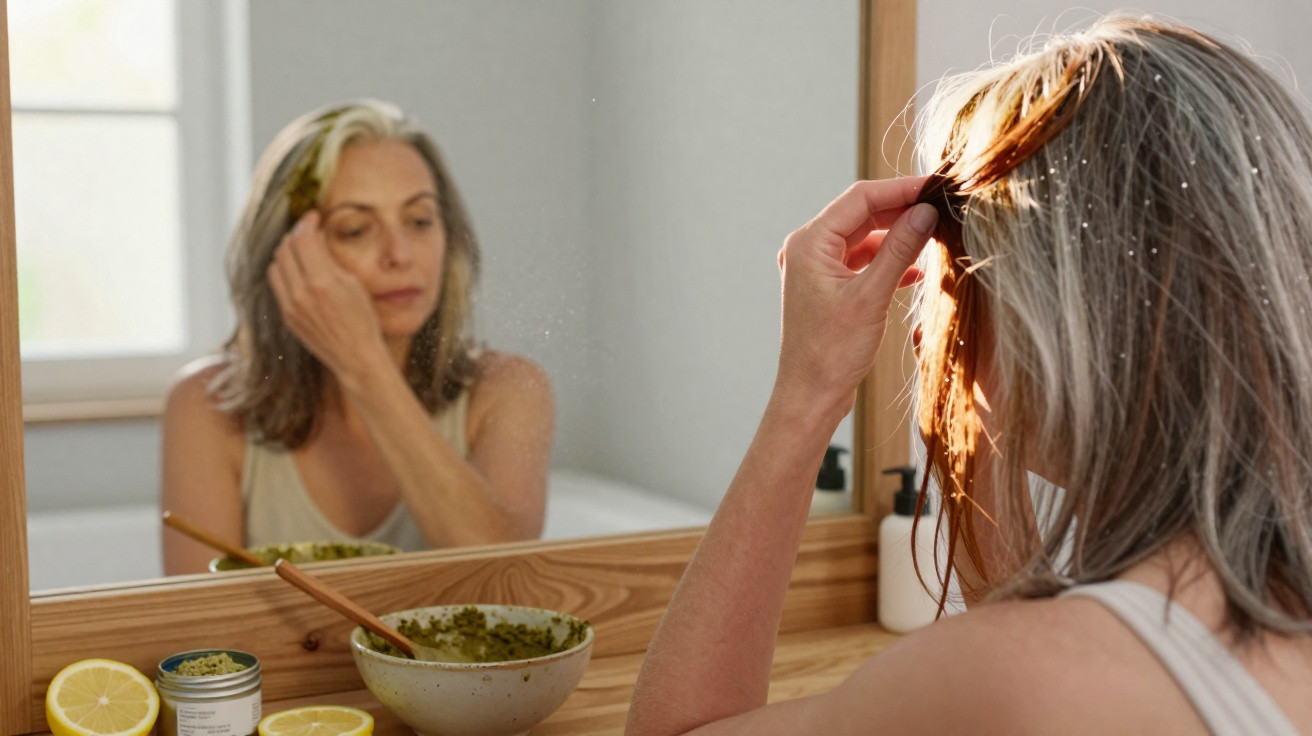
Henna is a plant-based option that can colour white hair without using conventional oxidative dyes. When combined with warm water and an acidic ingredient, it releases a pigment known as lawsone, which binds to the hair’s keratin and creates shades ranging from copper to red. The result may last for several weeks, but it neither removes white hair permanently nor makes the follicle produce melanin again.
What homemade mixture is used to cover white hair?
The preparation calls for pure powdered henna, warm water and a small amount of an acidic liquid, such as lemon juice. The acidity helps to gradually release the pigment found in the leaves of Lawsonia inermis. Once mixed, the paste usually needs to rest before use, although the precise timing depends on the product.
One commonly shared recipe uses roughly 100 grams of henna, the juice of one lemon and enough warm water to produce a thick paste. Some versions include vinegar, although combining several acidic ingredients is not required to achieve colour.
- Choose pure henna intended for hair colouring;
- Add the water gradually until the mixture becomes a creamy paste;
- Follow the resting time specified for the product;
- Wear gloves, as the pigment can also stain skin;
- Carry out a strand test before applying it to the whole head of hair.
Why can henna change the colour of a white hair strand?
The key is lawsone, the plant’s natural pigment. Its molecules are attracted to keratin proteins and can attach to the hair fibre. As white hair contains virtually no melanin, the pigment appears especially noticeable, generally producing a more intense copper or orange result than it would on darker strands.
Does the mixture actually restore the hair’s natural colour?
No. Henna colours hair that has already grown, but it does not address the biological process behind greying. Natural hair colour is produced by melanocytes associated with the follicle. With ageing, changes in these cells and their stem cells progressively reduce melanin production.
Once the cells responsible for pigmentation have been lost, there is currently no proven home remedy that can make them return. Henna’s effect is therefore cosmetic, even though it comes from a plant.
- Henna deposits pigment on and within the hair fibre;
- It does not increase melanin production in the follicle;
- New white hairs will continue to grow as normal;
- Roots will need touching up as the hair grows;
- The final shade depends on the colour present before application.
Why can the result differ from that of a conventional dye?
Henna colouring is less predictable because it does not lighten the hair’s natural pigment before adding a new shade. On completely white hair, it usually appears in warm copper and orange tones; on brown hair, it may mainly create reddish highlights. Repeated applications can also gradually deepen and darken the shade.
Henna lasts well, but it does not mean a permanent goodbye to grey hair
After application, the pigment from henna on hair may remain visible for several weeks and generally fades gradually. Because it has a strong affinity with keratin, removing or changing the colour later may be more difficult than simply waiting for a temporary dye to disappear. Anyone planning bleaching or another chemical treatment afterwards should tell the professional that they have used henna and know exactly which ingredients the product contained.
The most important distinction is between covering and reversing. Henna can visually change white hair and may suit people who prefer a plant-based hair colour, but it does not permanently restore the pigmentation made by the body. As the roots grow, new grey hairs will appear and need colouring again if that is the desired outcome. The mixture therefore provides long-lasting coverage, rather than a way to get rid of white hair forever.



Comments
No comments yet. Be the first to comment!
Leave a Comment