
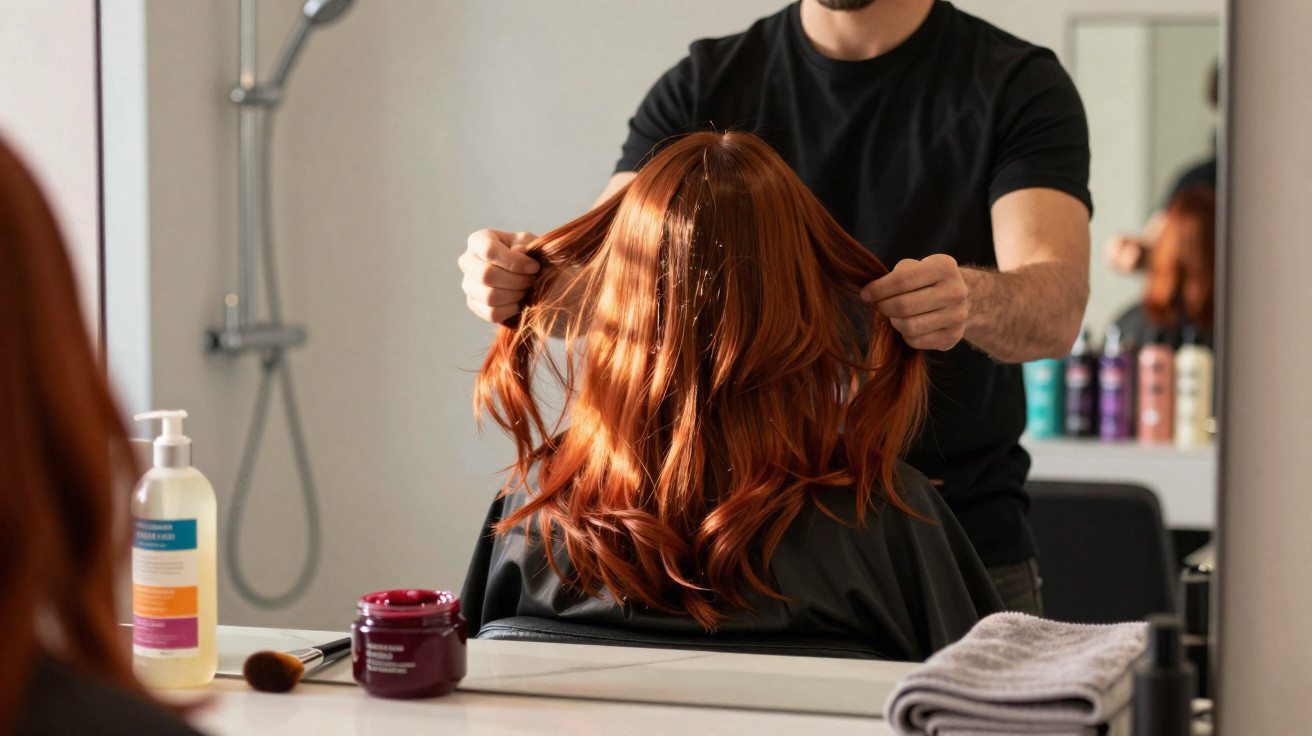
A fresh colour can feel like a small reset at the salon: glossy, rich and exactly the shade you wanted. At home, though, reality begins with showers, exercise and styling pressure – and within just a few days, the roots can already look darker while the lengths appear duller. How long your colour lasts depends less on a “miracle product” used at the salon and more on the many small choices you make every day.
The first 72 hours determine shine or dullness
If you carry on exactly as usual straight after colouring, you give away valuable longevity. Hairdressers repeatedly stress that the first three days after a colour treatment are crucial.
Gentle treatment during the first 72 hours can often extend vibrancy by several weeks.
After colouring, the hair fibres remain slightly open. The pigments have not yet settled “rock-solid” within the structure. This is precisely when the biggest mistakes tend to happen:
- Washing too soon: Shampooing the very next day can quite literally send freshly applied colour pigments down the drain.
- Hot water: High temperatures keep the cuticle open, allowing colour to escape more quickly.
- Rough towels: Vigorous rubbing stresses the hair surface and may dislodge pigments.
A better approach is to avoid washing your hair for around three days after colouring, if your routine allows. If that is absolutely not possible, rinse it briefly with cool water only and skip the shampoo.
Washing habits: less lather, more colour
Even once those first few days have passed, your washing routine remains the greatest enemy of hair colour. Every wash removes some pigment and dries out the lengths. Both factors make colour look lacklustre.
How often is it okay to wash?
Hairdressers generally recommend:
- 2 to 3 hair washes per week for coloured hair
- Daily washing only with plain water or a very gentle co-wash
- Dry shampoo on “bad” days when the roots become slightly greasy
Anyone who changes their routine from daily washing to every two or three days will usually notice within a few weeks that the shade stays rich for longer and the lengths break less easily.
Choosing the right water temperature
Although hot water feels relaxing, it acts like a colour stripper on coloured hair. Instead:
- Rinse shampoo away with lukewarm water
- Finish by running cold water briefly over the lengths and ends – this visibly closes the cuticle
After only a few washes, many people find that a cold final rinse makes their hair reflect more light and their colour look more defined.
Sport, sauna and swimming pools: protecting your colour every day
Shampoo is not the only thing that fades colour. Leisure activities can also affect pigments, often without you realising it.
Chlorine, salt water and sweat
Coloured hair is particularly sensitive to:
- Chlorinated swimming-pool water – which can leave blonde shades looking greenish and brown shades appearing dull
- Sea water – which is highly drying and makes pigments easier to release
- Heavy perspiration beneath helmets, hats or during intensive exercise
One simple trick is useful in every one of these situations:
Before swimming or exercising, soak your hair with clean water – this means the hair fibre absorbs less chlorine, salt or sweat.
At the swimming pool, a tight bun or swim cap is worthwhile. Following a day at the beach or pool, rinse your hair promptly with fresh water, then treat it with a rich mask.
Products that genuinely help hair colour last longer
Your real care routine starts after colouring. If you simply choose whatever is on offer in the chemist, aggressive surfactants and alcohols may strip out pigments faster.
What to look for in shampoo
A good colour shampoo can be identified by:
- The words “for coloured hair” or “colour protection” on the bottle
- Gentle surfactants such as coconut- or sugar-based surfactants
- As little as possible of high levels of drying alcohols
- Caring ingredients including panthenol, plant oils or proteins
The effect is even stronger when you pair shampoo with a suitable conditioner or mask. Their conditioning ingredients seal the surface, helping pigments remain in the hair for longer.
Masks and colour-depositing treatments
Alongside ordinary conditioning treatments, there are also colour-depositing masks. They contain colour pigments that build up lightly with each use.
| Product type | Benefit for coloured hair |
|---|---|
| Conditioning mask without pigment | Moisture, shine, less hair breakage |
| Colour-depositing mask | Revives the shade, disguises dullness, extends the time until the next colour treatment |
| Leave-in spray | Quick everyday protection, often with a UV filter |
For red shades or cool blonde tones in particular, using one of these masks every one to two weeks is worthwhile. It refreshes areas that have turned dull without significantly changing the original colour.
Heat styling: the invisible colour killer
Straighteners, curling tongs and hairdryers – many people use heat tools every day. For hair colour, that creates constant stress. High temperatures lift the cuticle, dry out the lengths and make the shade fade more rapidly.
How to style with less impact on colour
- Always limit heat: 160–180 degrees is enough for most hair types.
- Never skip heat protection: A good heat-protection spray coats the hair like a protective film.
- Include air-drying days: Make a conscious choice to leave the straighteners and similar tools aside on some days.
- Use the hairdryer on a medium setting: Do not work directly at the roots on the highest heat setting.
Every styling session without excessive heat extends the life of your hair colour – sometimes by several weeks.
Colour-friendly everyday routines hardly anyone knows
Alongside the usual advice, such as choosing the right shampoo and using heat protection, there are small tips that hairdressers have promoted for years – but clients rarely take them fully on board.
- Silk pillowcase: Less friction while sleeping, a smoother hair surface and more shine.
- Loose braid at night: Helps prevent tangles and split ends, while colour pigments remain better “sealed in”.
- UV protection in summer: Special sprays with sun protection factor slow fading caused by sunlight.
- No clarifying shampoo on coloured hair, except immediately before a fresh colour treatment.
These details may seem minor, but together they can make a clear difference between colour that fades gracefully and colour that looks dull and uneven after only four weeks.
When it is better to have your colour refreshed
Even with excellent care, there eventually comes a point when your colour treatment cannot be saved. A few signs include:
- The lengths look flat and “muddy”, even after conditioning treatments.
- The roots are clearly visible and contrast strongly with the rest of the hair.
- Colour-depositing masks conceal the difference for only a few days.
In these cases, booking a salon appointment for a glossing treatment or a gentle refresh is worthwhile. Usually, only the lengths and ends receive a light tint, rather than putting the whole head of hair under stress again.
What many people fundamentally misunderstand about hair colour
Hair colour is not a fixed state. It is more like a high-quality garment: cared for properly, it stays beautiful for a long time; treated badly, it quickly loses its shape and colour. Understanding that changes the way you plan your routines.
Rather than automatically reaching for shampoo with every shower, many people start asking themselves after a colour treatment: “Do I really need lather today, or are plain water and a little leave-in care enough?” Those small decisions add up. Over time, they matter more than the most expensive salon product.
People who gradually incorporate the tips above – from the first 72 hours and the right water temperature to heat protection and UV filters – often find that the intervals between colour appointments become longer. That protects not only the hair structure, but ultimately your wallet too.





Comments
No comments yet. Be the first to comment!
Leave a Comment