
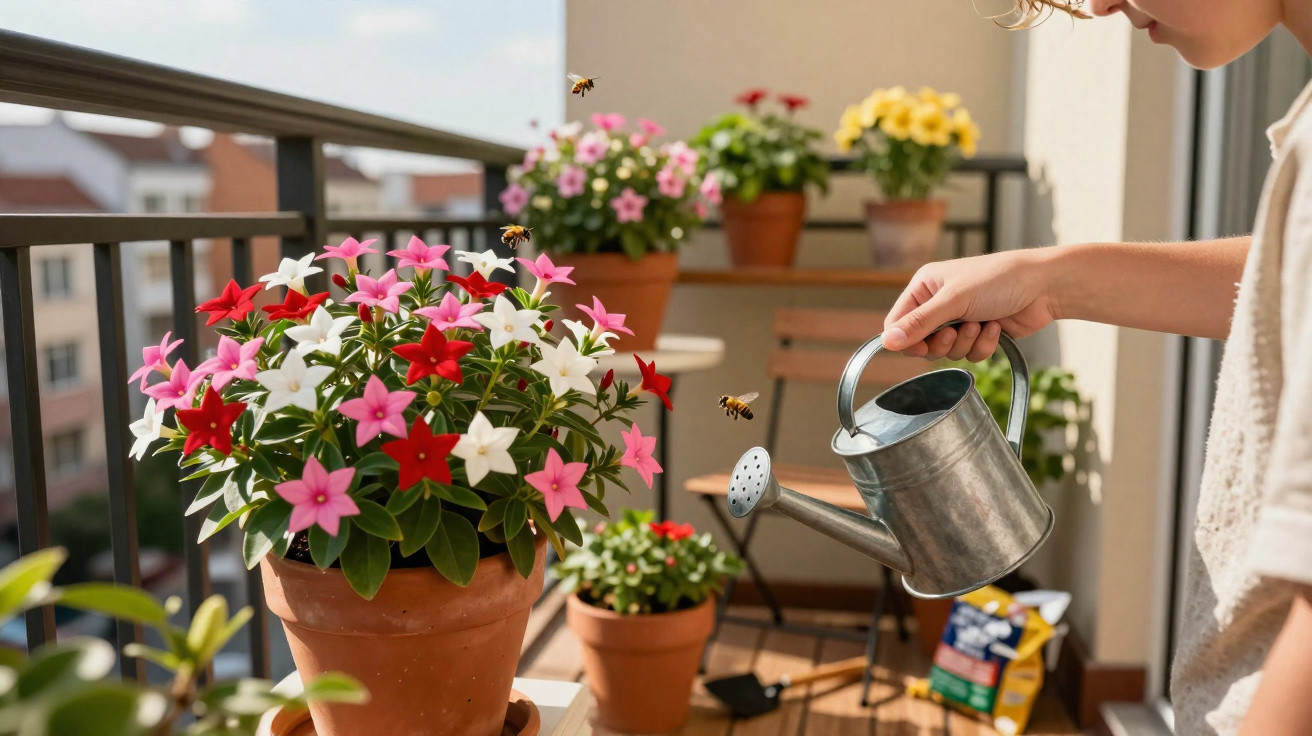
Between work, family and everyday life, there is often little time left to tend flower beds and keep an eye on every pot. Even so, many people want butterflies, buzzing bees and bold colour right outside their homes – even when all they have is a small urban balcony or narrow front garden. This is where a flower that is almost unfairly easy to care for, yet acts as a magnet for pollinators, comes in: Pentas, often sold as the “Egyptian starflower”.
Why the Egyptian starflower is a pollinator paradise
Pentas (botanical name Pentas lanceolata) originally come from tropical regions. In the UK, they are generally grown as annual summer flowering plants, forming dense bushes around 60 to 90 centimetres tall. Their distinctive feature is the abundance of small, star-shaped flowers gathered in compact clusters – hence the name “starflower”.
Depending on the variety, the colour range runs from vivid red to pink, white and purple, through to violet and even soft yellow. For insects, however, appearance matters less than what the blooms contain: they are particularly rich in nectar, making them a genuine energy café for pollinators.
“Pentas provide nectar for weeks on end – precisely when many other plants have long since finished flowering.”
Especially in late spring and summer, when some early-flowering plants have already faded, Pentas offer bees and butterflies a dependable food source. In very warm areas, they flower for almost the entire year; in the UK, their season usually runs from around late May until the first harder frosts.
It is not only honey bees that benefit. Solitary bees, bumblebees, hoverflies and numerous butterfly species all seek out these starflowers. In regions where hummingbirds occur, Pentas are even regarded as a favourite plant of these small birds – an indication of just how appealing their nectar is.
The best place for Pentas: borders, pots and compact balconies
As Pentas remain relatively compact, they suit almost every type of outdoor space. Whether planted in a traditional flower border, a container on the patio or a long window box on a balcony, they essentially need just sunshine, warmth and suitably free-draining soil.
- Light: A spot in full sun is best. Light partial shade is still possible, but will reduce the number of flowers.
- Temperature: Pentas thrive in warmth and cope with summer heat far better than many more delicate balcony plants.
- Soil/compost: Keep it loose, humus-rich and well drained. Avoid waterlogging, as it can rot the roots.
- Containers: Standard window boxes or pots with drainage holes are suitable; a layer of clay pebbles in the base is useful.
Anyone looking for the lowest-maintenance option should get a few essentials right at planting time. Once that is done, the rest is largely straightforward.
How to plant Pentas with minimal fuss
Plant in late spring, once night frosts are no longer expected. For beginners, young plants raised by a nursery are the ideal choice.
- Choose the position: Pick somewhere bright, warm and sheltered from the wind.
- Prepare the compost: Mix potting compost with a little compost or slow-release fertiliser.
- Plant them out: Leave 30 to 40 centimetres between individual plants.
- Water thoroughly: Give them a generous watering after planting so the roots settle in.
- Mulch: In borders, spread a thin layer of bark mulch or grass clippings around the plants.
Mulch helps retain moisture in the soil, suppresses weeds and saves several watering sessions during high summer. On a balcony, a closely packed display serves the same purpose: when several Pentas are grouped tightly together, they shade the compost themselves.
Everyday Pentas care: small tasks, long-lasting flowers
Despite their tropical origins, Pentas are not considered demanding. They are hardy enough provided a few simple rules are followed. The most important is consistent moisture without permanently wet compost.
During extended hot spells, plants in pots may need watering every day, while those in the garden will usually manage with a thorough soak every few days. Anyone prone to forgetting to water should opt for larger containers – they hold more moisture and are more forgiving of the occasional lapse.
“The more consistently faded flower clusters are removed, the denser and longer the plant will flower.”
Another simple tip is to trim off spent flower heads regularly. This encourages the plant to produce new buds instead of putting energy into seed production. It also keeps the bushes compact and makes them less likely to flop apart.
Applying a liquid fertiliser for flowering plants every three to four weeks during summer is enough to maintain abundant blooms. In very nutrient-rich compost, fertilise more sparingly, as otherwise the plants may produce lots of foliage and slightly fewer flowers.
What Pentas dislike most: frost and waterlogging
The Egyptian starflower’s one real weakness is sensitivity to cold. Plants begin to struggle at temperatures only just above freezing, and frost will kill them. In mild wine-growing climates, they may occasionally survive winter in a border with protection, but it is safer to treat them as conventional summer flowering plants.
If you do not want to buy your favourite varieties again every year, bring selected container-grown plants indoors in autumn. A bright but not overly warm place for winter – such as an unheated conservatory or a cool hallway with a window – is sufficient. The plants can then go outside again the following spring and will usually begin with a slight growth advantage.
Too much water in summer is more troublesome than cold. Wet, compacted soil encourages root rot. For this reason, saucers in which water collects permanently are best avoided. Instead, pour away any remaining water after a few minutes.
Pairing Pentas with other plants
Pentas are especially appealing when combined with other insect-friendly species. The result is not only a colourful feature but a genuine buffet with different flowering periods and flower shapes.
Suitable companions include:
- Lavender – drought tolerant, fragrant and irresistibly attractive to bees
- Ornamental salvias – provide nectar and visually complement star-shaped flowers
- Verbenas – delicate, airy blooms that continue flowering for a long time
- Zinnias – similarly easy to care for and add further splashes of colour
- Summer asters – extend the flowering season into autumn
For anyone who prefers a modern, pared-back look, several Pentas of the same colour can be planted in one large bowl. This creates a single, solid block of colour, while it still hums and flutters with activity above it.
Why Pentas are particularly suitable for beginners
Many people are wary of “demanding” garden plants and therefore choose artificial flowers or uniform thuja hedges. Pentas can provide an accessible starting point: they forgive mistakes, respond quickly with fresh blooms and deliver visible results even if you are not an experienced gardener.
| Feature | Rating for beginners |
|---|---|
| Care requirements | low to medium, easily manageable |
| Flowering period | long, from late spring until the first frost |
| Site requirements | warm, sunny, otherwise uncomplicated |
| Benefit for insects | high, very nectar-rich |
| Suitability for balconies | very good, including window boxes and containers |
For anyone wishing to show children how bees and butterflies work, Pentas are an almost ideal “teaching plant”. Pollinators can be watched at close range without needing to own a large wildlife garden. A small pot is enough to bring a living mini ecosystem directly to the window.
The term “melliferous”, or “nectar-rich”, is also useful and often appears in gardening guides. It refers to plants whose flowers provide particularly large amounts of nectar or pollen. Pentas belong firmly in this category – much like coneflowers, phacelia or catmint, though with a slightly more exotic-looking appearance.
Anyone already considering making their home more wildlife-friendly, whether through a natural-style garden or an insect-friendly balcony, can make an uncomplicated start with one or two pots of Pentas. The next step often follows the following year: more bee-friendly species, fewer sterile gravel areas and more colour outside the front door. For many, the journey begins surprisingly often with an unassuming starflower at the garden centre – and a summer in which there is suddenly a little more buzzing and fluttering again.




Comments
No comments yet. Be the first to comment!
Leave a Comment