
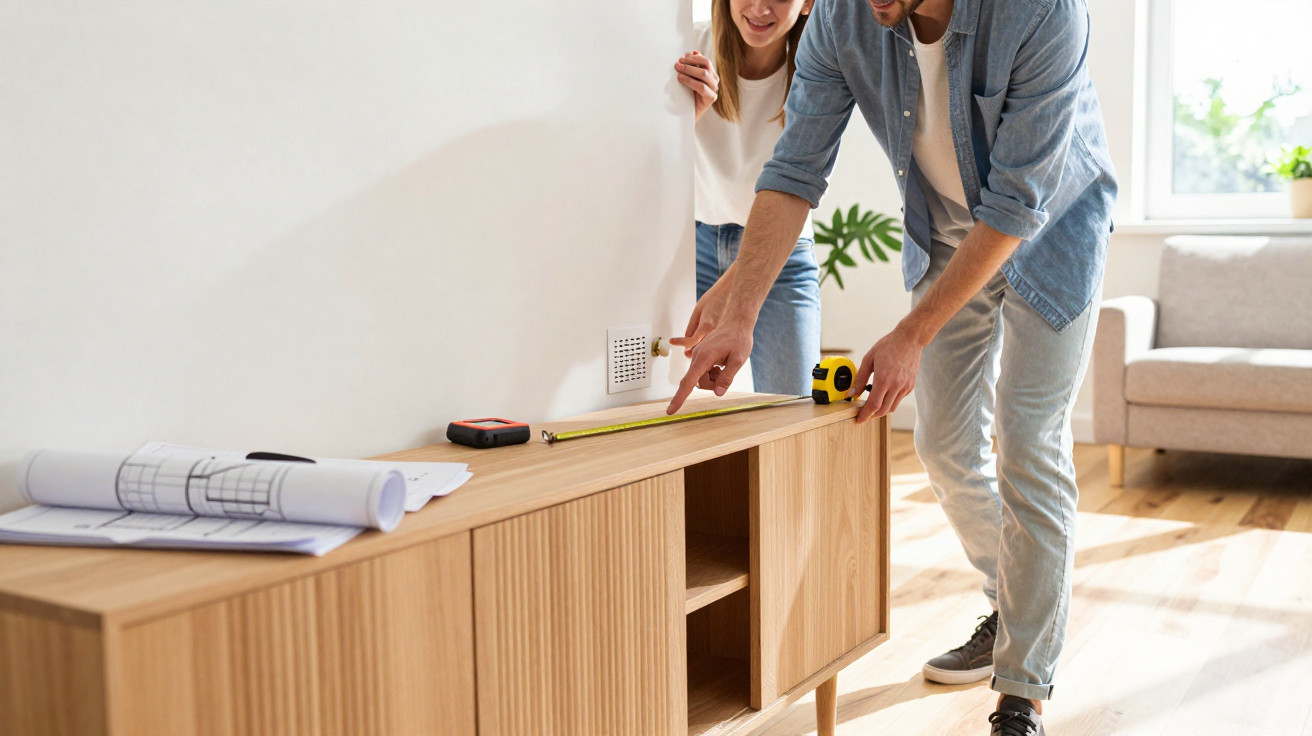
A space between furniture and wall may look like nothing more than leftover room during installation, yet it can serve a practical purpose in some situations. This gap can support air movement, provide access to services and help certain furniture items and appliances operate as intended.
Why do some furniture items need to be kept away from the wall?
Leaving a gap can allow air to move behind the furniture, particularly where there is a temperature difference between the wall and the room. This airflow helps limit pockets of stagnant air and may matter in areas with a greater likelihood of condensation.
Some furniture also has rear-mounted components, sockets, cables or pipework. Keeping the manufacturer-specified clearance prevents these elements from being compressed against the wall and makes maintenance easier when required.
What structural detail determines the required distance?
There is no single measurement that applies to every piece of furniture. The necessary clearance varies according to the item, its material, the wall and the reason for the gap. Cupboards, shelving units and fitted furniture may each have different ventilation and access requirements.
For furniture housing electrical equipment, the manufacturer’s guidance should take precedence. Fridges, ovens, machines and other appliances may require defined clearances for heat dissipation and air circulation.
How can you tell whether the space behind furniture should be retained?
Start by checking the manual or assembly instructions. Where the manufacturer specifies a minimum distance, it should be observed. It is also worth checking for sockets, cables, air vents or pipework behind the item.
Avoid pushing furniture fully against the wall simply to gain a few centimetres. If the design allows for a clearance, removing it can restrict ventilation or put pressure on components. The gap can also make it easier to clean dust that builds up behind the furniture.
Who should pay closer attention to this detail, and when?
Furniture placed near external walls, damp areas or heat-producing equipment may need particular consideration for airflow. In poorly ventilated rooms, suitable clearance can be even more important to prevent air from becoming completely trapped.
It is also important to distinguish decorative furniture from equipment with specific requirements. Any signs of damp, mould, excessive heat or warping should be investigated. Therefore, a space between furniture and wall should not automatically be removed, as it may be part of the installation’s operation or preservation.





Comments
No comments yet. Be the first to comment!
Leave a Comment