
Sometimes the problem is more than simply “not having green fingers”.
The snake plant is regarded as an almost indestructible houseplant. That is precisely why many owners are surprised when an otherwise hardy Sansevieria suddenly starts to decline, rot or simply stops growing. Anyone who recognises the usual warning signs early can often still save the plant – but wait too long and you may be left with nothing but a mushy root ball.
How to tell when your snake plant is in danger
Healthy snake plants grow upright and firm, with an almost architectural appearance, deep green leaves and distinct patterns. When their shape, colour or texture noticeably changes, the plant is signalling that it needs help.
Discoloured leaves: yellow, brown or dull
Yellow leaves are among the clearest warning signs. As part of normal ageing, only the occasional very old outer leaf should turn yellow. If several leaves throughout the clump are yellowing, something more fundamental is wrong.
If yellowing begins at the base of the leaf and moves upwards, there is usually too much water in the pot and the roots are starting to rot.
If yellow leaves feel soft or pulpy and give off an unpleasant smell, root rot is highly likely. This is a critical stage, as the damage has already reached deep into the root system.
Brown marks point to a different issue. Small brown tips and leaf edges are often caused by:
- irregular watering, with extended dry periods followed by heavy watering
- very dry air from central heating
- salt and limescale deposits from hard tap water
Larger brown patches or sunken dark areas, on the other hand, may indicate a fungal infection or pests. If the leaves look scorched, the snake plant may have received too much bright midday sun through glass.
Wrinkled, limp or curling leaves
When your snake plant feels like an old leather glove – wrinkled and creased – it lacks water, or its roots are no longer able to take up moisture. The plant then switches into conservation mode: its leaves may curl slightly, lose their rigidity and become easier to bend or topple.
Even so, a snake plant copes far better with drought than with constantly wet compost. If you suddenly try to make up for it by adding litres of water, you will often make the situation worse.
A soft base: when the plant turns mushy from below
It is particularly concerning if leaves become soft at their base or can almost be crushed between two fingers. This usually means that the area between the roots and leaves has rotted.
Soft, mushy leaf bases are an emergency – act immediately or the entire clump will be lost.
The cause is nearly always overly wet growing medium combined with poor drainage. The roots are sitting in water, oxygen is unavailable, and bacteria and fungi take over.
What is happening below ground: checking roots and compost
Whether a snake plant can still be saved is decided inside the pot. Inspecting the roots gives a quick answer, even if it means taking the plant out of its pot briefly.
What healthy and unhealthy roots look like
Healthy Sansevieria roots are pale, ranging from white to light beige, and feel firm. They should smell earthy rather than like a rubbish bin. Diseased roots have different characteristics:
- dark brown to black colouring
- a slimy, pulpy texture that falls apart when touched
- a rotten smell that is immediately noticeable
- hollow, dried-up root remains after extreme drought
- scarcely developed roots, with only bare rhizomes remaining
The more pronounced these signs are, the closer the plant is to the end.
The importance of compost: drainage, nutrients and air
Although snake plants are robust, they do not thrive in houseplant compost set to “swamp mode”. Standard potting compost holds a great deal of water – often ideal for constantly thirsty tropical plants such as peace lilies, but quickly excessive for succulent plants such as Sansevieria.
A loose, free-draining mix of cactus compost, coarse sand, perlite or pumice prevents waterlogging and can save many plants before problems even arise.
Over the years, compost settles and becomes compacted in the pot. Water may then run straight down the sides and out again, or remain trapped in the middle because the pores are blocked. Both situations put the plant under stress: either it can barely access water, or its roots suffocate.
Healthy versus dying snake plants: a direct comparison
| Feature | Healthy snake plant | Severely damaged snake plant |
|---|---|---|
| Leaf firmness | firm, stable and upright | soft, pulpy or heavily wrinkled |
| Leaf colour | rich green with clear patterning | yellow, brown, pale or blurred patterns |
| Roots | pale, firm and odourless | dark, slimy or bone-dry |
| Growth | produces new leaves regularly | no new growth for months |
| Compost moisture | dries out between watering sessions | permanently wet or continually dust-dry |
Limiting the damage: how to bring your snake plant back
Once it is clear that the plant is deteriorating, prompt yet considered action matters. The right rescue method depends mainly on whether it has been kept too wet or too dry.
Saving a plant affected by overwatering and root rot
Where there are obvious signs of rot, only radical pruning will help:
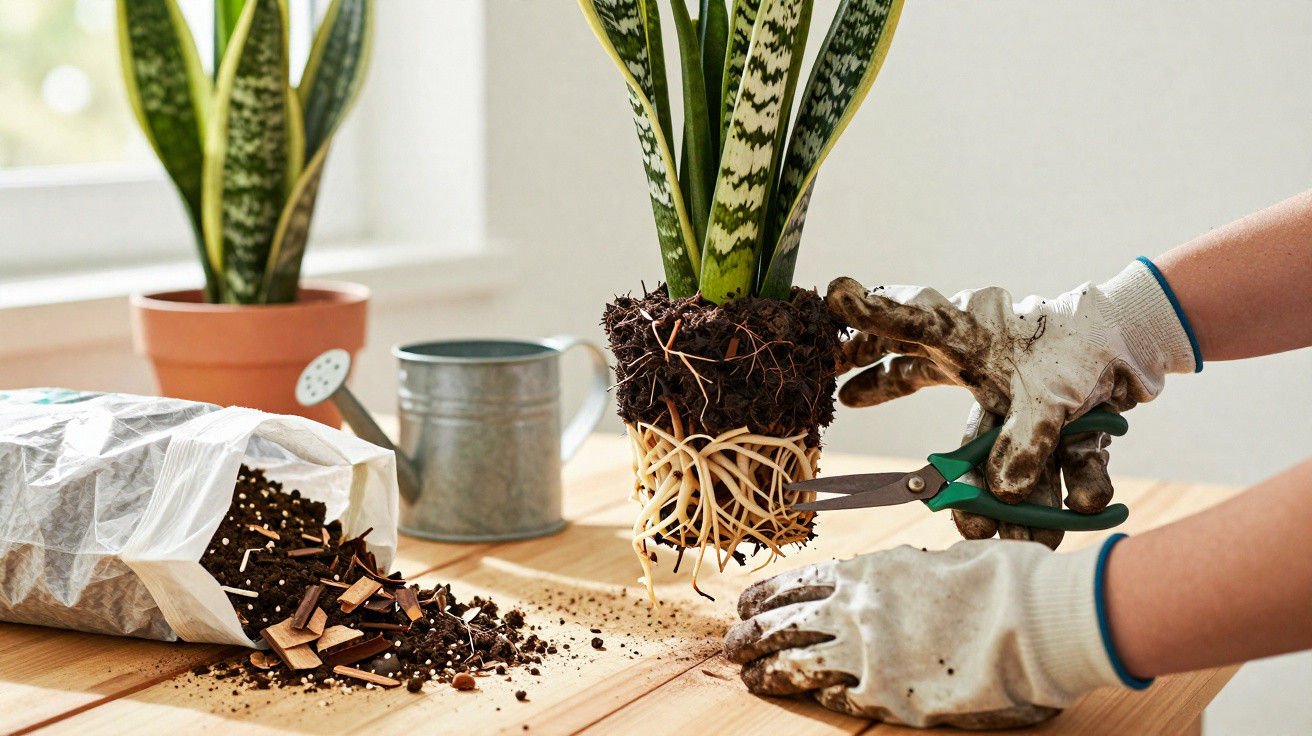
- Carefully lift the plant from its pot and remove loose compost.
- Cut away every dark, slimy and foul-smelling root using clean, sharp scissors.
- Trim mushy leaf bases back to firm, healthy tissue.
- Leave the rhizomes and cut surfaces to dry in the air for a few hours or up to one day.
- Repot it in fresh, free-draining compost, ideally in a pot with a drainage hole.
- Water only lightly, then water very sparingly for several days or weeks.
If the damage is severe, healthy sections of leaf can be used to propagate new plants. Cut one leaf into several sections, allow them to dry, then place them in lightly moist growing medium. At least part of the old snake plant can then live on.
Helping a completely dried-out snake plant recover
If the plant has simply been forgotten, it can often be rescued more easily than one suffering from rot. The key point is this: do not give it a “water shock” by pouring on a large amount all at once.
Instead:
- moisten the compost lightly at first, then wait a few hours
- water moderately several times over the following days
- allow the pot to dry out properly between watering
Leaves that have already become wrinkled will not become attractive again; they will remain visibly damaged. What matters is whether new, healthy leaves emerge from the centre. That shows the roots are functioning again.
Location, light and temperature: quiet plant killers
Watering is not everything. Many problems develop because a snake plant is placed in an unsuitable spot. It tolerates shade, but does best in bright, indirect light, roughly one to two metres from a window.
Too little light slows growth, while too much direct sun burns the leaves – over time, both result in a weakened and more vulnerable plant.
Temperature and draughts also matter. Major fluctuations, cold winter draughts or a position directly beside a radiator will stress the plant. A relatively stable area between around 16 and 29 degrees is ideal, without extreme peaks.
Snake plants need fertiliser only sparingly. One heavily diluted dose of succulent fertiliser in spring and summer is often entirely sufficient. Too much fertiliser damages the roots and is more likely to cause brown tips than lush growth.
Practical tips to prevent a snake plant crisis
By following a few basic rules, you will rarely find your snake plant in crisis mode:
- Use the finger test rather than a watering schedule: water only once the top layer of compost is clearly dry.
- Choose a pot with a drainage hole and empty the saucer after a few minutes.
- Repot every few years if the compost seems heavily compacted or the root ball is bursting out of the pot.
- If tap water is very hard, water occasionally with filtered or left-standing water.
- Briefly check houseplants regularly for pests or marks before a problem can spread.
Many owners underestimate how clearly a snake plant communicates its needs: yellow and mushy usually means “too wet”; wrinkled and soft means “too dry or a root problem”; while dull colour and stalled growth point to a lack of light or nutrients. Once you understand these patterns, you will spot the signs ever earlier.
There is one further point that often causes confusion: snake plants grow slowly. If seemingly nothing happens for several months, that is not automatically a death sentence. It only becomes truly critical when the pause in growth is accompanied by clear signs of stress, such as the smell of rot, extensive discolouration or consistently limp leaves. Then it is time to tip out the pot, inspect the roots and, if necessary, give the plant a fresh start with scissors and new compost.



Comments
No comments yet. Be the first to comment!
Leave a Comment