
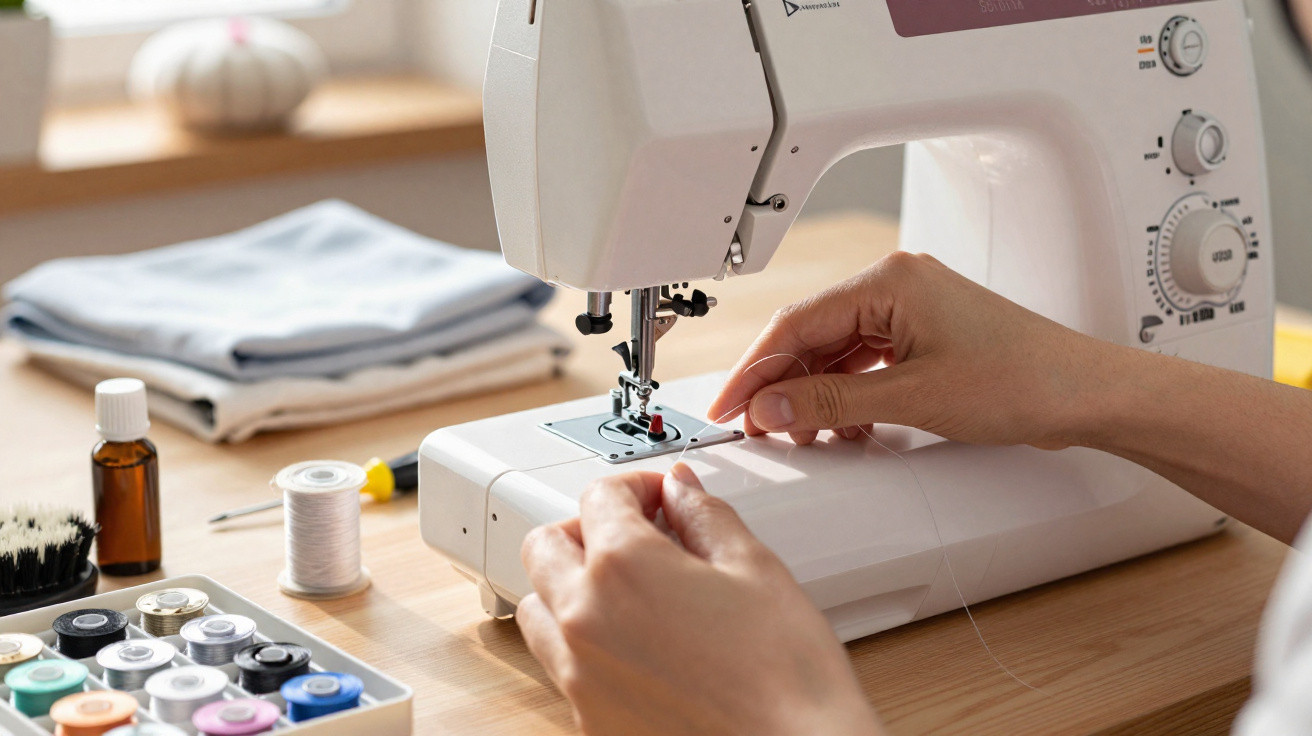
Many people experience sewing faults despite adjusting their machine’s tension regularly. The underlying issue often begins while winding the thread, when minor lapses create hidden knots and spoil the appearance of every seam made with precision in the fabric.
Why does incorrect winding affect stitches?
If bobbin winding is carried out carelessly, the thread loses its proper alignment. This happens when the thread is not given sufficient mechanical resistance, allowing the bobbin to build up loose turns and causing unstable tension throughout the whole sewing process.
A disordered build-up of fibres creates major inconsistencies in the lower thread feed. This imbalance prevents the threads from interlocking evenly in the fabric, producing distorted loops and visibly loose stitches that reduce the finished quality of any project made on a domestic machine.
Why are stitches loose on the reverse of the fabric?
When the lower loops appear tangled on the reverse side, the real cause is not always the upper tension setting, but rather… Read more
How does the pre-tension disc work during winding?
The metal disc has an essential role in controlling the firm passage of thread before it reaches the bobbin. By providing the correct resistance, this component ensures that the filament winds at an even density, preventing the thread from becoming loose or developing unwanted ripples.
Failing to position the thread correctly in this guide causes it to be distributed unevenly and without control. Without proper support, the thread develops slack that changes the machine’s mechanical behaviour, disrupting the continuous flow of the stitch throughout every stage of sewing.
Below is a video from the Brother Sews USA YouTube channel demonstrating the step-by-step process for winding a bobbin:
What are the signs of a poorly wound bobbin?
It is easy to spot an improperly prepared bobbin by checking its appearance before fitting it. The spool should show compact, symmetrical layers, with no loose strands sticking out from the sides, as any visible distortion indicates that the winding was carried out with faults in the guiding support.
Another common sign appears when the lower thread jams or feeds out in jerks while making items. This repeated snagging suggests that loose winding has created internal knots in the receiving case, preventing the stitch from maintaining the consistency expected by the sewer.
Essential Bobbin Kit
Indispensable items
Keep these supplies close by to ensure flawless preparation:
- Original spools compatible with the machine model;
- Strong, good-quality threads from a reliable source;
- Thread snips for precise cutting.
How can you avoid mistakes while winding the bobbin?
To achieve a perfect result, first follow the thread path marked on the body of the machine. Fitting the thread securely around the tension pin provides the resistance needed for the spool to receive consistent turns with complete operational stability.
Maintaining a moderate speed while winding also helps distribute the material evenly. Controlling the foot pedal prevents sudden pulls on the filament, ensuring that the thread retains the ideal firmness for flawless performance across a range of fabrics.
A few practical steps can help secure correct alignment before starting work:
- Check that the thread is properly seated in the pre-tension guide before switching on the motor;
- Wind the appropriate amount without going beyond the rim of the plastic component;
- Discard spools that are misshapen, cracked or have visible rough edges.
Why does preventive maintenance improve sewing?
Regular care of the internal components is vital for maintaining high-quality finishes. A build-up of dust and lint around the hook area can jam the mechanism, restricting the free movement of the part and changing the flow of the thread during use.
Cleaning the compartment routinely with a soft brush removes built-up debris. This simple measure extends the machine’s service life, ensuring that the system operates correctly and delivers an impeccable result in all your daily creations.






Comments
No comments yet. Be the first to comment!
Leave a Comment