
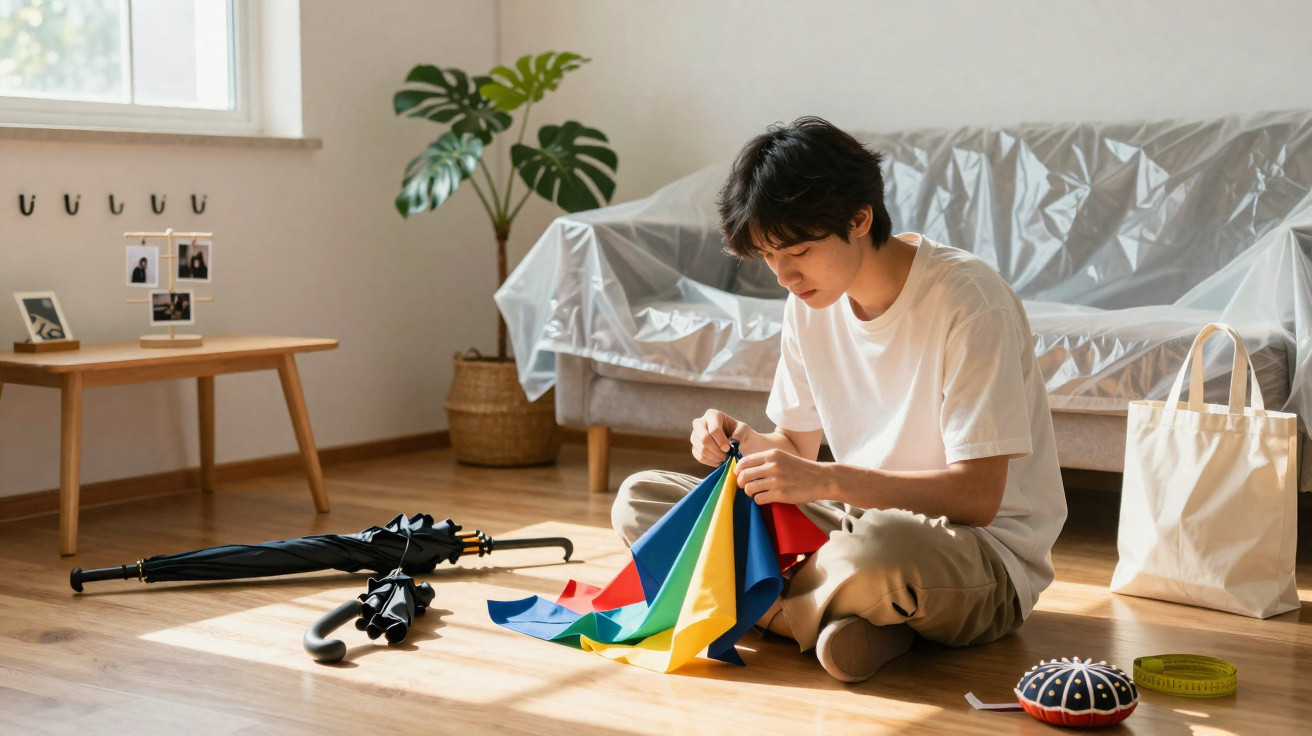
A broken umbrella may look like rubbish at first, yet its components can still be valuable around the home. Its waterproof fabric, metal ribs and sturdy handle can be repurposed into affordable items for organisation, decoration and gardening. The approach is to take it apart carefully, sort the materials and turn the accessory into useful pieces for everyday life.
Why can a broken umbrella still be useful?
When its frame bends or its fabric tears, many people throw an umbrella away without considering which parts can still be used. Even when damaged, it contains durable, lightweight and adaptable materials, including waterproof canopy fabric, flexible rods, the tip and an ergonomic handle.
Repurposing is worthwhile because the item was designed to withstand wind, rain and regular use. Its parts can therefore be useful indoors, on balconies, in utility rooms and in small gardens. Rather than buying new organisers, supports or covers, you can try straightforward solutions using items already at home.
How can you reuse waterproof umbrella fabric?
One option is to turn the umbrella fabric into lightweight pieces that resist moisture. The canopy is among the most versatile components, as it offers flexibility, durability and protection from splashes.
Before cutting it, spread the fabric on a table and identify the sections that remain intact. Next, wash it, dry it thoroughly and remove any torn areas. Using scissors, thread, fabric glue or simple stitching, it can take on several new uses.
- Reusable bag for quick shopping trips, books, gym clothes or small belongings.
- Cover for a backpack, shoes or accessories used on rainy days.
- Drawer liner for the bathroom, kitchen, utility room or cleaning-products cupboard.
- Waterproof pouch for storing brushes, damp cloths or beach items.
- Protection for plant pots in outdoor areas, preventing splashes directly onto the floor.
The fabric can also be paired with buttons, Velcro or drawstring. This makes the item easier to open, close and carry. It is best to begin with small projects, as these require less cutting and allow you to use even sections from heavily damaged umbrellas.
What can be done with the ribs and metal frame?
Umbrella ribs are often thrown away with the fabric, although they can work as rods, supports and small organisers. Their slim, flexible form makes them useful for solutions around the home, balcony and garden. The main precaution is to cut or bend the ends to prevent scratches.
Once removed, the rods can be wiped clean with a dry cloth and reshaped with pliers. If there is rust, brittle sections or very sharp ends, dispose of them safely. Material that remains in good condition can be used in several ways.
- Plant stakes for small plants, herbs, seedlings and pots with delicate stems.
- Support for climbing plants in balcony or garden pots.
- Simple hooks for hanging keys, ribbons, lightweight cloths or small tools.
- Bed markers, with labels attached to the end of each rod.
- Frames for decorative mobiles, using thread, shells, beads or fabric scraps.
For decorative projects, the metal frame can produce an appealing effect when painted with spray paint suitable for metal. It can become the base for hanging ornaments, a handmade lamp without electrical wiring, or a holder for lightweight photographs, provided it is securely fixed and kept away from young children.
How can an umbrella handle become functional decoration?
The handle is one of the easiest parts to repurpose. Many models feature a curved, solid and comfortable shape to hold. This makes it possible to turn the piece into a wall hook, decorative pull or support for lightweight items in the entrance hall, bedroom or utility room.
To use the handle as a hook, remove the remaining frame, clean the piece and attach it to a wooden base or directly to the wall with suitable wall plugs and screws. It can be finished with paint, varnish or decorative cord to suit the room.
- Hook for hanging reusable shopping bags, hats, keys or lightweight handbags.
- Support for cleaning cloths in the utility room.
- Creative pull for storage boxes or old furniture.
- Handmade hanger for craft-room accessories, such as ribbons and cords.
- Decorative feature on a themed wall alongside plants and small pictures.
This idea works best when the handle is sturdy and free from cracks. If it is fragile, it is better used only as a decorative detail, without any weight on it. The result can give a room a more individual feel, particularly in homes that value repurposed decoration and objects with a story.
What care is needed before starting a DIY project?
Before taking apart a broken umbrella, inspect its structure carefully. Some ribs may be bent, rusty or have exposed ends. Wear gloves, cut slowly and keep children away from the metal pieces throughout the process. The fabric must be dry to prevent mould in drawers, bags or cupboards.
Repurposing should also remain practical. Not every damaged piece is worth the effort, especially if it is dirty, badly rusted or made from severely torn fabric. Where there is a risk of cuts, unpleasant odours or weakness, proper disposal is safer. The best use for a broken umbrella combines creativity, genuine function and a simple finish, so it remains useful at home.
Comments
No comments yet. Be the first to comment!
Leave a Comment