
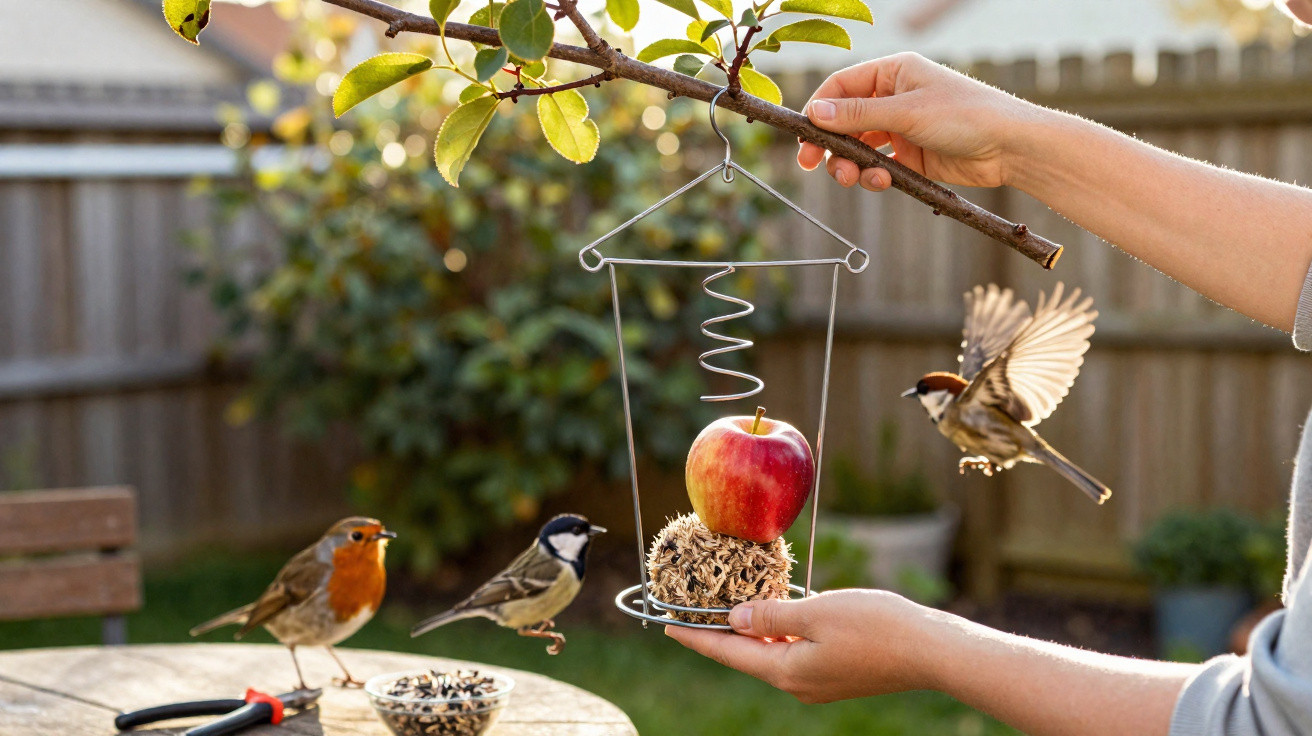
In spring, a glance out of the window quickly reveals the activity outside: birds are fluttering, calling and searching everywhere, and they need plenty of energy at this time of year. Rather than buying costly feeding stations from a DIY shop, you can turn an ordinary coat hanger into a sturdy, almost free bird feeder in just a few minutes. It is an easy, enjoyable project that brings wildlife to a garden, balcony or back yard.
From coat hanger to bird bar: how the trick works
The principle could hardly be simpler. Using pliers, reshape a thin metal coat hanger of the type often returned by dry cleaners so that it holds either half an apple or a fat ball. Keep the hook for hanging it up, then mould the remaining wire into the part that supports the food.
“With just a few simple movements, an everyday object becomes a robust, weather-resistant feeding station – with no shopping or specialist tools required.”
What materials you really need
You need only a small selection of items for this quick project, all of which can be found at home or in a basic toolbox.
- 1 thin metal coat hanger, typically from a dry cleaner
- 1 pair of side cutters or combination pliers with a cutting edge
- 1 pair of flat-nose pliers for bending the metal
- 1 whole apple or 1 bird fat ball, either plant-based or mixed
Fine-wire hangers are especially suitable. They are rigid enough to support the food's weight, while still being pliable with a little force and a pair of pliers. This creates a structure that is both stable and adaptable.
Step by step: make your own bird feeder in three minutes
Step 1: Reinforce the hanging section
Place the hanger on a firm surface. First, use the flat-nose pliers to undo the small wire twist immediately beneath the hook. This gives you a longer section of wire that can move freely.
Crucially, leave the hook itself largely in its original shape. It will later be used to hang the feeder from a branch, hook or balcony railing. If necessary, use the pliers to squeeze the hook slightly tighter so that it stays securely in place.
Then press the base of the hook firmly together to prevent the wire from twisting in the wind. This forms a stable ‘spine’ for the entire structure.
Step 2: Shape the holder for an apple or fat ball
This is where the creative part begins. There are two options from here, depending on the food you are using.
| Food | Wire shape | Benefit |
|---|---|---|
| Apple, or another fruit | U-shaped cradle or pointed spike | Holds the fruit firmly and makes it easy to push on |
| Fat ball | Spiral or tight basket | Prevents the ball from falling, even in windy conditions |
To make an apple holder, bend the lower end of the wire firmly upwards and shape it into a U. Alternatively, leave one end as a sturdy spike and push a half or whole piece of fruit onto it. The aim is to stop the apple slipping off as soon as birds begin pecking at it.
For fat balls, coil the lower section into a close spiral or a small basket. Press the ball into this wire spiral, where gentle pressure will hold it in place. It will therefore not come loose with every gust of wind.
Most importantly, bend any sharp wire ends inwards with the pliers, so birds cannot injure themselves when landing or taking off.
Why tits, robins and sparrows love this bird feeder
Small songbirds particularly need energy-rich food during the breeding season. An accessible, safe source of food can help them through the demanding period of nest building, breeding and raising their young.
“The homemade feeding station is slim, easy to grip and less likely to attract larger food rivals – a clear advantage for smaller species.”
Advantages over large bird tables
- Its narrow shape makes it easier for small birds to hold on.
- It is less appealing to larger species such as crows or pigeons.
- When suspended in the air, it is harder for cats to reach.
- It is easy to clean because there are hardly any concealed corners.
There is an environmental benefit too. Instead of purchasing new plastic items, you reuse something that might otherwise gather dust in a wardrobe or end up in the bin. That conserves resources and cuts waste.
The ideal position: feeding safely without stress
Where to hang the bird feeder
Once the hanger has been reshaped and filled with food, the next consideration is where to place it. Birds need to be able to feed undisturbed while remaining protected from danger.
A strong forked branch, 2 to 3 metres above the ground, is ideal. At this height, cats will find it almost impossible to jump up to it. The spot should have some shelter from the wind, so the apple or fat ball is not constantly swinging about, but it should also have an unobstructed view above so birds can spot predators early.
Allow enough distance from the home's windows: around 10 metres is a useful rough guide. This reduces the risk of a startled bird flying straight into the glass.
How to tell whether the location is right
If the first tits or sparrows appear after a day or two, you have got many things right. Should the feeder remain empty for longer, try moving it slightly, perhaps closer to a hedge where birds can land and take off under cover.
How to maintain and adapt the bird feeder
Even an improvised feeding point needs some care if it is to remain useful. Fruit spoils quickly in damp weather, so it is better to offer smaller portions more often than leave one apple hanging for ages.
Wash the wire hanger regularly with hot water. This removes food residue and reduces germs that can spread disease. Fat balls should not be left up for too long either, particularly in warmer weather.
Variations and additions for keen makers
If you enjoy this method, it is easy to develop it further:
- bend an additional small crossbar from wire to create a perch
- combine two hangers to form a ‘double station’
- offer pear, half walnuts or dried apple rings instead of apple
- use a hook that fits over the balcony railing for a balcony feeder
With minimal materials, you can create a genuine airborne restaurant for different species and adjust it to suit the season: fat-rich food in winter, and fruit and seeds later in the year.
Why this small trick achieves more than you might think
This simple bending project does more than support songbirds: it also shows how easily everyday objects can be repurposed. A disposable item becomes a useful aid for the wildlife on your doorstep. Children can see the effect of their efforts directly when the first feathered visitors arrive soon afterwards.
At the same time, this type of feeding station supports species regarded as natural pest controllers in gardens. In spring, tits and other insect-eating birds remove large numbers of caterpillars and beetles from trees, which is a real bonus for fruit trees and ornamental plants.
Once you start viewing everyday items in this way, more ideas soon follow: old food tins can become an insect hotel, a discarded bowl can be turned into a water dish, and leftover timber can make a nest box. The metal coat hanger is therefore only the start of a series of small projects that can make a garden and balcony livelier, without needing a large budget.
Comments
No comments yet. Be the first to comment!
Leave a Comment