

When hair starts to feel rough, puff up and look dull, a straightforward combination may help improve the appearance of the strands. Mixing a hydrating hair mask with a few drops of coconut oil makes for an easy at-home treatment, designed chiefly to restore softness to the lengths and ends.
Why can this mixture help hair?
A hydrating hair mask is already formulated to make hair softer and easier to manage, while coconut oil can be used as an extra step to enhance the feeling of nourishment. Used together, they may temporarily improve the feel of dry hair, particularly after frequent exposure to heat, sunlight or chemical treatments.
The key is to use only a small amount of oil. Too much can make hair feel weighed down, greasy or sticky. A few drops are therefore usually enough to enrich the mask without turning the treatment into a blend that is difficult to rinse out.
How do you make this 2-ingredient hydrating treatment?
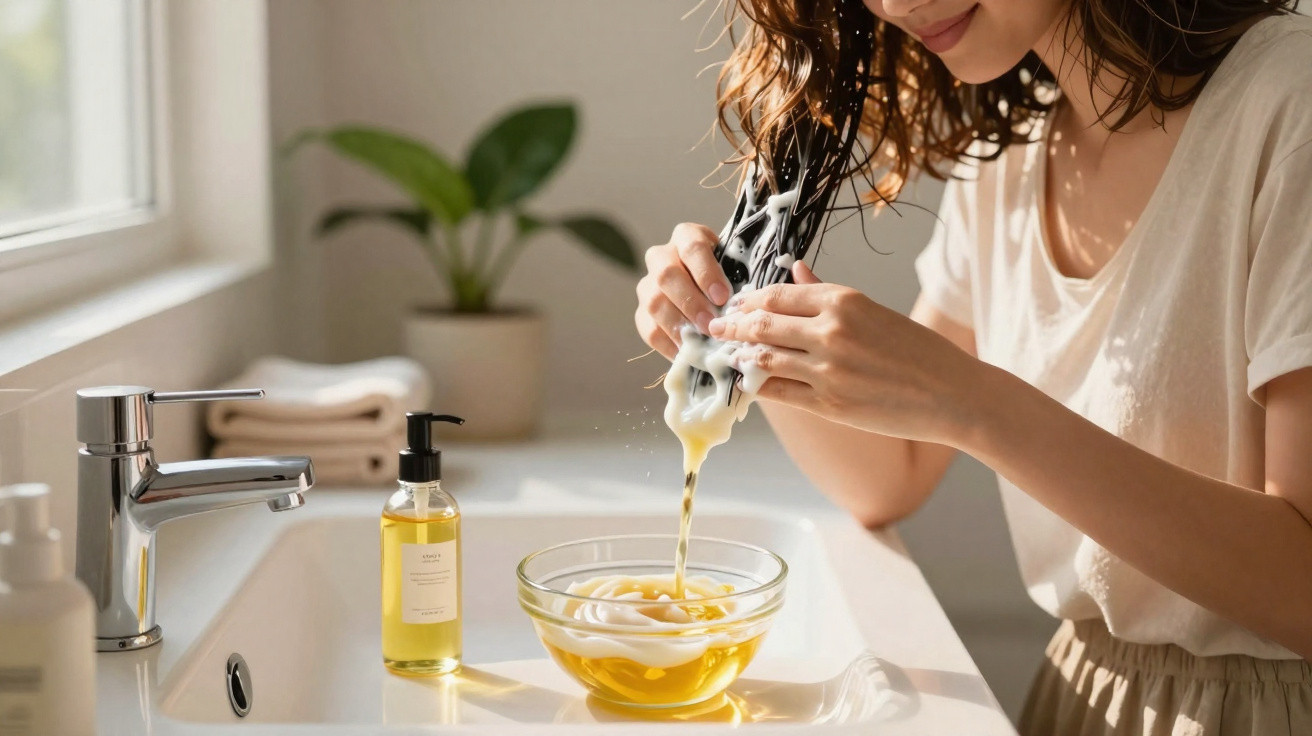
Prepare only the amount you intend to use at the time. Put a portion of your usual hydrating hair mask into a bowl, then add a few drops of coconut oil. Stir thoroughly until the mixture is even, with no separate layer of oil sitting on the surface.
- Set aside enough hair mask to cover the lengths of your hair.
- Add a few drops of coconut oil, mixing until it is fully incorporated.
- Make only the portion you will use, so the original product is not altered.
There is no need to add further ingredients to make the treatment more elaborate. The point is to keep the recipe simple. Those with very fine hair, or hair that is easily weighed down, can begin with even less oil and see how their hair responds after washing.
Where should you apply it to avoid weighed-down hair?
The blend should be spread only through the lengths and ends, especially over areas that feel rougher or drier. Applying it directly to the roots may increase greasiness, particularly for people whose scalp already produces plenty of sebum.
With clean, damp hair, squeeze out excess water and apply the mixture section by section, without saturating the strands with product. Gently massaging it through the lengths helps distribute the mask more evenly and prevents some areas from receiving far more than others.
Watch the video shared by the Patricia Elias YouTube channel, which shows the benefits of coconut oil for skin and hair.
How long should the mixture be left on?
Once applied, leave the hydrating treatment on for the time stated on the hair mask label. There is no need to extend the timing in the belief that this will necessarily improve the result. Every product has its own guidance, and following it makes the routine simpler and more predictable.
Once the recommended time has passed, rinse carefully until there is no excessive residue left on the hair. The water should remove the mixture without leaving the strands feeling overly slippery. Then style your hair as usual, paying particular attention to its softness, movement and the appearance of the ends.
When is this simple hydrating treatment worth trying?
This mixture can be a useful occasional option on days when hair appears drier, lacks shine or is harder to control. It does not replace professional treatments where there is severe breakage, scalp irritation or significant damage, but it can fit easily into a basic hair-care routine.
The best outcome is generally achieved by adjusting the amount of oil to your hair type. Start with a small amount, monitor how your hair responds and avoid overdoing it. If your hair needs softness right now, this is a practical way to try a simple treatment without making your routine more complicated.





Comments
No comments yet. Be the first to comment!
Leave a Comment