
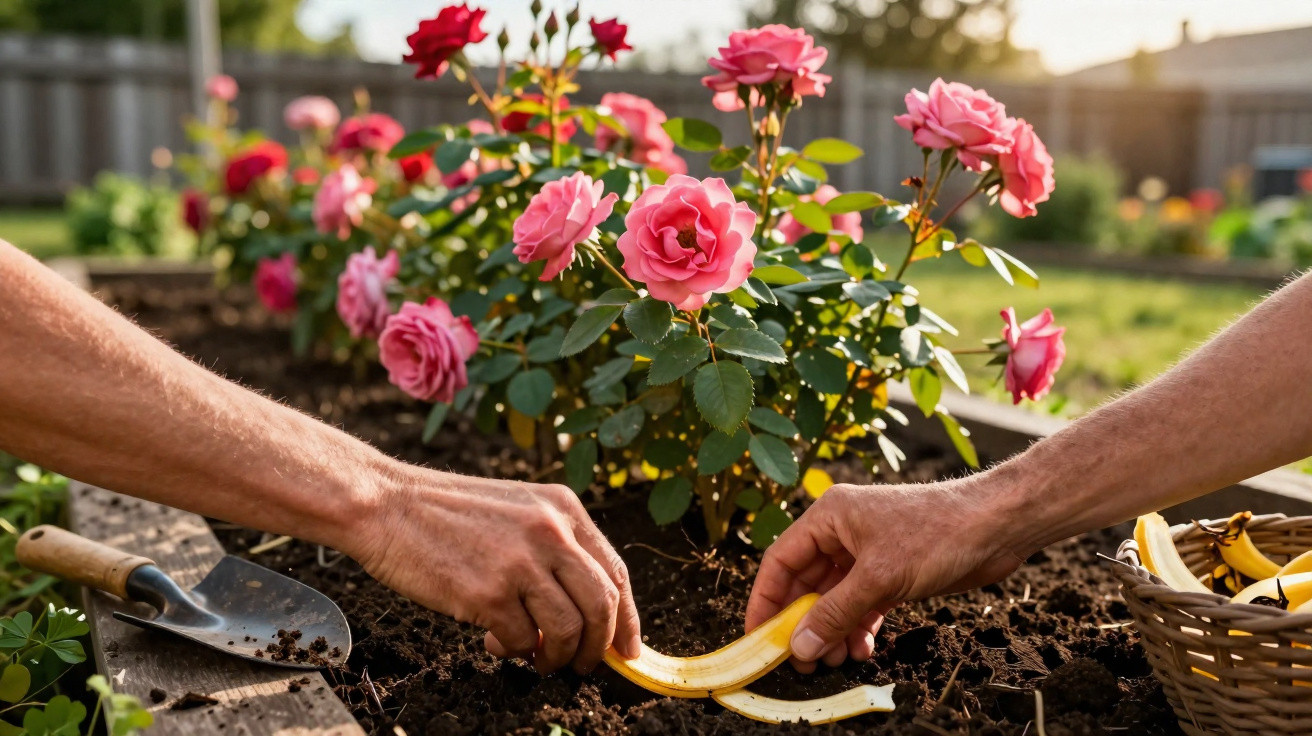
With a few well-timed jobs in spring and one simple item of kitchen waste, the flowering period of roses can be extended considerably. Gardeners who prune their shrubs correctly, feed the soil and make use of a particular fruit waste product may enjoy an almost continuous display of roses well into autumn.
Spring preparation for roses: pruning and soil care
As temperatures rise and severe frost is no longer expected, roses begin to emerge from their winter dormancy. What happens at this point has a major influence on how vigorously they grow during the year. Decisive pruning gives the shrub a clearer shape and directs its energy towards young, healthy shoots.
First, remove any dead, frost-damaged or visibly diseased growth. Pale, healthy cut surfaces are a positive sign, whereas dark or brown areas indicate damage. The aim is to create an open shrub that allows both light and air to reach its centre.
The better ventilated a rose shrub is, the lower the pressure from fungal diseases.
Once pruning is complete, attention turns to the soil. Lightly rake over the top layer to loosen it. This enables oxygen to reach the roots and allows nutrients to spread more evenly. Many gardeners work mature compost or an organic rose feed into this loosened soil. It supplies nitrogen, phosphorus and trace elements needed for fresh shoots and buds.
Banana peel: an overlooked source of nutrients
People growing gardens organically have long used kitchen scraps as free fertiliser. One traditional favourite is banana peel. Many rose enthusiasts still rely on it because it provides an important component for flowering.
Banana peels are particularly rich in potassium. This nutrient helps buds to develop, reinforces cell structure and enables plants to cope better with stresses such as heat or short periods of drought. As the peels break down slowly, they also release calcium and magnesium. Both nutrients support firm cell walls and resilient leaf tissue.
Banana peels act like a moderate, long-lasting flowering feed directly around the roots of roses.
Many fungal diseases attack weakened plant tissue. A well-fed rose shrub will therefore often experience fewer issues with common rose diseases such as powdery mildew or leaf spot, as its natural defences function more effectively.
How to use banana peels correctly on roses
Anyone wishing to use this kitchen waste purposefully should take care with its preparation. A whole peel decomposes very slowly and may attract pests, so one small extra step is worthwhile.
A practical step-by-step guide
- Remove all stickers and any damaged sections from the banana peel.
- Use a knife to cut the peel into small pieces, roughly the size of a fingernail.
- Make a shallow trench around the rose shrub, or create several small holes.
- Work the pieces into the soil to a depth of around five centimetres.
- Cover them again with soil and press it down lightly.
This treatment can be repeated regularly from March to September. Applying it about every three weeks is usually entirely sufficient. Over that period, the pieces gradually decompose and release their nutrients directly around the roots.
Well-watered soil enhances the effect because water dissolves the minerals. The soil should remain slightly moist, rather than constantly wet. Waterlogging damages rose roots far more seriously than a brief dry spell.
How much banana peel can a rose bed take?
Natural fertilisers can be overapplied too. Burying kilograms of peel around one shrub can lead to rot, odours and an imbalance of nutrients. It is also important to consider any other organic fertiliser being used.
For a medium-sized shrub, the following is a rough guide:
- around one chopped banana peel per plant every three weeks;
- less frequently where soil is already very nutrient-rich;
- slightly more often in poor, sandy soil, although smaller amounts should be used initially.
Signs of overfeeding may include very soft, weak growth, more leaf diseases or a markedly altered soil pH. If this happens, reduce the quantity and use only compost or a specialist rose feed at a moderate dose for a while.
Combining banana peels with established rose care
Banana peels are not a substitute for sound basic care; they are an addition to it. Well-draining soil remains essential: it should absorb water readily without becoming waterlogged. Heavy clay soils can be improved by incorporating sand or fine grit. In very sandy soils, compost improves the soil’s ability to retain water and nutrients.
The most successful rose beds combine sensible pruning, open crowns, loose soil and restrained organic feeding.
Deadheading faded roses is important too. Removing old flowers regularly redirects energy away from seed production and back into new buds. Combined with the slow nutrient release from banana peel, this can noticeably lengthen the flowering season.
When banana peels are unsuitable as fertiliser
Despite their many advantages, there are circumstances in which this method is not especially practical. In containers with very limited volume, the smell produced during decomposition may be unpleasant, particularly on balconies and patios. In these cases, many gardeners prefer to add the peels to compost first, then use the finished compost in the pot later.
Gardeners who regularly encounter voles, rats or raccoons should also take care. Food waste in the garden can attract certain animals. In areas where this is a significant problem, bury the pieces more deeply or avoid this approach altogether.
Practical additions and useful advice
When using banana peels, organic bananas are the preferable choice. Conventionally grown bananas often carry higher levels of pesticide residues, which can be concentrated in the peel. Those residues will then also end up in the garden soil.
Fine mulch is a useful companion to banana peel, such as grass clippings or shredded prunings. A thin layer over the soil keeps it moist for longer, protects it from excessive heat and gradually improves its structure. Roses often respond to this more stable soil environment with strong growth and abundant flowers.
Anyone uncertain about the nutrient content of their soil can use a simple soil test. Many garden centres sell test kits that provide an approximate reading of pH and key nutrients. This allows gardeners to see fairly quickly whether potassium deficiency is genuinely an issue - and whether banana peel is worthwhile as targeted support.






Comments
No comments yet. Be the first to comment!
Leave a Comment