
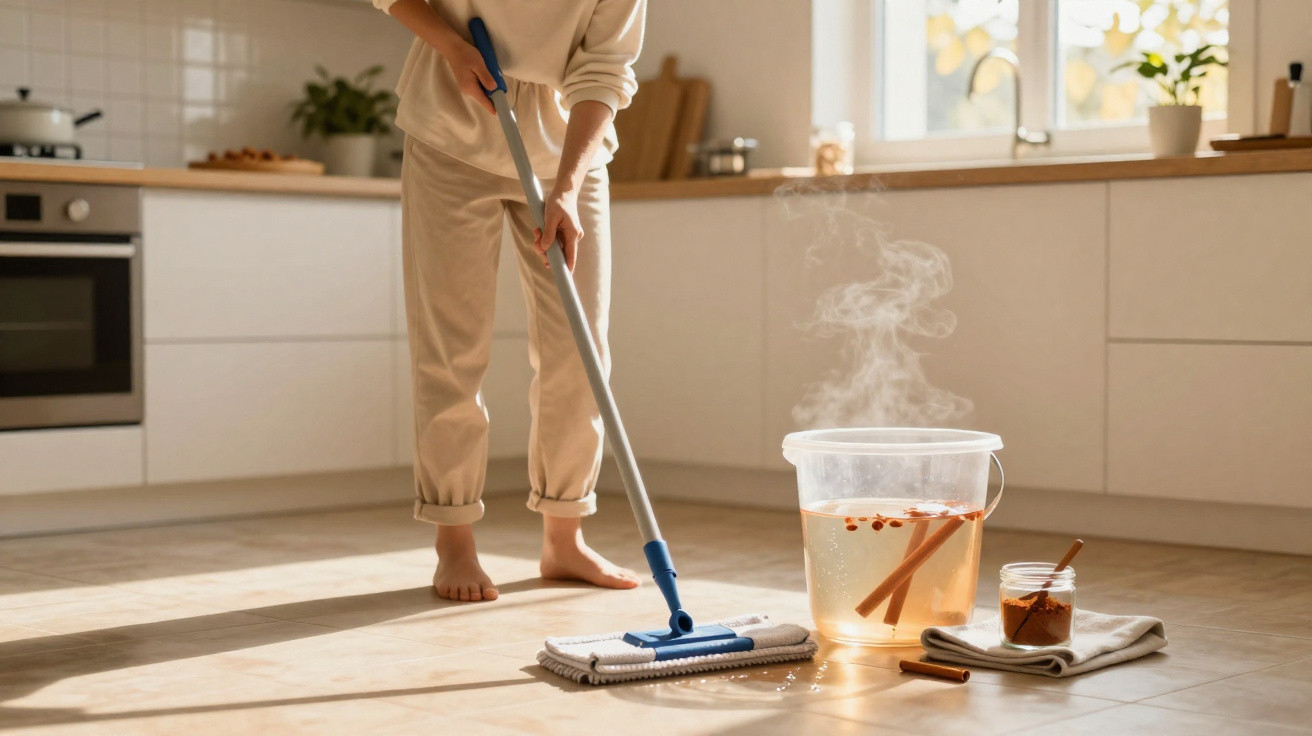
Searching for natural household-cleaning alternatives has become more common in many homes since the middle of the 2020s. Alongside vinegar, bicarbonate of soda and lemon, a familiar kitchen ingredient has also made its way into the cleaning bucket: using cinnamon to mop floors, valued for its distinctive fragrance, convenience and the potential to reduce reliance on conventional chemical products.
What does using cinnamon for floor cleaning involve?
The term using cinnamon to mop floors refers to adding ground cinnamon or cinnamon essential oil to the water used for mopping. Rather than relying solely on commercially produced disinfectants, the mixture combines water, optional mild washing-up liquid and the spice, whose antimicrobial activity has been observed in laboratory studies.
In practice, the floor is swept or vacuumed before the cinnamon-infused water is applied with a cloth or mop. The intention is to lift everyday light dirt, reduce microorganisms on the surface and leave behind a recognisable scent, making it a complement to standard hygiene routines.
Watch a video on the Almanaque SOS YouTube channel about straightforward techniques and home-based natural cooling tips for making rooms feel fresher on very hot days:
https://www.youtube.com/watch?v=M9mF2c5R9U4
How do you prepare and use a cinnamon floor-cleaning mixture?
There are several ways to use cinnamon in floor-cleaning water, from basic preparations to blends containing other household ingredients. Testing the mixture on a small, inconspicuous area first is essential, particularly on delicate surfaces such as varnished wood, moisture-sensitive laminate or very pale porcelain tiles.
Once the flooring type and level of dirt have been considered, the most practical preparation can be selected, with the amount of cinnamon and strength of fragrance adjusted to suit the household’s needs:
- Using ground cinnamon: add 1 teaspoon to a medium bucket of warm water, stirring thoroughly to disperse the powder.
- Using cinnamon essential oil: add 10 to 20 drops to the bucket and mix vigorously to distribute the oil.
- Using mild washing-up liquid: add a small amount of washing-up liquid first, then add the cinnamon to help remove grease.
Benefits and precautions when using cinnamon on floors
Using cinnamon to mop floors is often mentioned by people looking to cut down on synthetic fragrances while making their home feel more pleasant. Mechanical cleaning remains the main factor, but cinnamon water adds a sense of sensory comfort and may help control odours in high-traffic areas.
However, this approach also calls for care. A high concentration of ground cinnamon may stain surfaces; people who are sensitive to strong scents may find it unpleasant; and in homes with pets, they should be prevented from licking the still-damp floor. Wait until it is completely dry before allowing them back into the area. With natural wood or waxed floors, it is also important to check for darkening or loss of shine after continued use, adjusting the frequency or dilution where necessary.
How often should cinnamon be used in a household cleaning routine?
How often cinnamon in floor-cleaning water is used depends on the floor covering, footfall, and whether children or pets are present. In indoor spaces with moderate traffic, many households choose to use the mixture once a week, alternating it with other cleaning methods on the remaining days.
In kitchens, utility rooms and entrance areas, cinnamon is commonly paired with stronger detergents to tackle grease and tracked-in dirt. In bedrooms and living rooms, meanwhile, the gentler solution may be enough for regular upkeep. The spice can therefore take on an additional role in household organisation, helping keep the home clean and pleasantly scented while reducing everyday use of chemical products. It may even complement specialist products where there are allergies to artificial fragrances.




Comments
No comments yet. Be the first to comment!
Leave a Comment