
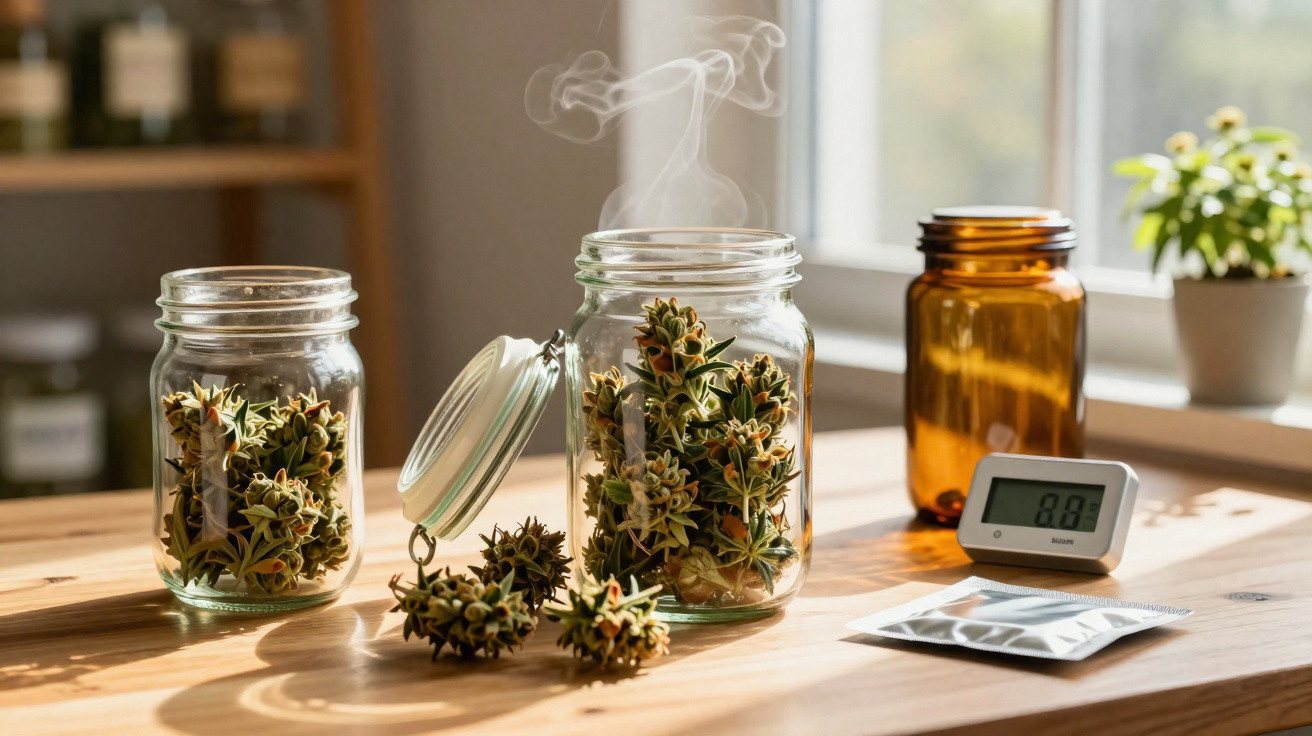
The scent of cannabis may be shaped as much by post-harvest processing as by the plant itself.
New research has shown that drying and storage practices can substantially change a flower’s aroma, while also affecting the compounds that determine cannabis potency.
Certain methods retain more THC and CBD, yet strip away many of the chemicals behind the plant’s recognisable scent.
The results indicate that growers must make a challenging compromise: no single approach preserves both peak potency and the complete aromatic profile.
What creates cannabis aroma
Cannabis gets its aroma from volatile compounds: small molecules released by flowers that travel through the air to the nose.
In nature, these chemicals help the plant deter pests and draw pollinators. For shoppers, they produce cannabis’s distinctive smell.
The research was carried out at the University of Ferrara (Unife) in Italy. Natasha Damiana Spadafora led the analysis, examining how flavour and aroma endure from harvest through to sale.
Her team captured scent compounds on an absorbent fibre enclosed in a jar with the plant material.
In the laboratory, the scientists then separated the compounds with a technique precise enough to distinguish molecules that might otherwise merge together.
Breaking down cannabis chemistry
The findings were extensive. In six commercial varieties, researchers detected 140 aroma compounds and seven cannabinoids, the active ingredients including THC and CBD.
Terpenes, a broad group of fragrant plant chemicals associated with pine, citrus and lavender scents, produced most of the aroma.
Other molecules formed part of the blend as well. Another study linked the skunky smell of certain varieties to a small set of sulphur-containing compounds chemically related to substances found in garlic.
Even the researchers operating the equipment were surprised by the level of detail.
“I could see which compounds were very important in creating the full experience of the aromas and explain some of their nuances,” said Spadafora.
Preserving strength, losing aroma
Freshly harvested cannabis is roughly four-fifths water and deteriorates rapidly, so growers dry it within days of harvesting. The study assessed two methods.
The first involved slowly drying flowers on trays in mildly heated air. The second was freeze-drying, in which flowers are frozen solid before moisture is removed in a vacuum.
Freeze-drying was more effective at protecting potency. It retained a greater amount of cannabinoids and slowed the chemical deterioration that reduces the quality of stored flowers over time.
However, the aroma suffered. Most compounds lost through freeze-drying were terpenes, including myrcene and limonene, which together can make up as much as half the aroma detected in cannabis.
Why the aroma fades
The explanation probably concerns the plant’s trichomes, the sticky resin glands covering the flowers that contain most aromatic oils.
When freezing creates minute ice crystals, they seem to break these glands open, allowing volatile compounds to escape during drying.
The loss of these chemicals alters the flower’s overall scent.
Previous research combined chemical testing with human smell assessments. It showed that several of these delicate terpenes are among the main contributors to cannabis aroma, so their disappearance is readily noticeable.
Choosing the right container
Drying is only the first challenge. After drying, cannabis can remain in storage for months before consumers buy it.
The researchers monitored changes over six months in three storage options: a sealed glass bottle, a plastic box and an uncovered tray.
Glass retained the broadest selection of aroma compounds. Its airtight closure reduced exposure to oxygen and moisture, which degrade these compounds, whereas the plastic box and open tray allowed greater contact with air.
For scent alone, glass was the obvious choice.
Cannabinoids made the decision less straightforward. In the sealed bottle, acidic cannabinoids gradually changed into their neutral, active forms – the process that converts CBDA, the raw form produced by the living plant, into CBD.
Growers often favour acidic forms because they fetch higher prices. The storage option that most effectively protected aroma had discreetly lowered part of the product’s value.
This compromise is seen elsewhere in the sector. An earlier study came to the same finding: no individual storage condition preserved every quality.
What people actually smell
Chemical analysis can identify every molecule in a flower, but it cannot reveal whether people will enjoy the outcome. To address this, the researchers presented the aromas to a panel of more than 150 people, asking them to describe the smells.
Distinct patterns appeared. Flowers containing high levels of monoterpenes, the lightest and most volatile terpenes, were described with bright, fresh notes. Flowers instead dominated by heavier sesquiterpenes were described as woody and spicy.
The relationship between chemistry and preference is particularly important to Spadafora because it directly affects sales.
“Of course, cannabis contains active cannabinoids such as THC, CBD and CBG, but people will naturally select varieties that they prefer the smell of,” said Spadafora.
Balancing cannabis potency and aroma
Before this research, no study had mapped so thoroughly how every stage after harvest affects both cannabis smell and strength.
The work clearly demonstrates the trade-off. One treatment maintains flower potency at the expense of aroma, while the container offering the strongest scent protection can also change its chemistry.
For growers, the most suitable method depends on their objective. A producer marketing aroma may dry flowers on trays and keep them in glass, whereas one prioritising cannabinoid content may tolerate a weaker scent to retain potency.
Spadafora has already provided her recommendations to industry partners considering these exact decisions.
A new way to judge cannabis
The legal cannabis industry has traditionally assessed products chiefly by THC content, the compound that causes the high.
These results support the argument for listing aroma alongside potency, as scent is frequently the first feature customers notice.
What was previously regarded as a secondary aspect of production now appears to be something growers can control deliberately.
If managed effectively, the scent of a flower could ultimately offer as much practical information as the potency figure displayed next to it.
The researchers presented their findings at a Society for Experimental Biology (SEB) conference in Florence.




Comments
No comments yet. Be the first to comment!
Leave a Comment